The Forgotten Destinations Perfect for a Solo Road Trip
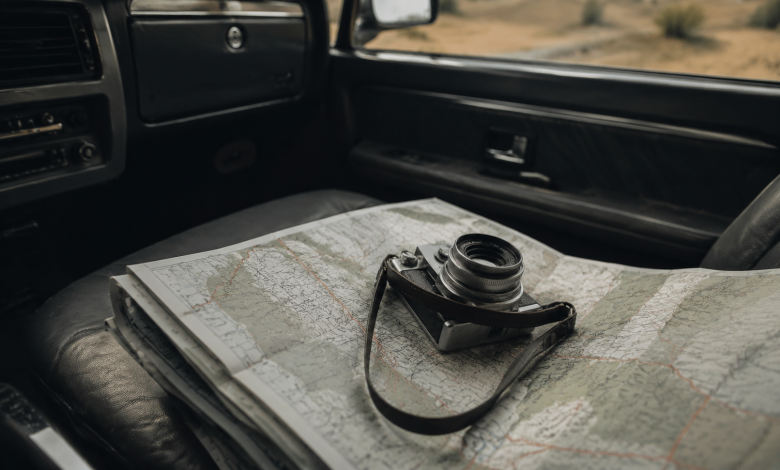
There’s a particular kind of freedom that only a solo road trip can give you no one to negotiate with, no compromises on the playlist, and no guilt about pulling over at an unmarked gravel road just to see where it goes. But somewhere along the way, “road trip culture” got swallowed by the algorithm. The same Pacific Coast Highway photos. The same Route 66 neon signs. The same Instagram-worthy arches with fifty people waiting behind you for their turn to look awestruck.
The real magic, though, has always lived in the places the crowd skipped. Not because they’re lesser, but because they require a little more patience, a slightly different map, and the willingness to trust the road before you see where it ends.
Why the Overlooked Places Hit Different When You’re Alone
Solo travel changes your relationship with a destination. When you’re alone, you’re not narrating the experience for anyone else. You absorb it differently slower, sometimes uncomfortably so. That’s why the forgotten destinations tend to leave a deeper mark on solo travelers. There’s no social buffer. It’s just you and the landscape, and whatever thoughts the silence decides to surface.
The places below aren’t hidden in a dramatic sense. They’re not secret coordinates passed between whisper networks. They’re simply the ones that don’t make the cover of travel magazines, and that absence, ironically, is exactly what makes them worth driving toward.
The Loneliest Road in America And It Earns That Name
US Route 50 through Nevada has been officially dubbed “The Loneliest Road in America” since Life magazine suggested in 1986 that travelers had no reason to go there. Nevada’s tourism board, in a move of extraordinary confidence, leaned into the insult and started handing out “survival kits” to drivers who attempted it.
Stretch across nearly four hundred miles of high desert, the route connectsEly to Fernley through towns so sparse that gas stations feel like milestones worth celebrating. The Great Basin landscape shifts from salt flats to pinyon pine ridges without warning. There are no spectators here. No tour buses. On some stretches you can drive forty miles without seeing another vehicle, which either unnerves you or completely unwires the tension you didn’t know you’d been carrying.
What makes this particular road extraordinary for solo travel is that the emptiness forces a kind of mental inventory you can’t do at home. The absence of stimulation becomes its own kind of experience. A lot of people who drive it describe a strange clarity that kicks in somewhere around mile two hundred, when there’s nothing left to distract you from your own thoughts.
Marfa, Texas But the Drive Getting There Is the Whole Point
Most people who know about Marfa come for the art scene the Donald Judd installations, the boutique hotels, the Prada store that’s actually just a sculpture. And that’s all real and worth experiencing. But the reason Marfa belongs on a solo road trip list has less to do with the town itself and more to do with the four-hour drive through the Trans-Pecos region that precedes it.
Come in from the north along US-385and the Chihuahuan Desert opens up in a way that feels almost confrontational. The mountains in the distance stay in the distance for hours. The road doesn’t curve much. The sky does something embarrassing to your sense of scale. By the time you roll into Marfa a town of fewer than two thousand people with three excellent coffee shops you’ve already had the experience. The town is just the punctuation mark.
That drive is also where you start to notice one of the more underappreciated joys of solo road trips: your relationship with time becomes elastic. An hour on that highway doesn’t feel like an hour. It feels like a much larger unit of something else entirely.
The Upper Peninsula of Michigan in Early October
The Upper Peninsula of Michigan the UP, to anyone who’s spent time there is one of the most quietly astonishing landscapes in the continental United States, and it is genuinely, consistently overlooked by travelers from outside the Midwest. This is partly geography. You have to want to go there. There’s no convenient flyover logic that drops you in the vicinity.
Drive the UP in early October and you’ll hit something rare: full autumn color without the crowds that descend on Vermont and upstate New York. The Keweenaw Peninsula alone, a narrow finger of land jutting into Lake Superior, offers copper mining ghost towns, waterfalls that require short hikes through birch forests, and lakeshores where the water is cold enough to make your brain recalibrate what “clear” means.
The towns up here Copper Harbor, Munising, Paradise are small and functional. The restaurants are not fussy. The locals are the kind of self-sufficient that comes from spending seven months a year in serious weather. As a solo traveler, you’ll find that people are genuinely curious about you, not performatively welcoming. There’s a difference, and it matters.
Highway 12 Through Utah The One People Drive Past to Get to Bryce
Most visitors to southern Utah come for Zion or Bryce Canyon, and they drive Highway 12 as a connector rather than as a destination. That’s a significant misread. Highway 12 is frequently listed by road-design enthusiasts and travel writers as one of the most scenic roads on the planet, and it receives a fraction of the attention of its neighbors.
The 124-mile route through Grand Staircase-Escalante and Capitol Reef country includes a section called the Hogback, where the road literally runs along a narrow ridge with thousand-foot drop-offs on both sides and no guardrails. It’s not dangerous at normal speeds, but it’s the kind of stretch that makes you grip the wheel a little differently and pay closer attention to being exactly where you are. That sensation genuine presence, not manufactured through an app is what solo road trips are ultimately about.
Stop in Boulder, Utah (population: around two hundred) for food at Anasazi State Park’s nearby options, and then just keep going. There’s no agenda that serves you better here than the road itself.
The Alabama Hills of California Before the Crowds Wake Up
The Alabama Hills, located outside Lone Pine at the foot of the Sierra Nevada, occupy a strange aesthetic middle ground. The rounded granite boulders look simultaneously otherworldly and deeply familiar they’ve appeared in hundreds of Westerns and, more recently, in every other phone wallpaper. And yet, the vast majority of visitors cluster around Arch Rock and call it done.
Arrive on a weekday before eight in the morning and you can wander the dirt roads that spread through the hills for hours without seeing another person. The scale relationship between the boulders and Mount Whitney directly behind them is the kind of visual information that doesn’t photograph cleanly but does something specific to your nervous system when you’re standing in it.
Lone Pine itself is a town worth sitting in. The small Museum of Western Film History is unexpectedly absorbing. The coffee is fine, not great, which is completely irrelevant when the light is doing what it does at 6 a.m. over those rocks.
What Makes a Place “Forgotten” in the First Place
It’s worth asking the question, because it reveals something interesting about how we choose where to go. A place becomes forgotten not because it lacks beauty or character, but because it lacks a particular kind of cultural momentum. It never became a reference point. No one used it as shorthand for adventure or romance or self-discovery in a movie that got wide release.
That absence of narrative baggage is, for solo travelers specifically, a genuine gift. You’re not arriving to confirm an image you already have. You’re arriving to form one from scratch. And there’s a particular satisfaction in that in discovering that your own experience of a place is the original, not a copy of someone else’s highlight reel.
The forgotten destinations don’t ask you to perform enjoyment. They just exist, fully, on their own terms. Whether you meet them on theirs is entirely up to you and how far you’re willing to drive.