7 Backpacking Myths That Are Costing You Serious Cash
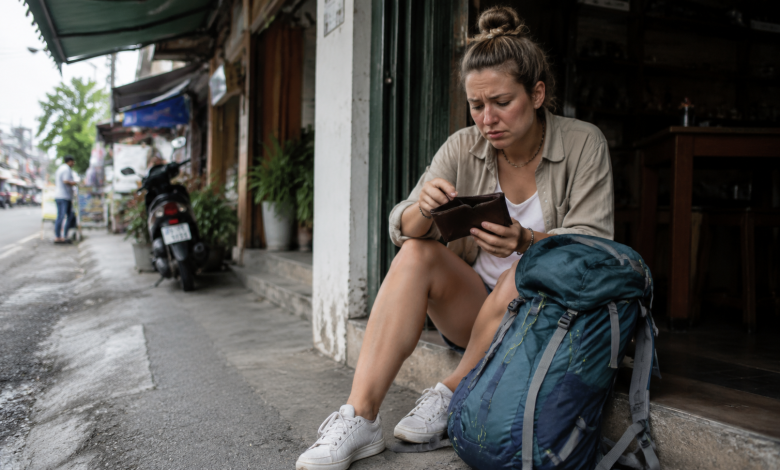
There’s a version of backpacking that lives in the cultural imagination the broke college kid with a $2 hostel bunk, living off street food and charm. It’s romantic. It’s also, for a lot of travelers, quietly expensive. Not because the lifestyle is inherently costly, but because the myths surrounding it lead people to make decisions that bleed money in ways they never see coming.
The backpacking world has its own gospel, passed down through travel forums, guestbook scrawls, and the unsolicited advice of people who did Southeast Asia in2009. Some of it holds up. A lot of it doesn’t and following it blindly is one of the most reliable ways to arrive home broker than you intended.
Myth 1: Booking Last-Minute Always Gets You a Better Deal
The logic sounds reasonable. Hostels don’t want empty beds. Airlines don’t want empty seats. So wait them out, and the price drops. Sometimes that’s true. More often, it isn’t.
Budget airlines in particular punish last-minute bookers. Their pricing algorithms are designed to extract maximum revenue from anyone who needs flexibility, and “flexibility” includes not having planned ahead. The sweet spot for cheap flights is typically four to eight weeks out for shorter routes not the night before departure while you’re standing in a different country figuring out your next move.
The last-minute myth also creates a cognitive trap. When you do occasionally snag a cheap room because a hostel was desperate to fill it, you remember it vividly. The three times you paid premium rates for the same flexibility? Those fade. Confirmation bias does the rest.
Myth 2: Cheap Gear Will Save You Money
This one costs people in two ways. The first is obvious: cheap gear breaks. A $15 rain poncho becomes a $15 wet lesson. A $30 backpack that transfers all its weight to your lower spine becomes a physiotherapy problem.
The second is subtler. When gear fails on the road, you replace it at whatever price the nearest city charges. That $30 bag that shredded in Lisbon gets replaced at a tourist-district shop where a comparable bag costs $80. You’ve now spent $110 on a bag that a $65 mid-range option would have handled from the start.
None of this means you need to buy expensive gear. It means buying gear that matches the demands of your trip. A three-week trip through Western Europe is not the same as three months through Central Asia, and outfitting them identically is a mistake in both directions.
Myth 3: Hostels Are Always the Cheapest Option
In some cities, a hostel dorm bed is unbeatable value. In others increasingly, in European capitals and tourist-saturated cities in Southeast Asia the math has quietly shifted. A dorm bed in Barcelona or Bangkok can run $25to $40 a night. Budget hotels and guesthouses in the same cities sometimes offer private rooms for $35 to $55.
The gap closes faster than most people expect, especially once you factor in the hidden costs of hostel life: lockers that require you to buy a padlock, kitchens that are too chaotic to actually cook in (pushing you toward restaurants), and the particular exhaustion of sleeping in a room with seven strangers that subtly degrades your judgment about spending decisions the next day.
Guesthouses, Airbnb for longer stays, and even apartment shares through local Facebook groups can undercut hostels significantly once you know where to look.
Myth 4: You Should Always Exchange Currency at the Airport
Airport currency exchange desks are, almost universally, a bad deal. The rates they offer are built around a captive audience people who just landed, don’t know the local financial geography yet, and need local currency right now. Margins of 10to 15 percent above the interbank rate are common. On a $500 exchange, that’s $50 to $75 simply evaporated.
The standard advice is to withdraw from ATMs abroad, which is correct but incomplete. Not all ATMs are equal. Bank-affiliated ATMs in many countries offer much better rates than the privately operated machines clustered near tourist attractions and airports. And dynamic currency conversion where a foreign ATM offers to charge your home currency instead of the local one should be declined almost every single time. The rate they use is not the one you want.
A travel debit card with no foreign transaction fees and ATM fee reimbursement changes the entire calculation. Getting one before you leave costs nothing and saves a compounding amount with every single transaction.
Myth 5: Traveling Slowly Automatically Saves Money
Slow travel evangelism is everywhere in backpacker culture, and the core idea has merit. Staying longer in one place reduces transport costs, lets you cook more, and often unlocks weekly accommodation discounts. All true.
But slow travel also has a spending floor, and in expensive cities, that floor is high. Spending three weeks in Zurich instead of three days doesn’t make Zurich affordable it multiplies the cost. The math only works if you’re slow-traveling somewhere where the daily cost of living is actually lower than your average across a faster-moving trip.
There’s also a subtler dynamic. Slow travelers often relax their daily spending vigilance because the timeline feels so comfortable. A morning coffee at a café becomes a habit. A restaurant meal becomes routine because cooking in a shared hostel kitchen has grown old. The budget loosens without any single decision feeling significant, and a week later the spreadsheet looks wrong.
Myth 6: You Don’t Need Travel Insurance If You’re Young and Healthy
This is the myth with the most catastrophic downside. Medical evacuation from a remote location can cost $50,000 to $200,000 depending on the destination and severity. A broken leg in the United States if you’re visiting can result in a bill that follows you for years. Young, healthy people get appendicitis. They get hit by motorbikes. They eat the wrong thing in the wrong place.
Travel insurance for a month of backpacking through Southeast Asia or Central America typically runs $30 to $60 depending on the plan and your age. The decision to skip it in service of a budget is one of the few backpacking choices with genuine financial ruin potential. It’s also, notably, one of the cheapest line items in any reasonable travel budget.
Myth 7: The Cheapest Route Is Always the Best Value
A 36-hour bus journey versus a 2-hour flight. The bus is $18. The flight is $55. The math seems obvious until you account for what the extra 34 hours actually cost you a night of accommodation you now need ($15 to $30), at least two additional meals ($10 to $20), and the kind of physical depletion that leads to recovery days and impulsive spending once you arrive.
Value and price are not the same thing, and nowhere is this confusion more expensive than in transport decisions. This isn’t an argument for always taking the flight. It’s an argument for running the real numbers rather than the surface ones.
Budget travel at its best is a skills game. The people who do it well aren’t necessarily spending less in absolute terms they’re spending in ways that align with what they actually value, while cutting hard on the things that don’t matter to them. The myths above share a common structure: they offer the feeling of thriftiness while quietly undermining the reality of it. Catching them before they catch you is what separates a trip that ends on budget from one that ends with an awkward conversation with your bank.