French Girl Style: The Only 4 Pairs of Summer Flats You Need
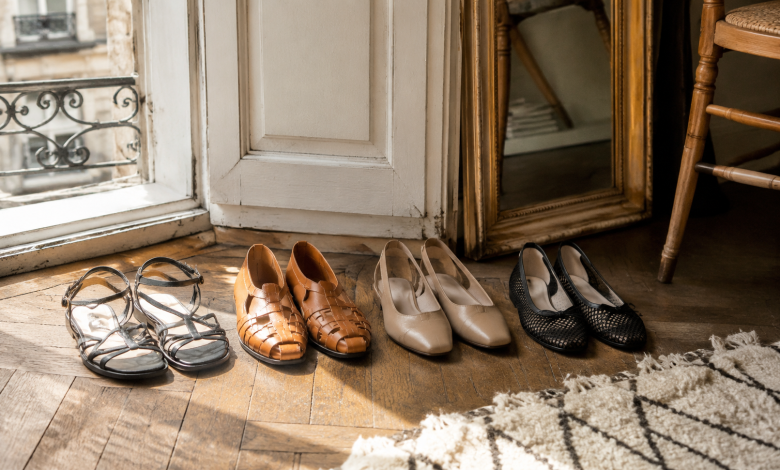
There’s a particular kind of woman you notice in Paris in July. She’s not trying. That’s the first thing. She’s walking fast maybe toward a market, maybe toward a café, maybe toward nothing specific and her shoes are flat, and her stride is completely unbothered. No platform. No wedge. No elaborate strapping situation that requires a tutorial to put on. Just a clean, considered shoe that seems to say: I dressed for myself, not for the occasion.
This is the paradox at the heart of French girl style that the rest of the world keeps trying to decode and keeps slightly missing. The aesthetic isn’t about minimalism as a trend. It’s not about owning less or buying expensive basics. It’s about a deeply internalized sense of what actually works on your body, in your life, across the chaos of a real summer day. And nowhere is that logic more visible than in the shoes.
Flats are the great revealer. When you strip away the heel, you lose the architecturalcrutch that makes any outfit read as “put together.” What’s left is pure taste. The French understand this, which is why the question of which flats to own isn’t casual for them it’s almost philosophical.
So let’s talk about the four pairs that actually earn a place in that rotation.
The Leather Loafer
The loafer has had so many cultural lives prep school staple, 70s menswear, 90s grunge casualty that it almost doesn’t belong to any single aesthetic anymore. Which is precisely why the French adopted it so completely. A shoe without allegiance fits perfectly into a wardrobe built on contradiction.
The summer loafer worn well is not the chunky, heavily logoed version that shows up in trend reports every other season. It’s something simpler: a sleek, slightly worn-in leather loafer, ideally in black, tan, or a deep cognac. The silhouette matters more than the brand. You want a toe box that’s neither too pointed nor too square something that sits in that ambiguous middle ground where it could work with straight-leg trousers, a linen midi skirt, or cutoff shorts without looking like it was chosen too deliberately for any of them.
The key insight is that the loafer earns its place in summer through texture contrast. Against the lightness of a cotton shirt or a linen dress, the solidity of leather grounds the outfit in a way that keeps it from floating into beach-vacation territory. It anchors things. That’s the function.
Wear them slightly unlaced or pushed down at the heel when it’s hot. That half-undone quality is not laziness it’s the whole point.
The Pointed-Toe Ballet Flat
There’s probably no shoe more directly associated with the French girl archetype, and there’s a reason for that beyondcliché. The ballet flat in its purest form slim, pointed, in a neutral leather solves a genuine problem: how do you wear something feminine without participating in discomfort? The ballet flat is the answer fashion arrived at in the 1950s, and the logic hasn’t changed.
What separates a flat that reads French from one that reads generic comes down to a few small decisions. The toe should have some length to it a slightly elongated point rather than a blunt cap. The leather should be matte or barely-there in sheen. The color that does the most work is not black (though black is always correct) but rather a warm nude that reads close to skin, the kind that visually extends the leg without any architectural help.
The French tendency is to buy one pair and wear them until they’re memorably broken in. There’s a specific kind of patina that comes from actually living in a shoe small scuffs, a slight softening of the toe that reads as personality rather than neglect. This is not something you can fake with “distressed” styles. It’s earned.
In summer, this flat functions as the chameleon of the rotation. It disappears under a sundress and lets the dress do its work. It dresses down a silk slip skirt into something wearable for lunch. It travels well, packs flat, and never requires a break-in period once it knows your foot. For all of these reasons, it’s indispensable.
The Strappy Sandal
Every summer wardrobe needs one pair of sandals that has some intention to it not a flip-flop, not a sport sandal, but something with actual lines. The version that works here is thin, flat, and architectural in the way a good piece of jewelry is architectural: deliberately simple.
Think two or three straps at most. A thin toestrap and an ankle strap. Maybe just one clean band across the forefoot. The sole should be thin enough that the foot doesn’t gain visual weight. This is where a lot of otherwise smart shoe choices go wrong the platform sandal that adds an inch of rubber, the sporty sole that tips the shoe into casual-only territory, the cork bed that dates the whole look.
The strappy flat sandal works because it’s honest. It doesn’t pretend to be anything other than a way to keep a shoe on your foot while revealing as much of it as possible. In that nakedness, the quality of the leather and the cleanliness of the hardware matter enormously. A gold buckle that tarnishes after one season, a strap that curls at the edges these things are visible at this level of simplicity. There’s nowhere to hide.
Neutral tones tan, ivory, barely-there gold carry the widest range. But the French girl move that always surprises is the unexpected color sandal worn against an otherwise subdued outfit: a deep cherry red flat sandal with a cream linen set, a cobalt blue against stone-washed grey. The shoe becomes the single point of conversation without shouting.
The White Canvas Sneaker
Yes, sneakers. The argument for including them in this particular list is that French girl style has never been about purity of aesthetic it’s been about refusal to be precious. And nothing communicates that refusal more cleanly than knowing when to reach for a white canvas sneaker instead of performing elegance in the wrong context.
The sneaker in question is not maximalist. Not retro-chunky. Not a statement. It’s the kind of shoe that a woman in Saint-Germain wears with a floral midi dress and a blazer thrown over her shoulders, and the combination works because the sneaker deflates any potential preciousness in the outfit. It says: I know this is pretty, and I’m also walking15 blocks.
Canvas over leather for summer it breathes, it ages more interestingly when it gets dusty, and it stays lighter on the foot in heat. The silhouette should be low-profile, the sole thin, the toe slightly rounded. Classic Veja styles, old-school Converse low-tops, vintage Keds the specific brand matters less than the commitment to simplicity.
The real skill is in knowing when to use this pair versus any of the others. The sneaker earns its place when the rest of the outfit already has enough going on a bold print, a slightly dramatic silhouette, a lot of jewelry. It’s the deliberate step back. In a wardrobe built on four pairs, every shoe has its logic. The sneaker’s logic is contrast.
What ties these four pairs together isn’t a single aesthetic or a price point or a commitment to French brands. It’s a way of thinking about footwear that prioritizes how a shoe actually functions across the texture of a real summer the mornings, the long afternoons, the dinners that happen before you have time to go home and change. Each pair solves a different problem. Together, they solve all of them.