The Dangerous Truth About Over-Conditioning Your Tresses
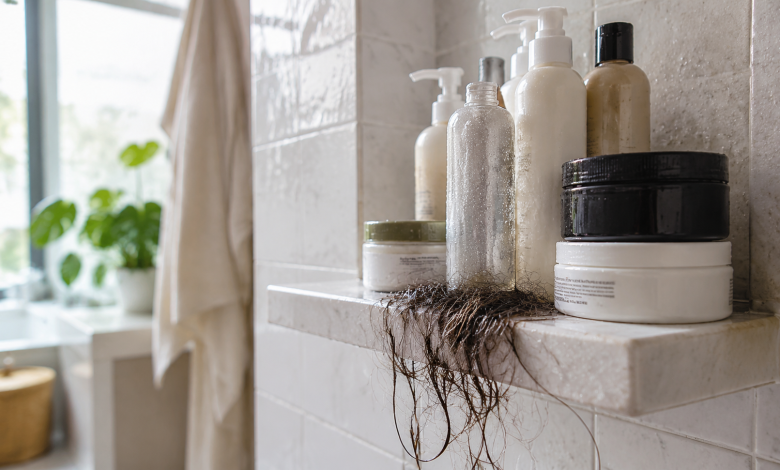
There’s a quiet irony embedded in most modern hair care routines. The products marketed as salvation the deeply moisturizing conditioners, the weekly protein treatments, the leave-in serums promising resilience can, under certain conditions, become the very source of damage. It’s not a fringe theory. Ask any seasoned stylist who has had to nurse a client’s hair back to health after months of well-intentioned over-treatment, and you’ll hear a version of the same story: the hair felt increasingly limp, then brittle, then began breaking at the crown for seemingly no reason.
The reason, as it turns out, is too much of a good thing.
What “Over-Conditioned” Actually Means
The term gets thrown around loosely, but hygral fatigue is the clinical reality underneath the phrase. Hair strands are porous. They absorb moisture and swell, then release it and contract. That cycle, repeated naturally, is normal. Repeated excessively through daily deep conditioning, leaving masks on for hours, or layering multiple moisturizing products weakens the hair’s structural integrity over time. The cuticle, which is meant to lie flat and protect the cortex, gets pushed open repeatedly and loses its ability to close properly.
What you end up with doesn’t look damaged in the traditional sense. It doesn’t look dry or frizzy. Instead, it looks flat. Lifeless. Stretchy when wet in a way that feels wrong. The elasticity something healthy hair should have tips from supple into rubbery, and that’s when breakage quietly begins.
People often don’t recognize this because the hair still feels soft to the touch. Soft has been so thoroughly equated with healthy that it’s genuinely hard to accept that softness can be a symptom rather than a sign of success.
The Protein-Moisture Balance That Nobody Explains Properly
Healthy hair depends on a balance between two things: moisture and protein. Moisture gives flexibility; protein gives structure. When you over-condition, you are almost always over-moisturizing flooding the hair with humectants and emollients while neglecting the keratin scaffolding underneath.
The metaphor that actually lands: think of your hair strand like a sponge. A dry sponge is rigid, easy to break. A moderately wet sponge is flexible and resilient. A sponge that’s been sitting in water for a week becomes soft and falls apart the moment you apply any pressure. That disintegration is what hygral fatigue looks like at a microscopic level.
Protein treatments are the corrective, but here’s where people compound the problem. They notice the breakage, panic, and add more conditioner reasoning that their hair needs more moisture because it’s breaking. This sends them deeper into an imbalanced state. The hair needs protein to tighten and reinforce the strand, not another layer of shea butter.
The deeper issue is that the beauty industry has created an environment where “moisture” is inherently good and protein is treated with suspicion. You’ll find countless online communities warning people against protein because some hair types are protein-sensitive. While that’s true, the overcorrection has left many people afraid of the very ingredient that would solve their problem.
How Frequency Quietly Becomes the Culprit
There’s a version of this problem that has nothing to do with product choice and everything to do with how often those products are used. A once-a-week deep conditioning treatment designed for someone with coarse, low-porosity hair becomes problematic when applied to fine or high-porosity hair at the same frequency. The same mask. The same timing. Completely different results.
High-porosity hair whether due to genetics, color processing, or heat damage absorbs product faster and more aggressively. That means the moisture threshold is reached much sooner. For these hair types, a rinse-out conditioner applied every wash might already be sufficient. Adding a deep treatment weekly on top of that, then a leave-in, then an oil, creates accumulation that the strand simply cannot manage.
Low-porosity hair has its own version of this problem. Because the cuticle is tightly bound and resistant to moisture absorption, product tends to sit on the surface rather than penetrate. People with low-porosity hair often feel their hair isn’t responding to conditioning and understandably do more. More product, more time, more heat to open the cuticle. The hair doesn’t actually need more conditioning; it needs a different approach entirely, often lighter products and less frequent treatments.
Both scenarios lead to the same outcome through different mechanisms. The hair suffers not because the product is wrong in theory, but because the user has never been taught to read their own hair’s actual signals.
The Scalp Gets Forgotten in This Conversation
Over-conditioning discussions almost exclusively focus on the strand, but the scalp is often the first casualty. Conditioner isn’t formulated for scalp contact, and when it migrates to the root especially during rinse-out it can create buildup that clogs follicles, disrupts the scalp’s natural microbiome, and contributes to issues ranging from scalp acne to increased shedding.
There’s a specific pattern worth noting. Someone begins experiencing what they think is dryness at the scalp flaking, tightness and responds by applying conditioner closer to the root, sometimes even massaging it in. In many cases, that flaking isn’t dryness. It’s a reaction to product accumulation. The response makes the underlying issue worse while masking it behind temporary softness.
A healthy scalp produces its own sebum, which is the original conditioner. The goal of any product routine should be to supplement what the scalp cannot produce on its own not to replace or overwhelm it. When you condition heavily and frequently, you signal to the scalp that it doesn’t need to work. Over time, natural oil production shifts, and the scalp becomes dependent on external product to feel balanced.
Reading the Signs Before It Gets Serious
The hair tells you, if you know how to listen. Excessive slip when wet the kind where acomb runs through with zero resistance and the hair feels almost frictionless is one of the earliest indicators of over-conditioning. Healthy hair has some texture, some natural grip. When that disappears entirely, the protein structure has been compromised.
Stretched strands that don’t spring back, hair that looks consistently flat despite volume-building efforts, and a gummy feeling at the mid-shaft are all things worth paying attention to. None of these are emergencies on their own, but together they form a clear picture.
The fix is less dramatic than people expect. Reduce conditioning frequency. Introduce a protein treatment suited to your hair’s porosity and current condition. Give the hair time to recalibrate. Most strands, if the damage hasn’t progressed to physical breakage, can recover within a few weeks of adjusted care.
The broader lesson, though, isn’t really about conditioner. It’s about the assumption that more is always better when it comes to hair care that diligence equals results. Sometimes the most beneficial thing you can do is step back from the routine entirely and let your hair breathe. The obsessive attention we’ve been sold as self-care can, in practice, be the source of the very problem we’re desperately trying to solve.