What Your Walking Pattern Says About the Wear and Tear on Your Heels
The Ground Beneath Your Feet Knows Everything
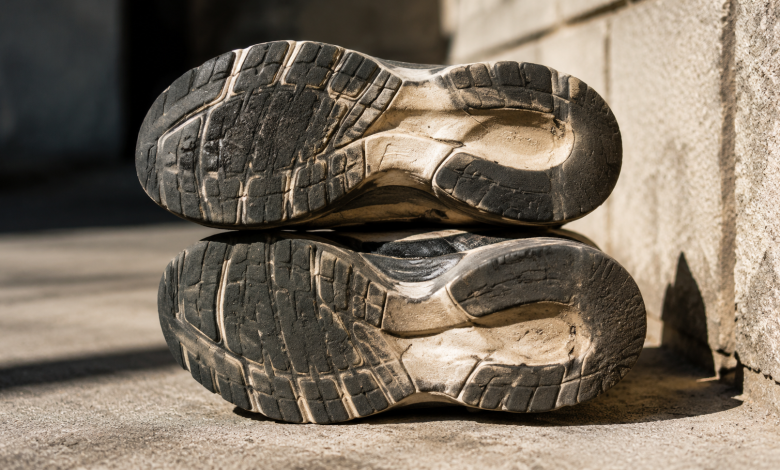
Flip any pair of well-worn shoes over and you’ll find a story. Not a vague one, either a specific, detailed record of how you move through the world. The rubber sole doesn’t lie. It wears down exactly where your weight lands, exactly where your stride pushes off, exactly where your body has been compensating for something it never bothered to tell you about. Most people look at that uneven erosion and think nothing of it. But podiatrists, physical therapists, and gait analysts spend careers reading exactly that kind of evidence.
Your walking pattern technically called your gait is as individual as a fingerprint. It’s shaped by everything from the angle of your hip joints to old ankle sprains you forgot about years ago to the fact that you spent your twenties sitting at a desk with your feet tucked under your chair. Every step you take is a negotiation between dozens of muscles, bones, and connective tissues, and the heel is where that negotiation typically begins. It’s the first point of contact for most people in a standard heel-strike gait. Which means it’s also the first place to show the consequences.
Reading the Wear Pattern Like a Map
The outer heel wearing down first is probably the most common pattern, and it’s connected to something called supination or underpronation. When your foot doesn’t roll inward enough after heel strike, the weight stays on the lateral edge. The outer sole takes the brunt. People with high arches tend to fall into this category naturally, but it’s also common in people who tense up when they walk, holding their feet slightly rigid. The result is a distinctive diagonal stripe of wear cutting from the outer back corner of the heel forward. Shoes wear out fast. Ankles absorb shock inefficiently. Stress fractures and IT band problems become recurring visitors.
Then there’s the opposite excessive pronation, where the foot rolls too far inward. The inner heel and the ball of the foot near the big toe absorb disproportionate pressure. The wear pattern shifts accordingly, toward the inside edge. This one is so prevalent it’s practically a modern epidemic, fueled by flat feet, weak hip abductors, and the unforgiving flatness of most indoor floors. The knee takes a lot of collateral damage here. So does the plantar fascia, that thick band of tissue running along the bottom of the foot that causes the stabbing morning heel pain so many people resign themselves to living with.
Symmetry matters too. If one heel wears faster than the other, you’re likely favoring one side unconsciously shifting load away from a hip, knee, or ankle that’s been quietly problematic. The body is remarkably good at protecting itself in the short term and quietly building bigger problems in the long term.
Why the Heel Bears the Burden
Human beings are one of the few animals that habitually strike the ground heel-first. This is partly a consequence of walking upright, partly a function of shoe design, and partly just what happens when you’re not barefoot on soft ground. Our heels evolved to handle significant impact the heel bone, or calcaneus, is the largest bone in the foot and is surrounded by a fat pad specifically designed for shock absorption. But that fat pad thins with age. By the time most people reach their fifties, they’ve lost a meaningful portion of that natural cushioning, and the wear pattern on their shoes starts to change accordingly, shifting in ways that reflect the body’s search for a new equilibrium.
There’s also the matter of walking speed. Slower gaits tend to produce more deliberate heel strikes with longer contact time. Faster gaits shift loading patterns forward. People who walk with a natural forward lean common in those who’ve adopted a more minimalist or trail-running influenced stride often show dramatically less heel wear and more wear under the metatarsal heads. Neither pattern is inherently better, but each tells you something different about where the stress is going.
The Compensation Cascade Nobody Talks About
Here’s where it gets genuinely interesting and a little unsettling. Heel wear doesn’t just reflect what your foot is doing. It reflects what your entire kinetic chain is doing. The foot is the foundation, and like any foundation, small irregularities at the base translate into larger structural issues higher up.
A heel that strikes slightly outside center doesn’t just stress the ankle. It rotates the tibia. That rotation affects the knee tracking. The altered knee mechanics change how the hip moves. The hip compensation shifts the pelvis. And suddenly someone is wondering why they have chronic lower back pain on the left side, not realizing it traces back to the way their left foot has been landing for thirty years. This cascade is well-documented in sports medicine literature, but it rarely makes it into general conversation because it asks people to think about their bodies as interconnected systems rather than separate parts that occasionally malfunction.
Physical therapists see this pattern constantly. A patient comes in with knee pain. The knee looks fine on imaging. But watch them walk for thirty seconds and you’ll see the foot collapsing inward on every step, the knee torquing to compensate, the hip dropping slightly to absorb the rest. The worn heel on their shoe told the whole story before anyone ran a single test.
What To Actually Do With This Information
Look at your shoes. Not a glance a real look. Take them off, set them on a flat surface, and look at them from behind. Do they tilt inward or outward? Is one heel more worn than the other? Is the wear concentrated in a tight spot or spread across the heel broadly?
If the wear is dramatically uneven and you’re experiencing any pain in your feet, knees, hips, or lower back, that’s a conversation worth having with a podiatrist or physical therapist who specializes in gait analysis. Modern gait analysis can be done with just a treadmill and a slow-motion camera, and the insights are often immediate. Custom orthotics help some people significantly. Targeted strengthening exercises particularly for the glutes and hip abductors help others more. Footwear changes make a real difference for many. The answer is rarely universal because the walking pattern isn’t universal.
There’s also something worth saying about mindfulness in movement. Most people walk on autopilot, and that’s fine for efficiency. But occasionally paying attention to how your heel actually contacts the ground feeling whether it’s the outer or inner edge, noticing if you’re tensing through your foot builds a kind of proprioceptive awareness that matters more as you get older and the margin for compensation begins to narrow.
Your heels have been absorbing the full weight of your life, one step at a time. The wear they show isn’t damage it’s data. And data, treated with curiosity rather than alarm, tends to point toward something useful.