Why Your Workout Clothes Still Smell Funky (And How to Fix It for Good)
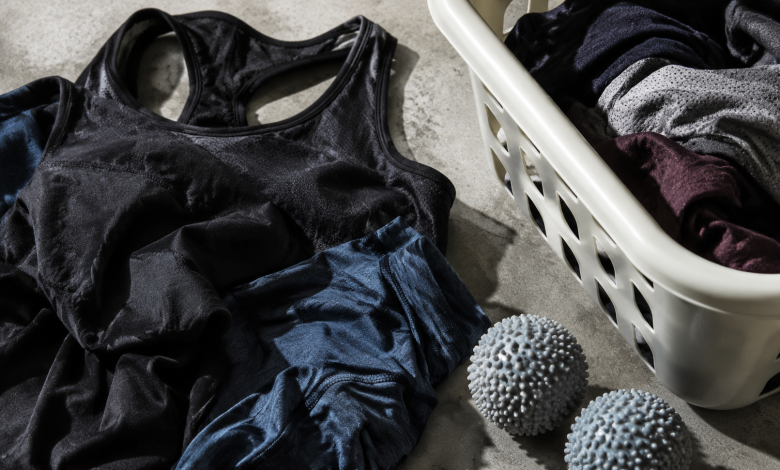
You pull your favorite leggings out of the dryer, still warm, and they smell perfectly fine. But the moment you start sweating during your next workout, that familiar funky odor creeps back sour, faintly metallic, stubbornly clinging to the fabric like it never left. You washed them. You used the right amount of detergent. Maybe you even ran them through twice. And yet, here you are again.
This is one of those quiet frustrations that athletes and casual gym-goers share equally, and almost nobody talks about it directly. The assumption is usually that the clothes just need a harder wash. In reality, washing them harder is often part of what made the problem worse.
The Real Culprit Isn’t What You Think
Sweat itself is actually odorless. What you’re smelling is the byproduct of bacteria specifically, the microbial colonies that live on your skin and feed on the fatty acids and proteins in your perspiration. When those bacteria transfer to fabric, they don’t just sit on the surface. They work their way into the fiber structure and begin to accumulate over time.
This is especially pronounced with synthetic fabrics like polyester, nylon, and spandex blends the very materials that dominate the athletic wear market. These fabrics are engineered for moisture-wicking and stretch, which makes them excellent for performance. But their hydrophobic nature, meaning they resist water, is a double-edged quality. Sweat doesn’t soak in the way it does with cotton. Instead, the oily components bind tightly to the synthetic fibers, creating a residue layer that regular detergent has trouble breaking down.
The bacteria don’t just sit in that residue they thrive there. Over months of regular use, a thin biofilm builds up inside the fabric. This is why the smell seems to emerge from within rather than on the surface. Hot water alone won’t dissolve it. Standard detergent usually doesn’t reach it. And the spin cycle doesn’t care about it at all.
The Detergent Trap
There’s a common instinct to use more detergent when clothes don’t smell clean enough. It makes logical sense if a little soap cleans a little, more soap should clean more. But in a washing machine, particularly with high-efficiency models, excess detergent doesn’t fully rinse out. It leaves a residue in the fabric that traps more bacteria, more body oils, and more odor compounds with each subsequent wash.
Fabric softener compounds this problem significantly. Those conditioning agents that leave clothes feeling silky smooth? They coat the fibers with a waxy film. On workout clothes, this film essentially seals in whatever was already living in the fabric. Softener and athletic wear are genuinely incompatible, though the packaging of neither product will tell you this clearly.
So the cycle becomes self-reinforcing: bacteria accumulate, you wash with more detergent or add softener for freshness, residue builds up, bacteria have more to feed on, the smell intensifies. Repeat.
Why Cold Water Is Making It Worse
Modern washing habits have shifted toward cold water cycles for environmental reasons, and generally speaking, cold water is fine for preserving the shape and elasticity of workout clothes. But cold water is significantly less effective at killing bacteria and breaking down the oils that hold odor compounds in place.
There’s a practical middle ground here. Not every wash needs to be hot and in fact, consistently high heat will degrade elastic fibers faster. But running an occasional warm wash, or at minimum using a sport-specific detergent formulated with enzymes, makes a meaningful difference. Enzyme-based detergents do something that regular detergents don’t: they break apart the actual molecular chains of proteins and fats, dissolving the biofilm rather than just rinsing around it.
A few brands have developed detergents specifically for athletic gear Hex, WIN Sports Detergent, and Nathan Sports Wash are among the better-known ones and the difference in odor removal is noticeable after the first use for clothes that have been struggling for a while.
The Soak That Actually Works
Before you can break the cycle, you need to reset the fabric. The most effective method involves white vinegar, which is mildly acidic and actively disrupts the bacterial biofilm while also neutralizing the alkaline residue left by detergent buildup.
The approach is simple but requires patience. Fill a basin or bathtub with cold water and add one cup of distilled white vinegar. Submerge your workout clothes and let them soak for thirty minutes to an hour. Don’t add detergent at this stage the vinegar needs to work on its own. After soaking, wring them out and wash them in the machine with a small amount of enzyme-based detergent on a warm cycle. Skip the softener entirely.
For clothes that have been deeply saturated with years of biofilm, a single treatment might not fully resolve the smell. Two or three cycles over the course of a week, combined with proper washing habits going forward, typically handles even the most stubborn cases.
Baking soda is another useful tool, though it works differently from vinegar. Rather than attacking bacteria, it neutralizes odor compounds directly it’s alkaline where many smell molecules are acidic. Adding half a cup to the wash alongside enzyme detergent creates a more comprehensive treatment. Some people swear by the combination of soaking in vinegar first and then washing with baking soda in the machine; just don’t combine vinegar and baking soda in the same solution, since the reaction between an acid and a base neutralizes both.
What Happens in the Dryer
One underappreciated factor is how you dry athletic clothes. High heat in the dryer is a common choice because it’s fast and convenient. But it essentially bakes any residual bacteria and odor compounds deeper into the fiber structure. If there’s any smell remaining after washing even just a faint trace the dryer will amplify and lock it in.
Air drying is genuinely better for workout clothes, both for odor prevention and for extending the life of the fabric. If you use the dryer, a low heat setting combined with a few wool dryer balls (instead of dryer sheets, which deposit more waxy residue) gives you the convenience without the damage. Dryer sheets, like fabric softener, have no place in this laundry category.
Sunlight is worth mentioning too. UV rays are naturally bactericidal. Hanging workout clothes outside in direct sun for a few hours isn’t just nostalgic it’s one of the most effective passive deodorizing treatments available, and it costs nothing.
The Habits That Prevent the Problem from Returning
Once you’ve reset your workout clothes, keeping them that way is primarily a question of timing and storage. The window between finishing a workout and putting clothes in the wash matters more than most people realize. Bacteria multiply rapidly in warm, damp fabric. Leaving sweaty clothes in a gym bag or a pile on the floor for more than a day or two accelerates the biofilm formation that creates persistent odor.
If you can’t wash immediately, at least let the clothes dry out fully before containing them. Hanging them up in a ventilated space not sealed in a bag slows bacterial growth significantly even if it doesn’t stop it.
Turning clothes inside-out before washing exposes the inner surface, where sweat and bacteria concentrate most heavily, directly to the detergent and water. It’s a small adjustment with a disproportionate effect on how thoroughly the wash reaches the odor source.
There’s also something to be said for rotating your workout wardrobe more aggressively. Every piece accumulates biofilm gradually, and giving clothes longer rest cycles between uses even just having one or two extra sets in rotation extends the effective life of each item and gives the fabric more time to fully dry between uses.
The funk in your favorite gym clothes isn’t a sign that they’re worn out or impossible to salvage. It’s a chemistry problem, and it has a chemistry solution. Once you understand what’s actually happening at the fiber level, the fixes stop feeling like rituals and start making obvious sense.