Are Chunky Sneakers Still In? Here’s What Fashion Editors Are Wearing Instead
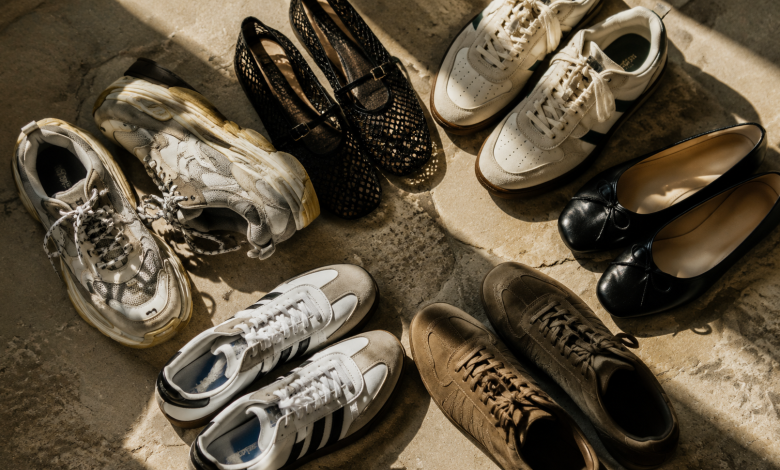
Are Chunky Sneakers Still In? Here’s What Fashion Editors Are Wearing Instead
The Rise, Reign, and Quiet Exit of the Dad Shoe
There’s a particular kind of fashion fatigue that sets in not with a bang but with a slow, collective shrug. That’s exactly what happened to chunky sneakers. A few years ago, they were everywhere on the runway at Balenciaga, on the feet of off-duty models in Copenhagen, stacked high beneath wide-leg trousers on every street-style photographer’s feed. They felt bold, irreverent, almost confrontational in their deliberate ugliness. That was the point. And then, somewhere between the tenth pair of Triple S sightings in a single afternoon and the moment fast fashion finished flooding the market with $40 knockoffs, the chunky sneaker stopped feeling like a statement and started feeling like a uniform.
Fashion doesn’t retire trends so much as quietly move on from them. Nobody sends a memo. Nobody posts an official goodbye. But the editors stop wearing them, the stylists stop pulling them, and the algorithm that relentless curator of what we’re meant to want next begins surfacing something else entirely.
What “Still In” Even Means Anymore
Before dissecting what’s replacing the dad shoe, it’s worth pausing on the question itself. “Are chunky sneakers still in?” is a deceptively loaded ask, because the answer depends entirely on who you’re asking and why.
If you bought a pair of New Balance 990s or a set of Asics Gel-Kayano14s two years ago, they haven’t stopped fitting your feet. They haven’t stopped working. And plenty of people stylish people are still wearing them with complete conviction. Personal style has never operated on the same clock as trend cycles, and conflating the two is how you end up with a wardrobe full of things you wore twice and a closet that reads like a fashion archive rather than a reflection of who you actually are.
But if you’re asking whether chunky sneakers are generating the same cultural energy they were in 2020or 2021 whether they’re the silhouette that fashion editors are reaching for when they want to look current the honest answer is no. The creative class has already moved on, and the direction they’ve moved in is telling.
The Pivot to Slim and Retro-Clean
Walk through any fashion week street style gallery from the past two seasons and a clear counter-narrative emerges. Where the dad shoe was all mass and exaggeration, the sneakers attracting the most attention now are lean, low-profile, and almost aggressively understated. Think Adidas Samba. Think New Balance 574in a muted colorway. Think the kind of sneaker your older brother might have worn to school in1994without thinking twice about it.
The Samba deserves particular mention because its ascent has been genuinely remarkable. Originally a football training shoe designed for indoor courts in the 1950s, it spent decades as a reliable but unremarkable staple before editors at Vogue and i-D started integrating it into editorial shoots alongside tailored trousers and vintage blazers. The silhouette is flat, the sole is thin, the profile is almost modest everything the chunky sneaker wasn’t. And yet it reads, in context, as more sophisticated precisely because it isn’t trying so hard.
Alongside the Samba, shoes like the Nike Killshot and the Adidas Gazelle have been quietly accumulating momentum in the background. These are shoes with genuine heritage, which matters in a moment when fashion is hungry for things that feel earned rather than engineered.
Why Editors Are Gravitating Toward Ballet Flats and Loafers Instead
Here’s where the conversation gets more interesting. Because it’s not just that editors are swapping one sneaker silhouette for another. A significant portion of the fashion-forward crowd has exited the sneaker category altogether for their everyday dressing at least for the portion of daily life that doesn’t require actual athletic performance.
Ballet flats have staged one of the more unexpected comebacks in recent memory. After years of being dismissed as boring or, worse, as a symbol of the mid-2000s aesthetic that everyone was desperate to disavow, the ballet flat has returned with a kind of quiet authority. Brands like Repetto, Khaite, and Alaïa have been doing serious numbers in this category, and the styling that surrounds them wide-leg trousers, cropped blazers, the occasional maximalist bag suggests that the shoe is being used as a deliberate counterweight, a note of restraint in an otherwise considered outfit.
The loafer never fully left, but it’s taken on new relevance. Chunky loafers with lugged soles (which occupied a middle ground between the dad shoe aesthetic and classic footwear) have given way to sleeker, more traditional forms. The Gucci Horsebit remains a reference point, but the broader market has absorbed the loafer into everyday dressing in a way that feels less logo-driven and more about silhouette.
The Mary Jane Moment Nobody Saw Coming
If one shoe encapsulates the current editorial mood, it might be the Mary Jane. Strapped, feminine in a way that’s been reclaimed rather than imposed, and deeply connected to the kind of nostalgic European dressing that fashion keeps circling back to the Mary Jane is showing up on the feet of stylists, editors, and the particular subset of Instagram accounts that always seem to be one step ahead.
What makes this interesting is what it signals about the broader cultural conversation. The chunky sneaker, at its peak, was partly about comfort-first dressing, about refusing to suffer for fashion, about the democratization of street style through athletic footwear. The turn toward Mary Janes, ballet flats, and slim loafers suggests that the pendulum is swinging back not toward the punishing heels of an earlier era, but toward a kind of dressed-up intentionality that the sneaker, by its very nature, had been pushing against.
The Sneakers That Survived the Cull
It would be inaccurate to suggest that sneakers as a category are in trouble. They’re not. But the sneakers with staying power right now are the ones with genuine stories the ones that existed before the trend cycle absorbed them and will continue to exist after it moves on.
The aforementioned New Balance 990 is a good example. It’s a running shoe with actual engineering credentials, a loyal following that predates the dad-shoe trend, and a made-in-USA production story that resonates with a certain consumer. The Onitsuka Tiger Mexico 66, with its clean lines and low profile, is being worn by people who have no interest in making a statement about maximalism or its rejection. Converse Chuck Taylors perennial, practically indestructible as a cultural object continue to circulate.
What these shoes share is that they were never purely trend objects. They had lives before the hype and they’ll have lives after. That’s a different category from the shoes that rode the chunky wave purely because chunky was the moment.
What This Shift Actually Tells Us
Fashion cycles are never really just about clothes. The move away from the exaggerated proportions of the dad sneaker toward cleaner, more restrained footwear reflects something happening at a larger scale a collective tiredness with maximalism, with conspicuous consumption as aesthetic, with the kind of styling that requires significant effort to look effortless.
There’s an appetite right now for things that feel considered without feeling loud. For a shoe that works with a good pair of trousers and doesn’t demand to be the focal point of the outfit. For dressing that communicates taste through subtlety rather than through volume.
That’s not a permanent state of affairs fashion will overcorrect again, it always does but for now, the editors have spoken with their feet, quite literally. And what they’re stepping into is less about making a statement and more about getting dressed.