The Anti-Social Travel Guide: Places Where Locals Will Leave You Alone
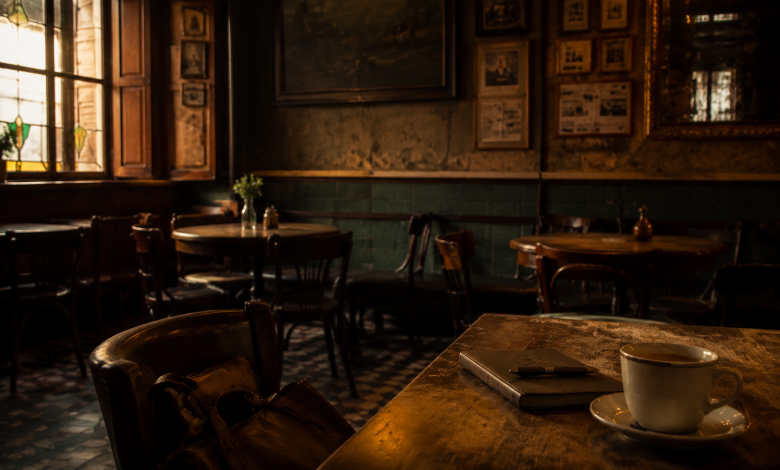
A Confession Before We Begin
Not everyone travels to connect. Some of us board planes precisely to disconnect fromcoworkers, from small talk, from the invisible social tax of being a person among other people. The travel industry has spent decades selling us images of warm encounters, serendipitous friendships, and life-changing conversations with strangers on trains. What it rarely sells is the other fantasy: arriving somewhere and being magnificently, peacefully ignored.
This guide is for that traveler.
There is a particular kind of place in this world where you can exist without being noticed, chatted up, or gently pressured into communal experience. These aren’t desolate places in fact, some are surprisingly populated. What they share is a cultural contract between visitor and local that essentially reads: you have your space, I have mine, we both agree this is fine.
Japan: The Architecture of Polite Indifference
Tokyo is the most obvious entry point, but it almost feels too easy. The city has refined a form of social interaction that manages to be both deeply courteous and profoundly hands-off. Service is immaculate. Eye contact is minimal. Nobody on the subway is looking at you, and you would do well to return the favor.
What makes Japan genuinely remarkable for the anti-social traveler isn’t just the quietude it’s that the quietude is structural. The country has built its public life around not intruding. Convenience stores where transactions happen in near-silence. Ramen shops with individual wooden partitions so diners face the wall. Capsule hotels where your entire private world is a curtained pod and nobody finds this sad.
Kyoto can feel more performative, more aware of being watched by tourists. But venture into smaller cities Kanazawa, Matsumoto, Morioka and you find the social temperature drops further. Locals aren’t unfriendly. They’re simply uninterested in making your visit about them, which is an extraordinary gift.
The catch: you need to hold up your end of the bargain. Talking loudly on the train, demanding attention, or treating the arrangement like an exotic quirk to photograph will dissolve it instantly.
Iceland: Where the Landscape Does All the Talking
Iceland has roughly 370,000 people spread across a landmass slightly larger than Kentucky. That ratio alone tells you something. But beyond the mathematics, there’s a cultural temperament here that prizes self-sufficiency to the point of near-stoicism. Icelanders are not cold ask for help and you’ll get it, genuinely. But they won’t initiate. They won’t fill silence because silence doesn’t make them uncomfortable.
For the traveler who wants to feel small and alone in the best possible sense, the landscape cooperates completely. The central highlands in summer are traversable only by 4WD, populated by nobody, and covered in colors that don’t quite exist anywhere else ochre fields, black gravel, electric green moss clinging to volcanic rock. You can drive for two hours without seeing another vehicle.
The hot spring culture reinforces this. The Blue Lagoon is now overrun, unfortunately, but the country-pot pools scattered across rural Iceland sometimes unmarked, sometimes requiring a twenty-minute hike operate on a different principle entirely. You lower yourself in next to whoever is already there. You don’t speak unless spoken to. You stare at the mountains. Everyone understands this.
Switzerland After Dark (And Before Noon)
Switzerland gets misread as merely expensive and efficient. Both are true, but they miss something more interesting: Swiss social culture has a very high tolerance for people not participating. The Swiss aren’t famous for effusive warmth, and in cities like Zurich and Basel, there is a distinct understanding that public space is shared but not communal. You are allowed expected, even to sit in a café for two hours with a single coffee and your own thoughts.
The trick with Switzerland is timing. The tourist zones in summer, particularly around Lucerne and the Berner Oberland, are loud and international. But the off-season or the shoulder hours early morning in a small mountain village, late evening in a neighborhood restaurant in Bern reveal the country’s natural frequency. Quiet. Organized. Unbothered.
There’s a Swiss German word, Chuchichäschtli, famously used as a pronunciation test for outsiders, but what it represents matters more than its sounds: a culture that has its own private language, its own private rhythms, and is in no particular hurry to translate them for you. That’s not hostility. It’s just a clear sense of self.
Portugal’s Interior: The Anti-Lisbon
Lisbon has been discovered, photographed, instagrammed, and priced accordingly. The city is wonderful, but it is no longer a place where you disappear. For that, you go inland.
The Alentejo region cork forests, rolling golden plains, white-walled villages baking in afternoon heat operates at a pace that simply doesn’t accommodate urgency or social performance. The villages here are small. The old men sitting outside the café have been sitting outside that café for thirty years. They are not unfriendly, but they are not curious about you either. You are a brief atmospheric event in a landscape that has been doing its thing for centuries.
The Portuguese interior has a quality called saudade woven into it that untranslatable melancholy-longing and it creates a particular emotional permission. You can be wistful here. You can be interior. Nobody is going to notice or ask you why you look like you’re thinking about something sad.
Mértola, Monsaraz, Castelo de Vide: these are not destinations that have been packaged for the anxious traveler who needs constant stimulation. They are places that will let you sit with yourself for as long as you need.
The Philosophy Underneath All of This
There is a version of this guide that’s simply a listicle of “introverts travel here, extroverts stay away.” But that flattens what’s actually happening in these places.
What each of these destinations shares is a cultural relationship with public solitude that treats it as legitimate rather than suspicious. In much of the world, a person sitting alone looks like a problem to be solved an invitation for the waiter to suggest you move to a smaller table, for the friendly local to sit down uninvited, for the hostel staff to recommend a group tour. In the places listed above, a person sitting alone is a person sitting alone. The full stop is included.
That’s rarer than it sounds. And increasingly, for a certain kind of traveler, it’s worth more than any sunset cocktail or guided walking tour.
The anti-social traveler doesn’t hate people. We’ve just noticed that the world is loudest when it’s trying to make sure you’re having a good time. Sometimes the good time is the quiet.