Why You Should Stop Planning Every Detail of Your Trip
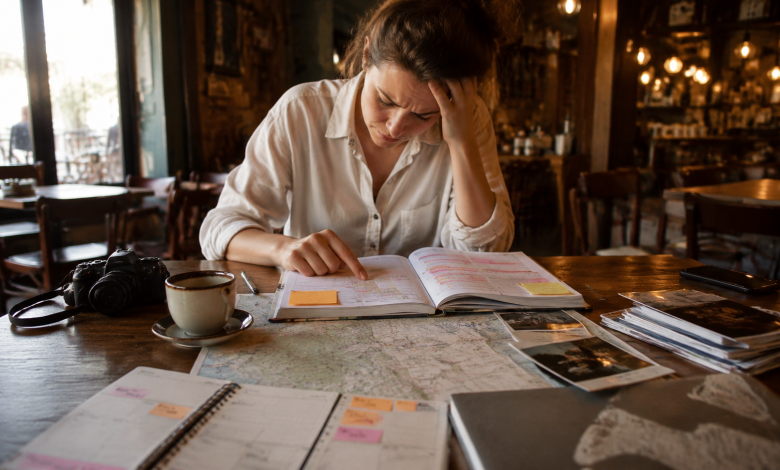
There’s a particular kind of traveler you’ve probably met or maybe you are that traveler. The one who has a color-coded spreadsheet, a laminated itinerary, restaurant reservations booked two months out, and a fifteen-minute buffer built into every single activity. The one who lands in a foreign city and immediately consults the schedule rather than the window.
This person isn’t irrational. Planning offers comfort. It converts the enormous, slightly terrifying blank space of an unknown place into something manageable. But somewhere along the way, the plan stopped being a tool and became the whole point. And when that happens, you stop traveling. You start executing.
The Illusion of Control in an Uncontrollable World
Travel, by its very nature, resists being managed. Cities don’t perform oncue. The sun doesn’t wait for your golden-hour photography window. The hole-in-the-wall trattoria you read about in a 2019 blog post has closed, and the family who ran it moved to the countryside. Life happens at its own tempo, and places real, living, human places refuse to be frozen into the version that existed when someone wrote them up for a listicle.
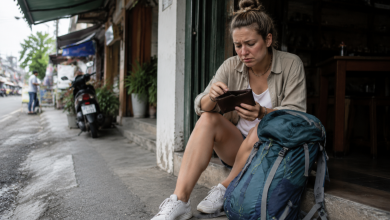
The overplanner doesn’t just miss the unexpected. They often end up resenting it. Every deviation from the schedule registers as a failure, a loss, something that needs to be corrected rather than explored. A train delay becomes a catastrophe instead of an unplanned afternoon in a town you never intended to visit. A wrong turn becomes a problem to fix rather than a side street that leads somewhere genuinely strange and lovely.
There’s a psychological term worth knowing here: loss aversion. Behavioral economists have shown that humans feel the pain of a loss roughly twice as strongly as the pleasure of an equivalent gain. When you’ve planned every hour of a trip, any disruption becomes a loss you feel robbed of the scheduled experience. But when you hold the day more loosely, the unexpected becomes a gain. Same event, completely different emotional experience.
What Gets Lost When You Script Everything
The best travel stories almost never begin with “so I did exactly what I planned.” They begin with “we almost didn’t go in, but” or “the guy at the coffee shop told us about this place” or “we got completely lost and ended up at this festival.”
Those moments can’t be pre-ordered. They emerge from friction, from boredom, from gaps in the day where nothing has been scheduled and your senses start paying attention again. When every hour is accounted for, there’s no space for the city to surprise you. You move through it like a tourist executing a to-do list, checking boxes, collecting sights, but never quite arriving.
Serendipity isn’t magic. It’s the product of availability of being present enough and unscheduled enough to notice what’s actually happening around you. The afternoon you wander into a neighborhood market and spend two hours talking to a fabric vendor. The evening your dinner reservation falls through and you end up at a plastic-table restaurant that turns out to serve the best meal of the trip. These things require a kind of openness that hyper-planning systematically closes off.
There’s also something to be said about the tyranny of other people’s opinions embedded in overly researched itineraries. Most online travel content is optimized for engagement, not authenticity. The “top ten must-see spots” in any major city are top-ten because they photograph well and because enough people have already validated them. There’s nothing wrong with visiting famous places, but when your entire trip is assembled from pre-approved experiences, you’re essentially touring someone else’s highlight reel rather than discovering your own.
The Case for a Looser Framework
None of this is an argument for showing up somewhere with no preparation and hoping for the best. That’s not freedom that’s just a different kind of anxiety. The goal isn’t to plan nothing. It’s to plan less, and to plan differently.
Think of it as the difference between a skeleton and a straitjacket. A skeleton gives the trip shape. You know roughly where you’re staying, you have a sense of the neighborhoods, you’ve identified two or three things you genuinely care about seeing. That’s enough. The flesh the actual texture of the experience gets added in real time, by the place itself, by the people you meet, by the version of you that shows up and decides what feels right that day.
Some of the most experienced travelers in the world operate this way. They book accommodation and flights because logistics matter, but they leave entire days unscheduled. They ask locals where they actually eat, not where they tell tourists to go. They follow their mood. They allow themselves to spend four hours in a small museum they stumbled into that wasn’t on any list, because something in it grabbed them.
The willingness to be grabbed by something unplanned, unreviewed, un-instagrammed is actually a skill. It atrophies if you don’t use it. And the more trips you take on total autopilot, executing someone else’s curated version of a place, the harder it becomes to trust your own instincts on the road.
Boredom as a Travel Strategy
This one will sound counterintuitive. Build boredom into your trip on purpose.
Not the kind of boredom that comes from poor planning or a long layover you didn’t account for. Deliberate, structured idleness. An afternoon with nothing on it. A morning where the plan is simply to walk until you feel like stopping. A day near the end of the trip that you refuse to fill in advance.
Boredom is the condition under which your actual preferences emerge. When you’re not being carried from one organized experience to the next, you have to figure out what you actually want. And that process small, unglamorous, a little uncomfortable is where travel starts to become genuinely personal rather than generic.
Sit in a square and watch the city move without documenting it. Get a coffee somewhere unremarkable and stay longer than is efficient. Let the afternoon get slow. The rhythm of a place only reveals itself when you’re not rushing to meet your next scheduled experience.
The Permission You’re Waiting For
For a lot of people, the real reason every trip gets over-planned isn’t logistics it’s anxiety management. The unknown is uncomfortable. The fear of “wasting” limited vacation time is real. Flights and hotels are expensive, and it feels irresponsible to leave things to chance when you only have ten days.
But consider what you’re actually protecting when you lock down every hour. You’re protecting yourself from the discomfort of uncertainty. And that discomfort, slightly leaned into rather than avoided, is often exactly what makes a trip feel like travel rather than a very expensive checklist.
The trips that change people the ones that get told and retold, the ones that shift how someone sees the world are almost never the trips that went exactly according to plan. They’re the ones where something went sideways and turned out better. Where the mistake became the story. Where the empty afternoon became the whole point.
You don’t need a tighter itinerary. You need a little more trust in the place, in the people you’ll encounter there, and in your own ability to figure things out as they come. The best version of your trip is probably hiding somewhere just past the edge of your spreadsheet.