The Ultimate Training Wheels Countries for First-Time Solo Backpackers
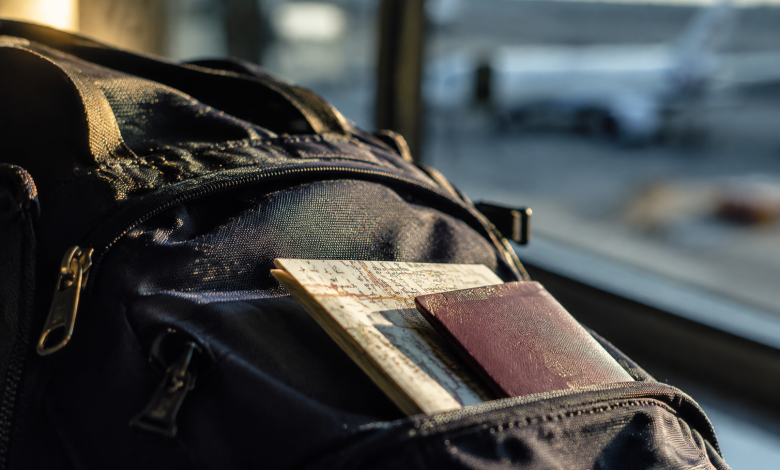
There’s a moment every first-time solo backpacker knows. You’re standing in an airport, boarding pass in hand, and it suddenly hits you that there’s no one to turn to, no one to split the map-reading with, no one to remind you where you packed your passport. The freedom is intoxicating. The fear is real.
That combination thrilling yet terrifying is precisely why destination choice matters so much on your first solo trip. Go somewhere too chaotic and you might burn out before week two. Go somewhere too easy and you won’t actually grow. The countries that thread that needle are the ones backpackers quietly pass down to each other like a well-worn secret: places with enough infrastructure to catch you when you fall, enough culture shock to genuinely stretch you, and enough of a backpacker community that you’ll never feel truly alone.
These are the training wheels countries. Not because they’re boring. Because they’re smart.
Why Portugal Keeps Showing Up at the Top of Every List
Portugal has a particular gift for making newcomers feel competent. Lisbon and Porto are navigable on foot in a way that few capital cities are, and the locals have an almost uncanny patience with confused tourists attempting broken phrases. English is widely spoken, which removes one layer of anxiety without eliminating the experience of being genuinely foreign.
But the real reason Portugal works for solo first-timers isn’t the language. It’s the texture of the place. You’re constantly surrounded by evidence that you made a good decision the pastéis de nata at a counter in Belém, the tram grinding up a hill in Alfama, the Atlantic wind coming off the cliffs at Sagres. Portugal gives you small, concrete wins every day. That matters when you’re learning to trust your own instincts.
The hostel culture here is also exceptionally well-developed. You can spend a week in Lisbon, hop a bus to the Algarve, and find the same warm social ecosystem waiting for you people swapping tips, forming day-trip groups, sharing bottles of wine on rooftop terraces. For someone who hasn’t yet learned how to manufacture solo social connection from scratch, Portugal provides the scaffolding.
Southeast Asia: The Backpacker Superhighway Still Delivers
Thailand, Vietnam, and Indonesia have been absorbing nervous first-timers for decades, and the infrastructure they’ve built around backpacker travel is genuinely remarkable. This is a region that has learned, through millions of encounters, exactly what a solo traveler needs: cheap guesthouses with communal areas, tuk-tuk drivers who know the name of your hostel, night markets where a full meal costs less than a coffee back home.
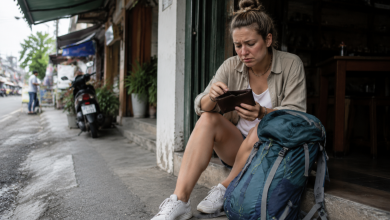
Thailand specifically functions as a kind of orientation program. Bangkok is overwhelming but forgiving every mistake you make there has an obvious correction. Got on the wrong MRT line? The stations are color-coded. Accidentally ordered something you can’t eat? Point at something else. The city has an almost infinite tolerance for beginner errors, and that tolerance is a gift.
What Southeast Asia teaches that Portugal doesn’t is how to sit inside genuine discomfort. The heat, the noise, the sensory density of a market in Chiang Mai or a street in Hanoi these things can’t be managed away. You just have to breathe through them. That’s a different kind of lesson, and it’s one that will serve you in every hard destination you visit afterward.
The Banana Pancake Trail the well-worn route connecting popular spots across the region is often criticized by experienced travelers for being too easy, too touristy, too insulated. That criticism is fair and also completely beside the point for a first-timer. You need a trail before you can go off it.
New Zealand for the Traveler Who Needs Nature More Than Chaos
Not everyone learns best by plunging into a crowded city. Some people need wide open space to find their footing, and for them, New Zealand is the obvious answer. It is, by almost any measure, one of the safest and most logistically straightforward countries on earth. The roads are clear, the people are direct, the hiking infrastructure is world-class, and the country seems almost architecturally designed for solo adventurers.
The Milford Track, the Tongariro Alpine Crossing, the Abel Tasman Coast Track these routes have established hut systems, detailed trail maps, and a steady stream of fellow hikers. You’re technically alone but practically surrounded. That’s the sweet spot for a certain type of person: enough solitude to feel the weight and the freedom of your own company, enough human presence to never feel genuinely stranded.
New Zealand also has something quietly important for first-time solo travelers: a culture that treats competent outdoor behavior as a baseline social expectation. When you rent gear, buy a DOC hut pass, and check the weather before heading out, you start to feel like someone who knows what they’re doing. That feeling earned, not simulated builds the kind of confidence you’ll need when the training wheels eventually come off.
Japan: The Outlier That Somehow Always Works
Japan seems like it should be hard. The language is genuinely inaccessible, the writing system is impenetrable to most Western travelers, and the cultural codes around behavior are real and layered. Yet Japan consistently appears on solo travel recommendation lists, and there’s a reason for that.
Japan is safe in a way that doesn’t just mean low crime. It means systems work. Trains run on time, often to the minute. Convenience stores have hot food, ATMs, and phone chargers. Addresses that look impossible to parse can usually be solved with Google Maps and a patient local. The country has a deep social contract around public order and mutual courtesy, and that contract extends to lost-looking tourists in a way that isn’t pity it’s just how things work there.
For a solo traveler learning to read a new environment, Japan offers clean feedback loops. The chaos is manageable. The confusion is temporary. And when you successfully navigate the Shinkansen from Tokyo to Kyoto, figure out which type of ramen shop to duck into on a cold night, and manage your first ryokan check-in in broken Japanese and enthusiastic gestures you walk out the other side feeling genuinely capable.
What All These Places Have in Common
None of these countries are easy in the sense of being empty experiences. Portugal has history dense enough to spend a lifetime in. Southeast Asia has genuine complexity behind the tourist trail. New Zealand can kill you if you treat it casually. Japan is, in many ways, a destination that reveals more the more you bring to it.
What they share is a favorable ratio of challenge to support. They ask enough of you to grow. They provide enough structure that the growth doesn’t tip into collapse. And they tend to attract travelers who are in the same early stages curious, slightly nervous, hungry to figure things out which creates a social environment where learning is normalized and mistakes are survivable.
The concept of training wheels is sometimes treated as embarrassing, like an admission that you’re not ready for the real thing. That framing is wrong. Every seasoned backpacker who’s navigated a 48-hour local bus journey through a country where they don’t speak a word started somewhere that felt manageable. The skill isn’t innate. It’s built, incrementally, in places that were forgiving enough to let the building happen.
Choose your first destination well. The confidence you carry out of it will take you everywhere else.