
The Safest Way to Clean Your Gold and Silver Chains at Home
Why Your Chains Look Dull (And Why That’s Normal)
There’s a moment most of us know too well. You open your jewelry box or pull a chain from the dish on your nightstand, and the piece that once caught the light like a tiny river now looks flat. Muted. Maybe there’s a faint darkening along the links, or a film that wasn’t there six months ago. Your first instinct might be to grab whatever cleaner lives under the kitchen sink. That instinct is worth ignoring.
Gold and silver react to the world differently, but both accumulate the residue of daily life. Skin oils, lotions, perfume, sweat, humidity, even the sulfur compounds floating around in city air. Silver tarnishes because it bonds with sulfur at the molecular level, forming silver sulfide on the surface. Gold, particularly lower-karat gold alloyed with copper or nickel, oxidizes more subtly. The result is the same visual disappointment: a chain that has lost its voice.
Understanding why the dulling happens matters because it shapes how you respond. You’re not removing damage in most cases. You’re dissolving or lifting a surface layer that doesn’t belong. The chain underneath is almost always fine. That distinction should relax you. Cleaning jewelry at home isn’t surgery. But it does require a gentle hand and the right chemistry.
Gold Chains: The Warm Bath Approach
Gold is more forgiving than people assume. Pure24-karat gold doesn’t tarnish at all, which is part of why civilizations have obsessed over it for millennia. But most gold chains are 14K or 18K, meaning they contain alloy metals that can react to environmental exposure. The good news is that a basic soak handles the vast majority of buildup.
Fill a small bowl with warm water. Not hot. You want it comfortable to the touch, somewhere around body temperature. Add two or three drops of plain dish soap. Nothing with added moisturizers or antibacterial agents. Dawn original works. So does any unscented castile soap diluted appropriately.
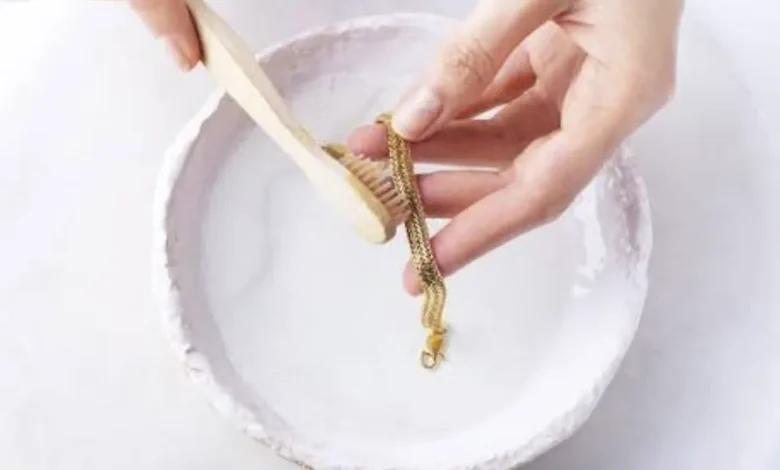
Drop the chain in and let it sit for fifteen to twenty minutes. This isn’t a step to rush. The soak loosens oils that have settled into the tinycrevices between links, particularly in rope chains, figaro chains, or anything with a braided or interlocking pattern where grime loves to hide. After soaking, use a soft-bristled brush. A baby toothbrush is ideal. The bristles are flexible enough to reach between links without scratching. Brush gently in the direction of the chain’s natural movement.
Rinse under lukewarm running water. Pat dry with a lint-free cloth. Not paper towel. Paper towel leaves microscopic fibers that cling to the links and dull the finish you just worked to restore.
One thing worth noting: if your gold chain has gemstones, pearls, or any porous material attached, skip the soak entirely. Pearls absorb water. Certain soft stones can crack with temperature changes. For gem-set gold chains, a damp cloth wiped carefully along the metal is a safer route.
Silver Chains: Tarnish Has a Nemesis
Silver demands a slightly different philosophy. Where gold cleaning is about removing oil and residue, silver cleaning often involves reversing a chemical reaction. That dark layer isn’t dirt. It’s silver sulfide, and it’s bonded to the surface at a molecular level. You can’t just wash it off with soap.
The baking soda and aluminum foil method is genuinely effective here, and it works through electrochemistry rather than abrasion. Line a shallow dish with aluminum foil, shiny side up. Lay the silver chain flat on the foil, making sure it makes physical contact with the aluminum. Pour boiling water over the chain until it’s submerged, then sprinkle a tablespoon of baking soda into the water.
What happens next is a small-scale electrochemical reaction. The aluminum acts as a sacrificial metal, pulling the sulfur atoms away from the silver and bonding with them instead. You might see tiny bubbles. You might smell something faintly like rotten eggs. That’s the sulfur releasing. Within three to five minutes, most light-to-moderate tarnish will have transferred from your chain to the foil.
Remove the chain with plastic tongs or your fingers once the water has cooled enough. Rinse thoroughly under running water and dry immediately with a soft cloth. Leaving silver wet invites new tarnish faster.
For heavier tarnish that the foil method doesn’t fully resolve, a paste of baking soda and water applied with a soft cloth can work as a mild abrasive. But go carefully. Silver is softer than most people realize. Aggressive rubbing, especially with a gritty paste, can leave hairline scratches that accumulate over time and give the surface a cloudy appearance rather than a clean shine.
What You Should Never Use
The internet is full of cleaning hacks that sound clever and cause real damage. Toothpaste is the most persistent myth. Standard toothpaste contains silica-based abrasives designed to polishenamel off teeth. Those same abrasives scratch soft metals. The scratch marks trap light unevenly, making the piece look worse after cleaning than before.
Bleach and chlorine are equally destructive. Chlorine attacks the alloy metals in gold and can cause pitting, especially in lower-karat pieces. Sterling silver exposed to bleach can discolor permanently in ways that go beyond surface tarnish.
Vinegar shows up in DIY cleaning lists constantly. It works on some materials, but its acidity can etch silver if left too long, and it’s entirely unnecessary for gold when soap and water handle the job without risk.
Ultrasonic cleaners deserve a more nuanced mention. They work well for solid gold chains without stones. The high-frequency vibrations dislodge debris from between links effectively. But they’re risky for anything delicate: hollow chains, chains with micro-pavé settings, antique pieces with worn solder joints. The vibration can loosen stones or even fracture fragile links. If you own one, use it selectively rather than as a default.
The Difference Between Clean and Polished
There’s a distinction worth drawing here that most guides skip over. Cleaning removes what shouldn’t be there. Polishing reshapes the surface to reflect light more uniformly. They are not the same process, and conflating them leads people to over-polish pieces that only needed a bath.
Every time you polish metal, you remove a microscopic layer of material. On a thick solid chain, that’s negligible over a lifetime. On a plated chain, it can wear through the plating in months. On a delicate vintage piece, polishing removes the patina that actually contributes to its character and value.
If your chain looks clean but still doesn’t gleam the way it once did, the issue might not be cleanliness. It might be micro-scratches from years of wear. A professional jeweler can buff those out with proper equipment and a trained eye. Attempting to polish at home with compounds not designed for fine jewelry usually makes things worse.
Knowing when to clean and when to take a piece to a professional is its own form of care.
Storage as Prevention
The best cleaning routine is one you rarely need. How you store chains between wears determines how fast they tarnish, tangle, and collect grime.
Silver benefits enormously from anti-tarnish strips or cloths placed in the storage container. These strips absorb sulfur from the air before it reaches the metal. A ziplock bag with the air pressed out works surprisingly well for silver pieces you don’t wear often. The less air exposure, the slower the tarnish.
Gold chains should be stored individually. Not tossed together in a dish, not piled in a drawer. Chains rubbing against each other create the micro-scratches mentioned earlier. A soft pouch for each piece, or a jewelry box with separated compartments, preserves the finish for years.
Both metals benefit from being the last thing you put on and the first thing you take off. Perfume, hairspray, sunscreen, moisturizer: let all of it dry and absorb before the chain goes on. At night, remove jewelry before washing your face or showering. These small habits reduce cleaning frequency dramatically.
A Realistic Maintenance Schedule
You don’t need to clean your chains weekly. For pieces worn daily, a gentle soap-and-water cleaning once a month keeps gold bright. Silver worn regularly might need the foil treatment every two to three months, depending on your body chemistry and environment. People whose sweat is more acidic will notice faster tarnishing. Humid climates accelerate the process for everyone.
Between deep cleans, a quick wipe with a dry polishing cloth after each wear removes oils before they settle in. It takes ten seconds and saves you from needing the baking soda bowl at all for long stretches.
The goal isn’t perfection. Jewelry that gets worn develops character. Small signs of life on a chain aren’t flaws. They’re evidence that the piece is doing what it was made to do. The cleaning is just maintenance, a way to keep the metal honest to its own nature without erasing the story written into it by daily wear.