The Science Behind Choosing the Perfect Marathon Trainer
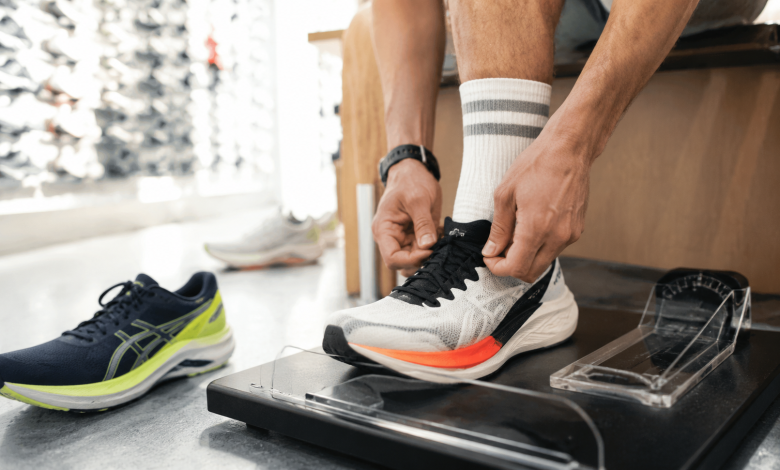
There’s a moment every marathon runner knows well standing in a specialty running store, surrounded by dozens of shoes, and realizing you have absolutely no idea which pair will carry you through 26.2 miles without destroying your body. The salesperson points to a few options, maybe watches you walk a few steps, and suddenly you’re holding a box that costs $180 and a lot of hope. Most people leave trusting their gut. But your gut, it turns out, knows very little about biomechanics.
Choosing the right marathon trainer isn’t a lifestyle decision. It’s a physiological one. And once you start looking at it through that lens, the entire process changes.
The Foot Is Not a Simple Machine
The human foot contains 26 bones, 33 joints, and more than 100 muscles, tendons, and ligaments. When you run, it absorbs roughly three times your body weight with every footfall. Over the course of a marathon, that adds up to something in the neighborhood of 50,000 individual impacts.
What this means practically is that no two runners have the same biomechanical needs. Arch height, heel width, toe splay, the way your ankle rolls inward (pronation) or outward (supination) all of these factors shape how force travels through your lower body. A shoe that works brilliantly for a high-arched runner with a neutral gait can accelerate injury for someone who overpronates. The design decisions inside a marathon trainer the stack height, the heel-to-toe drop, the midsole density aren’t arbitrary. They’re engineering choices that interact directly with your individual anatomy.
This is why the old rule of “buy what the elites wear” breaks down almost immediately. Professional runners are selected partly because their biomechanics happen to suit efficient running form. Their shoe choices reflect their bodies. Yours has to reflect yours.
Stack Height and the Drop Debate
Two of the most debated numbers in marathon footwear are stack height and heel-to-toe drop, and they’re worth understanding because they affect your body in ways you’ll feel after mile 18.
Stack height refers to the total thickness of material between your foot and the ground. Modern super shoes and premium marathon trainers have pushed stack heights well above 35mm, which offers substantial cushioning for long efforts but also changes proprioception your foot’s ability to sense the ground and make micro-adjustments. More cushion isn’t automatically better. For runners who rely on ground feel to regulate their stride, excessive stack can actually increase injury risk by masking feedback that the nervous system needs.
Heel-to-toe drop is the difference in height between the heel and the forefoot. A zero-drop shoe places your heel and toes on the same plane, essentially mimicking barefoot mechanics. A 10–12mm drop, historically standard in stability trainers, reduces demand on the Achilles tendon and calf complex. Neither is inherently superior. What matters is what your body has adapted to.
Runners who suddenly shift from a10mm drop to a 4mm drop in training often chasing the promise of more natural biomechanics frequently end up with Achilles tendinopathy orcalf strains, not because the lower drop is wrong for them, but because the transition was too fast for their connective tissue to adapt. The science here is about tissue loading rate, and it doesn’t care about your timeline.
Pronation: Misunderstood and Over-Corrected
For decades, overpronation was treated as the root cause of most running injuries, and the solution was motion control shoes stiff, heavy trainers built to limit inward ankle roll. The marketing was convincing. The evidence, less so.
Research over the past 15 years has complicated this picture significantly. A landmark study published in the British Journal of Sports Medicine followed over 900 runners across a year of training and found that runners assigned to neutral shoes based on their foot type (including those with flat feet often presumed to need support) had no higher injury rates than those assigned motion control or stability shoes. Some analyses suggest that moderate pronation is a natural shock-absorption mechanism, and correcting it aggressively may simply redirect stress elsewhere in the kinetic chain.
This doesn’t mean stability features are useless they provide real benefit for runners with significant overpronation or those recovering from specific lower-leg injuries. What it does mean is that buying a motion control shoe simply because your arch looks low is an oversimplification that biomechanical science no longer supports. The gait analysis that matters isn’t just watching whether your ankle rolls it’s watching how your entire chain responds under fatigue, which changes dramatically between miles5 and 22.
Cushioning, Carbon, and the Long Run
The emergence of carbon-fiber plate technology has changed how runners think about marathon trainers. What was once strictly race-day footwear has migrated into high-end training shoes, with brands offering plated daily trainers that promise both energy return and durability. The science behind carbon plates involves the interplay between plate stiffness and midsole foam compression the plate acts as a lever, storing and releasing energy in the toe-off phase of your stride.
But here’s what the research suggests about using these shoes for marathon training specifically: they change your muscle recruitment patterns. A2020 study in the Journal of Science and Medicine in Sport found that highly cushioned, carbon-plated shoes reducedcalf activation compared to traditional trainers. This is fine maybe even advantageous on race day. Over hundreds of miles of training, however, it can lead to deconditioning of exactly the muscles that protect your joints when the shoes come off. Many coaches now recommend cycling between a plated trainer and a more minimal, responsive shoe precisely to prevent this adaptive shortfall.
The perfect marathon trainer, in this context, might not mean a single perfect shoe. It might mean a rotation built around your training phases.
Fit as a Biomechanical Variable
Shoe fit is usually treated as a comfort issue. In reality, it’s a performance and injury variable with measurable consequences.
The general guideline of a thumb’s width of space at the toe exists because feet swell during long runs blood pooling, heat expansion, and the cumulative effect of impact all increase foot volume. Runners who lace their marathon trainers the same way they lace dress shoes are regularly setting themselves up for black toenails and subungual hematomas, problems that sound cosmetic but can end a training cycle.
Width matters too, and it’s where the running industry has historically underserved a large portion of the running population. A foot that spreads naturally at toe-off, when crammed into a standard-width toe box, loses its ability to generate propulsive force efficiently. The metatarsal heads can’t splay, the flexor tendons can’t load properly, and over time, neuromas and metatarsalgia become familiar words. Several brands have responded to this with wider toe boxes that preserve natural foot spread and for many runners, this single change has been more transformative than any stack height or stability feature.
The last shape of the shoe the three-dimensional form around which it’s constructed needs to match the three-dimensional shape of your foot. A curved last on a foot that naturally sits straight creates rotational stress through every stride. This is measurable. It shows up in gait labs. It rarely shows up on the box.
What Testing Actually Looks Like
The gap between what consumers can access and what biomechanics research can measure is still significant, but it’s narrowing. Pressure mapping insoles, 3D foot scanning, high-speed treadmill cameras these tools exist in specialty running stores and sports medicine clinics and provide genuinely useful data. If you’re investing serious time and money in marathon training, a single session with a qualified running gait analyst is worth more than a hundred online reviews.
The honest version of shoe selection involves running in candidates not just walking because the dynamics of running engage your foot and ankle in ways that standing analysis simply can’t capture. Most reputable running stores will allow outdoor test runs. If they won’t, go somewhere that will.
Mileage testing matters too. A trainer that feels perfect at two miles may show its limitations at twenty. Breaking in a marathon trainer over 50 to 80 miles before race day allows both the shoe and your foot to reach a stable relationship. The cushioning materials settle, the upper conforms, and any emerging pressure points reveal themselves with enough time to course-correct.
The runner who approaches shoe selection as a science experiment gathering data, testing hypotheses, adjusting variables will consistently make better choices than the one chasing trends or brand loyalty. Your marathon trainer isn’t a piece of equipment you wear. It’s an interface between your biology and the ground beneath you, and it deserves exactly that level of careful consideration.