
The Best Kept Secrets of Student Discounts Worldwide
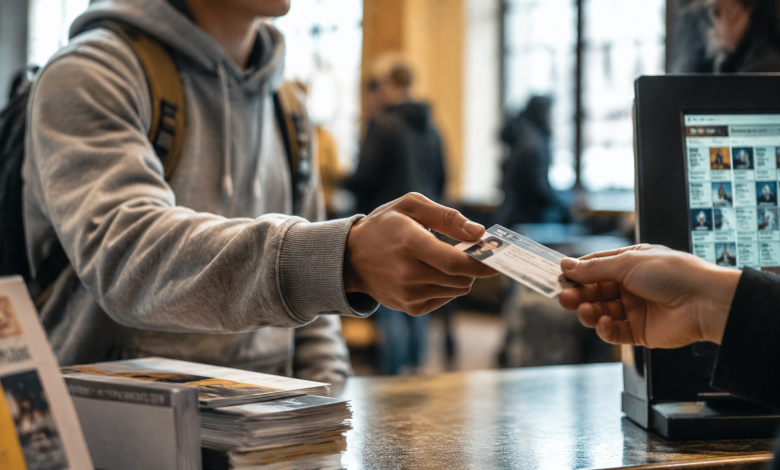
Most students know about the basics. Flash your ID at a movie theater, get a few dollars off a museum entrance, maybe snag a cheaper Spotify plan. That’s the surface level the part everyone talks about. But beneath that obvious layer sits an entire underground economy of student savings that most people graduate without ever discovering. Some of it is hiding in plain sight. Some of it requires knowing where to look, or simply having the nerve to ask.
This is about the deeper game.
The Psychology Behind Why These Deals Exist
Before diving into what’s out there, it helps to understand why companies offer student discounts at all. It’s not charity. It’s one of the smartest long-term marketing plays in the book.
Students are, financially speaking, in a transitional state. They don’t have much money right now but the brands they adopt during college tend to stick. Research in consumer behavior consistently shows that brand loyalty formed between ages 18 and 24 is remarkably durable. A student who gets hooked on Adobe Creative Cloud at a steep discount is likely to become a full-paying professional subscriber after graduation. Same logic applies to software companies, streaming services, banks, and even airlines.
This means companies are actually motivated to keep some of their best student deals quiet. Broad advertising would attract exploitation from non-students. Instead, the best deals flow through word of mouth, niche forums, and student portals that require verification. The fact that these deals aren’t splashed across billboards is by design, not by accident.
Software and Tech: The Iceberg Beneath the Surface
The tech sector is where student discounts get genuinely remarkable, and where most people miss the full picture.
Everyone knows that Microsoft365 and Spotify offer student pricing. Fewer people realize that JetBrains the company behind IntelliJ IDEA, PyCharm, and a suite of professional development tools used by working engineers worldwide offers all of its products completely free to students and educators. Not a stripped-down version. The full professional suite. GitHub’s Student Developer Pack bundles dozens of paid tools, cloud credits, and domain registrations into a single free package that, if priced individually, would run well over a thousand dollars annually.
Then there’s Figma, the design tool that’s become the industry standard. Students get access to the full professional plan at no cost. Canva Pro is free. Notion, which charges teams handsomely for workspace features, opens the same tier to verified students without charge.
What’s interesting is that the generosity scales with how competitive the market is. In spaces where multiple tools are fighting for the same users design software, developer environments, productivity platforms companies are practically bidding for student loyalty. The student with a .edu email address is sitting on something valuable without realizing it.
Travel: The Geography of Savings Most Students Ignore
The International Student Identity Card, known as the ISIC, has existed since 1953. It’s recognized in over 130 countries. And it remains one of the most underused travel tools available to students anywhere in the world.
With an ISIC card, students can access discounts on rail travel across Europe, reduced admission at thousands of museums and cultural sites, cheaper hostels, and negotiated rates on flights through partner agencies. In certain countries Greece, Turkey, and much of Eastern Europe showing an ISIC card at a heritage site will cut the entrance fee in half or eliminate it entirely. Egypt offers free entry to some archaeological sites. Several national rail networks in Europe have student-specific passes that aren’t prominently marketed but exist and are honored.
The mistake most students make is treating air travel as a fixed cost. It often isn’t. STA Travel operated for decades as a student-focused booking agency specifically because airlines were willing to negotiate unpublished fares for the student demographic. Some of these channels still exist through successor agencies. Budget carriers in Southeast Asia, particularly in Thailand, Vietnam, and Indonesia, have periodic student fare campaigns that never appear on mainstream booking platforms they circulate through university bulletin boards and local student Facebook groups.
Buses, too. FlixBus in Europe and comparable operators in South America frequently offer youth and student prices that require nothing more than a valid student email to activate. The savings on a month of regional travel can be substantial.
Banking and Financial Services: The Deals Nobody Advertises
This is the category students most consistently overlook, probably because finance feels less exciting than travel or tech.
Several major banks in the United States, United Kingdom, Canada, and Australia offer fee-waived accounts specifically for students accounts that charge no monthly maintenance fees, no minimum balance penalties, and sometimes come with overdraft buffers. The catch is that many of these perks are never mentioned unless you ask. Walk into a bank branch, or navigate to the student section of a bank’s website rather than the general homepage, and a different set of offerings appears.
In the UK, student bank accounts often come with interest-free overdraft facilities of up to £1,500 or more. This isn’t a loan. It’s a buffer that many banks quietly extend to student customers because they’re betting on long-term relationship value. Students who open an account at18 and have a positive experience stay for decades.
Amazon Prime deserves a mention here too, sitting at the intersection of tech and financial services. The student version is half the standard price and comes with a six-month free trial. Given what Prime membership actually includes streaming, next-day delivery, photo storage, reading services the effective per-feature cost becomes remarkably low.
The Verification Loophole That’s Changing Everything
Here’s where things get particularly interesting from a structural standpoint.
For years, student discounts were self-policed or enforced through physical ID checks. That created gaps. Now, most tech companies have shifted to third-party verification services like UNiDAYS and Student Beans, which cross-reference enrollment databases from thousands of institutions worldwide. At first glance, this tightened the system. But what it also did was create a single login that unlocks deals across hundreds of brands simultaneously.
Students who set up a UNiDAYS account and systematically work through the brand directory often find discounts they had no idea existed. Not just the obvious categories. Eyewear brands. Athletic clothing companies. Insurance providers. Food delivery platforms. Furniture retailers. Some of the discounts are modest. Others particularly in apparel and electronics run to30 or 40 percent off.
The architecture of these platforms means the discount is already negotiated and waiting. The student just hasn’t clicked through yet.
The Countries Where Student Status Is Practically a Currency
Student discounts aren’t uniformly distributed around the world. In some countries, they’re minor perks. In others, student status functions almost like a parallel economic category.
France is perhaps the most comprehensive example. French students benefit from subsidized campus restaurants where a full meal costs under two euros, government-assisted housing allowances, reduced public transit passes in major cities, and discounted access to cultural venues through a national scheme. The French state has essentially decided that students represent a distinct economic category deserving structural support, not just commercial perks.
Germany operates similarly. Public transportation discounts, subsidized healthcare through student insurance schemes, and free or heavily discounted access to university libraries and cultural institutions are baked into the educational infrastructure. International students studying in Germany often find themselves in a discount ecosystem far richer than what they had back home.
Japan’s student discount culture runs deep in a different direction less government-structured, more commercially embedded. Electronics stores, transit passes, and entertainment venues all have tiered student pricing that locals take for granted and foreign students frequently don’t discover until late in their studies.
The lesson is consistent: the local discount landscape rewards the curious and the proactive. Most of it doesn’t come to you. You go to it.
Making the Most of a Finite Window
Student status is temporary. Four years, maybe six. Then the .edu address expires, the verification services lock you out, and the window closes.
The students who extract the most value aren’t necessarily the ones with the tightest budgets they’re the ones who treat their student status as a finite asset worth actively managing. They set up verification accounts early. They ask at the point of purchase whether a student rate exists, even when no sign advertises one. They explore international card systems before traveling. They read the terms on their bank accounts.
There’s an irony buried in all of this. The discounts designed to build brand loyalty often fail at exactly that goal when students don’t know they exist. A software company that gave a student free access for four years has a customer for life but only if the student knew about and used the product. The secret is only useful once it’s found.