The Truth About DIY Face Masks: Natural Doesn’t Always Mean Safe.
The Truth About DIY Face Masks: Natural Doesn’t Always Mean Safe.
The Kitchen-to-Skincare Pipeline We Normalized Without Question
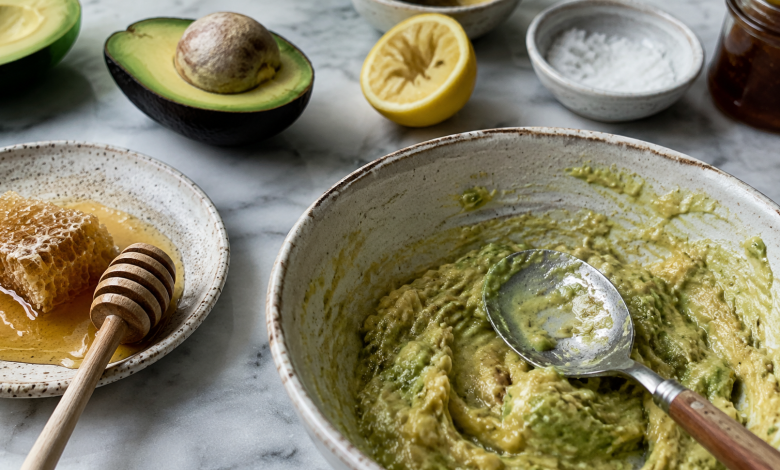
There’s a ritual comfort to it. You slice open an avocado, mash it with a fork, squeeze in some lemon juice, maybe stir in a spoonful of honey and suddenly you’re doing something that feels both indulgent and virtuous. No chemicals. No unpronounceable ingredients. Just food. Just nature. The logic seems airtight: if it’s safe to eat, it must be safe on your face.
That logic, unfortunately, is wrong. And the gap between what feels true and what is true has left a lot of people with chemical burns, chronic irritation, and allergic reactions they never saw coming all in the name of going natural.
The DIY face mask movement didn’t appear from nowhere. It grew out of something real: a legitimate distrust of the cosmetic industry, a desire for transparency in ingredients, and an economic instinct to avoid spending forty dollars on a clay mask when you have ingredients at home. Those instincts aren’t irrational. But somewhere along the way, “natural” became a synonym for “harmless,” and that conflation has consequences.
Your Skin Is Not a Cutting Board
Skin and a digestive system operate under completely different rules. The stomach is built to handle acids it produces hydrochloric acid on its own. The skin is not. Its surface maintains a pH of roughly 4.5 to 5.5, a mildly acidic environment that protects against bacteria, locks in moisture, and keeps the barrier function intact. Disrupt that balance and you don’t just cause temporary redness. You can compromise the skin’s ability to protect itself for weeks.
Lemon juice is one of the most commonly recommended DIY ingredients, and also one of the most damaging. Its pH sits around 2, which is aggressive enough to strip the acid mantle, sensitize skin to UV radiation, and in some cases cause phytophotodermatitis a chemical burn triggered when citrus compounds on the skin are exposed to sunlight. The burn can leave hyperpigmentation that persists for months. Dermatologists see these cases regularly, often from people who had no idea a “brightening” lemon mask could do this.
Baking soda is the alkaline counterpart to that problem. Popular in masks and scrubs for its supposedly pore-cleansing properties, it sits at a pH of around 9. Applied to the face, it disrupts the acid mantle from the opposite direction, stripping protective oils and triggering the kind of dryness and irritation that can take a long time to resolve. People with acne are especially vulnerable they often reach for baking soda thinking the abrasive texture will help, not realizing they’re making their barrier worse and potentially more prone to breakouts.
The Allergen Problem No One Warns You About
Essential oils are perhaps the most romanticized category in the DIY world. Tea tree, lavender, eucalyptus, rose hip they sound gentle, they smell wonderful, and they come wrapped in the credibility of traditional remedies. Some of them do have real, studied benefits. Tea tree oil has legitimate antimicrobial properties. The problem is concentration.
In commercial skincare products, essential oils are formulated at concentrations usually below 1%, and often in the range of 0.1% to 0.5%. When someone adds a few drops of undiluted lavender oil to a homemade mask, they may unknowingly be applying a concentration ten or twenty times higher than what a professional formulator would use. Lavender oil contains linalool and linalool oxide, both of which are known contact allergens. Sensitization doesn’t always happen on the first exposure you can use something for months before your immune system decides it’s had enough and mounts a response. Once sensitized, you may react to that ingredient forever, including in commercial products that contain it at safe levels.
Cinnamon and clove are even more aggressive. Both contain compounds cinnamaldehyde and eugenol respectively that are among the most common causes of contact dermatitis. They appear frequently in “warming” DIY masks, often recommended for circulation or complexion. The warmth people feel when applying them is not a sign that the mask is working. It’s a sign that the skin is already reacting.
Raw Eggs, Honey, and the Contamination Risk Nobody Mentions
Beyond pH and allergens, there’s a more fundamental concern: contamination. Raw eggs are a staple in DIY mask recipes, praised for the protein content and the tight, lifted feeling they temporarily create on skin. But raw eggs carry Salmonella, and while intact skin provides a barrier, masks are often applied near the eyes and mouth. They’re rinsed with warm water, which opens pores. Micro-abrasions from prior scrubbing can compromise the skin’s ability to block pathogens. It’s a low probability risk, but it’s a real one and it’s entirely absent from every recipe card and beauty blog that recommends egg white masks.
Honey is more defensible. It does have real antimicrobial and humectant properties, and it’s been used medicinally for centuries. But raw honey can contain Clostridium botulinum spores, which is why it’s specifically contraindicated for infants under one year old. In adult skincare the risk is minimal, but it’s a useful reminder that even traditional, widely used natural substances come with conditions andcaveats that pop-culture DIY culture tends to erase.
Why “It Worked for Someone on the Internet” Is Not Evidence
Social media has become the primary distribution mechanism for DIY skincare, and it operates on the logic of testimonials. Someone with glowing skin tells you what they put on their face. The before-and-after images feel compelling. The comment section fills with agreement. This is not how skincare efficacy works.
Skin changes for dozens of reasons hormones, sleep, hydration, diet, seasonal changes, the placebo effect of engaging in any kind of self-care ritual. When someone starts a new mask and their skin improves, the mask gets the credit. When their skin doesn’t improve, they quietly stop posting about it. This is survivorship bias in its most straightforward form. What you see amplified online is the success stories; the reactions and failures disappear into private frustration.
There’s also a meaningful difference between short-term surface appearance and actual skin health. Egg whites temporarily tighten skin because they dry and slightly constrict the surface it looks smoother in a selfie and feels different for a few hours, but it doesn’t indicate anything about the deeper layers. Turmeric, another enormously popular DIY ingredient, can cause impressive yellow staining and also has sensitization potential in high concentrations. Many people love the “glow” it creates without realizing that glow is partly inflammation.
A More Honest Relationship With Natural Ingredients
None of this means DIY skincare is universally bad, or that natural ingredients have no place in a skincare practice. Oat-based masks are genuinely soothing colloidal oatmeal has enough clinical evidence behind it that the FDA classifies it as a skin protectant. Plain yogurt contains lactic acid, a well-studied exfoliant, though at concentrations that are generally mild enough to be well tolerated. Aloe vera gel, when properly extracted and stored, has real soothing and hydrating properties.
The difference is approaching these ingredients with the same critical thinking you’d apply to anything else. Patch test before applying anything to your full face. Recognize that natural origin does not determine safety, concentration does. Understand that your skin is not the same as someone else’s, and that the recipe that worked for someone with a different skin type, barrier function, or background may not translate.
The most honest version of “going natural” with skincare isn’t about following recipes from wellness influencers. It’s about actually understanding what’s going on at the surface of your skin what it needs, what disrupts it, and why the distinction between something being natural and something being safe is not semantic. It’s biochemical.
The kitchen will always be there. Your skin barrier, once compromised, takes considerably longer to come back.