15 Free Things to Do in the World’s Most Expensive Cities
15 Free Things to Do in the World’s Most Expensive Cities
There’s a particular kind of anxiety that sets in when you land in Zurich or Singapore or New York and realize that a glass of orange juice at the airport just cost you twelve dollars. These cities carry a reputation not entirely undeserved of existing primarily for people who never check the price tag. The skylines are dazzling, the infrastructure immaculate, the restaurants Michelin-starred. And yet the assumption that you need a bloated travel budget to genuinely experience the world’s most expensive cities is, frankly, wrong. Some of the most defining experiences these places offer cost absolutely nothing. You just have to know where to look.
Walk the Financial Districts After Dark
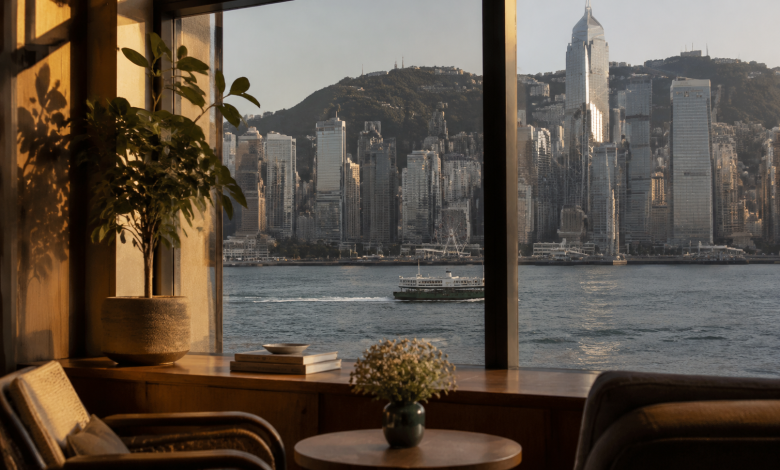
This sounds counterintuitive at first. Financial districts London’s City, Hong Kong’s Central, Manhattan’s Wall Street are typically written off as daytime-only territory, all suited commuters and corporate cafeterias. But come back after9 p.m. on a weekday, and something shifts. The streets empty out. The lighting changes. The architecture, which spends its daylight hours being photobombed by crowds, suddenly reveals itself at a human scale. You can stand beneath the Gherkin in London or gaze up at the Hong Kong and Shanghai Banking Corporation headquarters in Central without a single person in your frame. The cities’ most ambitious buildings were designed to impress. Let them.
Museum Free Days Are Not a Secret But They’re Still Underused
Every major expensive city has them. The Smithsonian institutions in Washington D.C. are permanently free. The British Museum in London charges nothing for general admission. The Museum of Modern Art in New York offers free Friday evenings. The National Museum of Singapore has free permanent gallery access. People know this in the abstract, but somehow still feel vaguely apologetic walking in without buying a ticket, as if the experience will be lesser for it. It won’t. The Elgin Marbles don’t care what you paid.
What makes these visits genuinely worthwhile is going with intention. Pick one wing. Read two placards thoroughly instead of skimming forty. The free entry isn’t a consolation prize it’s an invitation to slow down in spaces that reward slowness.
Find the Public Parks That Locals Actually Use
Not the famous ones. Or rather, not only the famous ones. Hyde Park is magnificent, but so is Hampstead Heath, which sits far enough north of central London that the tourist density drops to near zero on a Tuesday morning. Central Park gets all the attention in New York, but Prospect Park in Brooklyn designed by the same Olmsted and Vaux duo offers the same quality of landscape design with a completely different social texture. In Tokyo, Yoyogi Park fills with amateur musicians, cosplay enthusiasts, and elderly couples doing slow stretching routines every weekend. It costs nothing and delivers something that no tour package could manufacture: the unrehearsed texture of local life.
Singapore’s Botanic Gardens are a UNESCO World Heritage Site and free to enter. Zurich’s lake promenade is publicly accessible and offers views that would cost several hundred dollars a night from a hotel window. The pattern repeats across every city on the expensive-city list. The parks are there. They’re just waiting for visitors who aren’t exclusively following a guidebook.
Ride the Public Transit Like You Mean It
The subway in New York, the MTR in Hong Kong, the MRT in Singapore these are not just modes of getting from point A to point B. They are cross-sections of the city’s social fabric, and a single ride can cost the equivalent of pocket change relative to any other activity. The Hong Kong MTR is arguably the most efficient urban transit system on the planet, and for the price of a few dollars, you can ride it from the gleaming financial towers of Central out to the quiet ancestral villages of the New Territories, watching the city transform entirely over forty minutes.
In Tokyo, the Yamanote Line loops the entire central city for a few hundredyen. Sitting on it for a full circuit about an hour gives you a panoramic survey of how the city stitches itself together: the otaku density around Akihabara, the student energy near Shinjuku, the quiet residential calm of Komagome. It’s not tourism exactly. It’s something more honest than that.
Attend Free Outdoor Performances and Street Culture
This is where expensive cities quietly outperform everywhere else. The concentration of artistic talent in cities like New York, London, and Paris means that what ends up as street performance or free public programming is often genuinely world-class. Bryant Park in Midtown Manhattan runs free summer film screenings, jazz performances, and dance events. The Southbank Centre in London has free performances throughout the year in its outdoor spaces. Edinburgh’s Royal Mile during the Fringe technically the festival itself charges for shows hosts hundreds of free acts daily, ranging from acrobatics to experimental theatre.
The economics work in the visitor’s favor precisely because of what makes these cities expensive in the first place. The talent pool is enormous. The competition is fierce. The free stuff is subsidized, in a sense, by the cultural ambition of the city itself.
Explore the Neighborhoods That Tourism Hasn’t Quite Reached
Every expensive city has a neighborhood where the rent hasn’t fully caught up yet, or where a strong community identity has resisted the homogenizing pull of luxury retail. In Zurich, that’s the district of Wiedikon. In Singapore, it’s Geylang chaotic, real, and entirely free to wander. In London, Deptford and Woolwich are undergoing the early stages of gentrification but still retain a grittiness and authenticity that Shoreditch sold off years ago. In New York, the South Bronx is seeing genuine artistic and cultural revival, and walking its streets costs nothing.
These neighborhoods offer something the polished tourist zones can’t: the sense that the city is still in process, still becoming. The murals are fresher. The markets are stranger. The cafes haven’t learned to charge fifteen dollars for an oat milk latte yet.
Sit in on Open Religious and Civic Ceremonies
This is perhaps the most underrated item on any free-things list. St. Paul’s Cathedral in London offers free entry to its daily Evensong services. The city’s famous legal institutions, including the Royal Courts of Justice, allow public observation of court proceedings. In Washington D.C., the public galleries of Congress are open when in session. In Singapore, the Sri Mariamman Temple on South Bridge Road welcomes respectful visitors at no cost during non-ceremonial hours.
There’s something quietly powerful about watching a city’s institutional life from the inside, even briefly. You’re not just looking at the architecture you’re watching the actual mechanisms of culture, faith, and governance running in real time.
Use the Libraries
The New York Public Library’s main branch on Fifth Avenue is one of the great interiors on earth. The reading rooms are free to enter and use. The British Library in London allows visitor access to its permanent gallery, which includes an original Magna Carta, the Gutenberg Bible, and handwritten Beatles lyrics all behind glass, all free. The National Library of Singapore has stunning city views and air-conditioned reading spaces that cost nothing.
In expensive cities, public libraries often punch far above their weight because they were built duringeras when civic grandeur was considered a public good. That philosophy hasn’t been entirely abandoned. The buildings remain. The collections remain. The doors are open.
Chase Sunrise at the Iconic Viewpoints
Most of the world’s famous viewpoints charge admission: the Empire State Building, the Eiffel Tower, Victoria Peak tram in Hong Kong. But every city has a free version, and it’s often better. Primrose Hill in London gives you a panorama of the entire central city skyline without a ticket or a queue. Brooklyn Bridge Promenade delivers the Manhattan skyline at eye level for free. The Mount Faber ridge in Singapore offers harbor views without the Sentosa entry fee.
The trick is going at sunrise. Not because it’s more photogenic though it often is but because the city hasn’t warmed up yet. The tourists are asleep. The light is doing something extraordinary. And the whole skyline, the product of trillions of dollars of construction and ambition and competition, is yours for about forty-five minutes before the world catches up.