Texture Over Objects: The Secret to a Cozy Sleep Space
There’s a particular kind of bedroom that stays with you. Not because it was expensive, not because it was perfectly staged, but because it felt like something. Like the air was softer in there. Like your body knew, before you even pulled back the covers, that this was a place built for rest. Most people, when they try to recreate that feeling, reach for objects a new lamp, a different headboard, another throw pillow. And most people end up slightly disappointed, surrounded by nice things that somehow don’t add up to the atmosphere they were chasing.
The reason is almost always texture.
Texture is the element that interior designers talk about in hushed, almost reverent terms, and that everyone else tends to overlook entirely. We’re wired to notice shape and color first. Our eyes go to the lamp, the artwork, the furniture silhouette. But our nervous systems respond to surface. To the way light catches the weave of a linen duvet. To the subtle resistance of a chunky knit blanket when you press your palm into it. These sensory inputs don’t register consciously the way a beautiful object does they just settle over you, quietly, like the room itself is exhaling.
Why Texture Does What Objects Can’t
Objects have presence. Texture has feeling. That’s the core distinction, and it matters more than most decorating advice ever lets on.
A velvet throw draped across the foot of a bed doesn’t just look luxurious it communicates warmth before you’ve touched it. Your brain reads that surface as soft, heavy, enveloping. Contrast that with the same bed dressed with a smooth, matte coverlet in the same deep color. Visually similar. Sensorially completely different. One room whispers “sink in.” The other just stands there looking competent.
This is why so many beautifully appointed bedrooms still feel cold. The objects were chosen the sculptural nightstand, the linen-shade lamp, the art print in the right tones but the surfaces weren’t layered with any intentionality. There’s nothing for the eye to move through, nothing for the body to anticipate. Cozy is a physical promise that texture makes and objects simply can’t.
Neuroscience has a partial explanation for this. Our tactile and visual systems are deeply intertwined. We don’t just process texture when we touch something; we process it when we look at it. The brain runs what researchers call “haptic simulation” it predicts what a surface would feel like based on visual cues alone. A bedroom with rich, varied textures is literally activating your nervous system’s sense of comfort before your body has contacted a single surface. That anticipatory warmth is exactly what makes a room feel inviting rather than merely attractive.
The Layering Logic
Good texture in a bedroom isn’t about picking one beautiful material and featuring it. It’s about building a conversation between surfaces rough and smooth, matte and sheen, structured and fluid.
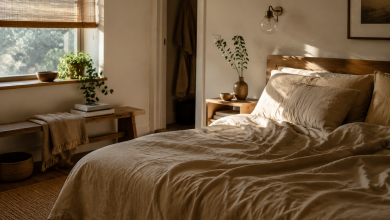
Start with the bed, since that’s where the body ultimately lands. A simple but effective framework is to think in three layers. The base layer your sheets should be something that rewards contact: washed linen, brushed cotton, or sateen depending on your preference. These aren’t interchangeable. Linen has a subtle scratchiness when new that softens dramatically with washing, and that transformation is part of its character. Brushed cotton flannel is immediate and unpretentious. Sateen drapes like water. Each one sets a different emotional temperature for the whole room.
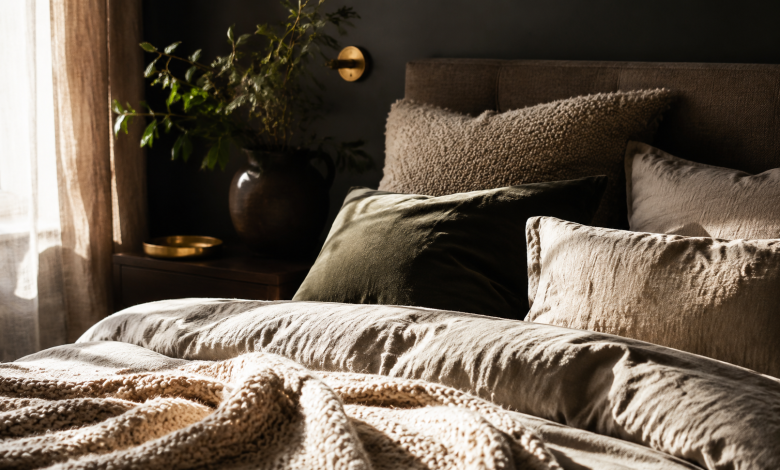
The middle layer is where most people stop a duvet or comforter. But this is actually where the conversation starts. A waffle-weave cotton duvet against smooth sateen sheets creates friction in the best sense: the eye has something to move between. A chunky linen duvet over flannel is more monotone in texture, more uniform. Both are valid, but they produce different moods. One is dynamic; one is cocoon-like.
The third layer is the variable a throw, an extra blanket folded at the foot, a quilt. This is the element that lets you gesture toward the season without overhauling anything. A loosely woven wool throw reads as autumn. A thin cotton matelassé drape reads as late summer. And because this layer is deliberately casual in its placement, it also signals that the room is lived-in rather than dressed.
Beyond the Bed: Where Texture Does Quiet Work
The mistake people make after getting the bed right is assuming the job is done. But texture in a sleep space isn’t only a bedding conversation.
Rugs are one of the most underestimated mood tools in a bedroom. The floor is a surface you encounter before you even reach the bed particularly first thing in the morning, when your feet hit the ground. A high-pile wool rug beside the bed changes the quality of that moment completely. There’s a reason stepping onto stone tile feels like an alarm and stepping onto thick pile feels like a second chance at sleep. The material your feet contact first thing in the morning actually affects how awake you feel. This is less trivial than it sounds.
Walls are typically the most texture-neglected surface in any room. Flat paint is visually inert which is fine, even useful, but it misses an opportunity. Limewash paint, grasscloth wallcovering, unpainted plaster, or even paneling all introduce a surface quality that catches light differently throughout the day. They make a room feel less like a container and more like a place. This isn’t about dramatic wallpaper statements. It’s about the difference between a wall that reflects light flatly and one that absorbs it, scatters it, gives it somewhere interesting to go.
Window treatments are another surface that often gets chosen for its visual effect without much thought to its material reality. Heavy linen curtains that pool slightly on the floor aren’t just a style choice they soften sound, diffuse light, and visually anchor the room with a sense of solidity and calm. Thin synthetic panels do the opposite. They let in light without filtering it, and when they move, they have a cheap, insubstantial quality that undermines the whole atmosphere.
The Discipline of Restraint
All of this can go wrong in one specific direction, and it’s worth being honest about it. Too much texture becomes visual noise. A bedroom with competing materials in every corner woven rattan, faux fur, velvet, cable knit, distressed wood, hammered metal stops feeling rich and starts feeling anxious. The room is trying too hard, and some part of you registers that effort as tension rather than comfort.
The best textured bedrooms have a material throughline a family of surfaces that feel related even if they’re not identical. Natural fibers together. Soft mattes together. There’s usually one moment of contrast that makes the whole thing interesting, but the contrast works because everything else is consonant. A sheepskin rug in an otherwise linen-and-oak bedroom lands perfectly because it’s warm against a cool palette, soft against clean-lined furniture. Add three more moments of similar drama and the room loses its center.
Restraint is also what separates texture-as-atmosphere from texture-as-trend. The rooms that age well aren’t the ones that chased the most interesting materials in any given season. They’re the ones where every surface choice was made in service of how the room would feel to be in not how it would read in a photograph.
That’s the secret, really. Acozy sleep space isn’t designed for an audience. It’s designed for the one person who will lie in it at the end of a long day, close their eyes, and feel, without quite knowing why, that everything is fine.