What Nobody Tells You About Hitchhiking Across Europe
The Version Everyone Tells You First
You’ve heard this story before. Someone quits their job or finishes a semester, throws a pack on their back, sticks a thumb out somewhere near a highway ramp in France or Germany, and three weeks later they’re standing at a hostel in Budapest with a sunburn and a grin. The story gets shared over dinner tables and in Reddit threads, and it all sounds deceptively simple like freedom is just a thumb and a little nerve.
What nobody mentions is the full picture. Not to be cynical about it, just honest. Hitchhiking across Europe is one of the most genuinely rewarding ways to travel, but it carries a texture that the highlight reels never capture. The discomfort that builds character. The hours that test patience in ways no one prepares you for. And the moments of human connection so unexpected and sincere that they make you rethink what you assume about strangers.
The Wait Is the Real Journey
Everyone romanticizes the ride. Almost no one talks about the wait.
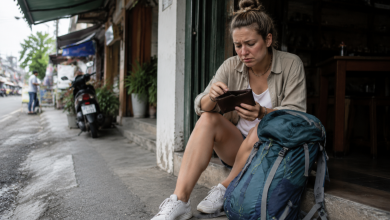
You can stand at a gas station on the outskirts of Lyon for three hours. Not a drizzle, not a breeze just flat afternoon heat and the smell of diesel. Cars slide past. Truckers don’t make eye contact. A family in a minivan slows down, and your heart lifts for a second, and then they keep going. This is hitchhiking. This is a huge part of it.
The wait strips away the performance of travel. You can’t Instagram your way out of a roadside breakdown in patience. You just have to sit with it, eat whatever’s in your bag, maybe read, probably stare at nothing. And somewhere in that boredom, something loosens. The grip you have on controlling your schedule, your comfort, your sense of productivity it starts to let go. Some people hate it. Others discover it’s the first real stillness they’ve felt in years.
Experienced hitchhikers will tell you: your spot matters enormously, your sign matters, your posture matters. But even when you do everything right, you wait. That’s not a flaw in the system. That’s the system.
Who Actually Stops
This is where the assumptions collapse fastest.
The nervous expectation, especially for first-timers, is that someone sketchy will stop. That the vehicle that pulls over will be the one you wish hadn’t. It happens, sure you develop instincts, you learn to decline a ride that feels wrong within ten seconds of the window rolling down. But that’s not the dominant experience.
The dominant experience is a retired schoolteacher from Poznan who insists on detouring twenty minutes to drop you closer to the city center. It’s a young chef driving back from a supply run who speaks almost no English but plays music for the entire two hours and occasionally looks over smiling like you’re both in on a joke. It’s a long-haul trucker who’s been driving since 4 AM and genuinely just wants someone to talk to so he doesn’t fall asleep on the A4.
People who stop for hitchhikers are, statistically and experientially, not who you fear. They’re curious. Many of them hitchhiked themselves, decades ago. Others just have a reflex toward generosity that hasn’t been trained out of them. You meet people who hand you a sandwich, people who invite you to a wedding (yes, it happens), people who change the way you think about a country you thought you already understood.
There’s a man I shared a ride with outside Krakow who spent forty-five minutes explaining, in halting English, why he believed kindness between strangers was the only real politics. He drove a beat-up Renault and wore a vest with too many pockets. I’ve thought about that conversation more than I’ve thought about most monuments I’ve paid entrance fees to see.
The Geography Has Opinions
Europe is not a monolith, and neither is hitchhiking across it.
Germany and Austria are efficient. People stop, they’re often direct, rides can feel almost businesslike which isn’t a criticism, just a tone. France is inconsistent in a way that feels personal until you realize it isn’t. Scandinavia can be sparse but the people who stop are deeply, almost philosophically invested in the conversation. Eastern Europe Poland, Czech Republic, Slovakia, Hungary tends to have a generosity that feels both practical and warm, especially outside major cities.
The Balkans deserve their own conversation entirely. Hitchhiking through Bosnia or Serbia has a different rhythm, a different intimacy. People often insist on buying you coffee before you get back on the road. Rides can turn into hours-long friendships that end with exchanged numbers and a genuine sadness at parting.
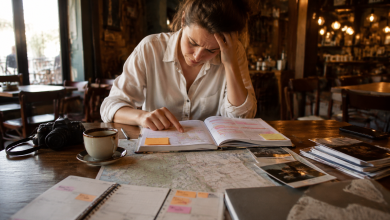
What this means practically: your experience will vary wildly depending on where you are, not just because of infrastructure but because of cultural attitude toward strangers, toward the road, toward the small act of sharing space in a moving vehicle. Do your reading before you plant yourself on a highway ramp. Know which countries treat gas stations as social hubs and which treat them as pitstops. That knowledge shapes everything.
The Logistics Nobody Glamorizes
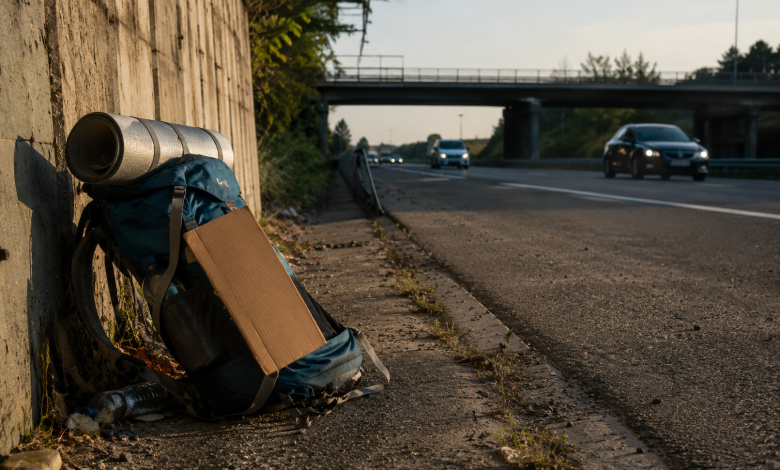
A cardboard sign matters more than most people admit. Destination, clear lettering, held at chest height, with a look on your face that communicates you’re a normal human being who made a reasonable choice this is your entire marketing strategy. Don’t underestimate it.
Cash is your safety net in a way that apps and cards aren’t. If you’re stranded somewhere remote and your phone dies, cash gets you a bus ticket, a coffee, a phone charge at a café bar. Keep some.
And then there’s the safety conversation, which tends to get either dismissed entirely or inflated into something paralyzing. The realistic middle ground: you are not reckless for hitchhiking, and you are not naive for taking precautions. Tell someone your rough route. Trust your instincts when a ride feels off. Keep your bag reachable, not in a locked trunk. Have offline maps downloaded. None of this is excessive it’s just how you travel solo anywhere.
Solo women hitchhiking face a different calculus, and pretending otherwise isn’t progressive, it’s dishonest. Many women hitchhike across Europe successfully and regularly. Most also approach it with a different level of selectivity about who they accept rides from, and they shouldn’t have to, but the world being what it is, the preparation looks different. Online communities of women who hitchhike share real, granular advice that’s the resource, not the generic travel blog that smooths everything over.
What Changes in You
There’s a specific kind of confidence that builds when you spend two weeks not knowing where your next ride is coming from. It’s not bravado. It’s something quieter a growing trust that things will generally work out, that people are mostly decent, that the worst-case scenario is usually just an inconvenient afternoon rather than a catastrophe.
You also start to read situations faster. Who to approach at a rest stop. How to explain your route in under ten seconds. When to accept a detour and when to hold out for something closer to your direction. These are small skills, but they compound into a general competence about navigating the world that doesn’t go away when the trip ends.
The version of travel that keeps you in curated hostels and pre-booked buses is fine. There’s nothing wrong with it. But it maintains a certain distance from the place you’re traveling through. Hitchhiking collapses that distance completely. You’re in someone’s actual car, listening to their actual music, hearing their actual opinion about the government or the weather or the best place to eat within thirty kilometers.
That’s the thing nobody manages to fully convey in advance: the intimacy of it. Not romantic intimacy something more like the intimacy of being briefly, genuinely present in someone else’s ordinary day. Passenger seat, window down, road ahead. Europe seen from the inside, one stranger at a time.