
My $5-a-Day Meal Plan for High-Cost Cities
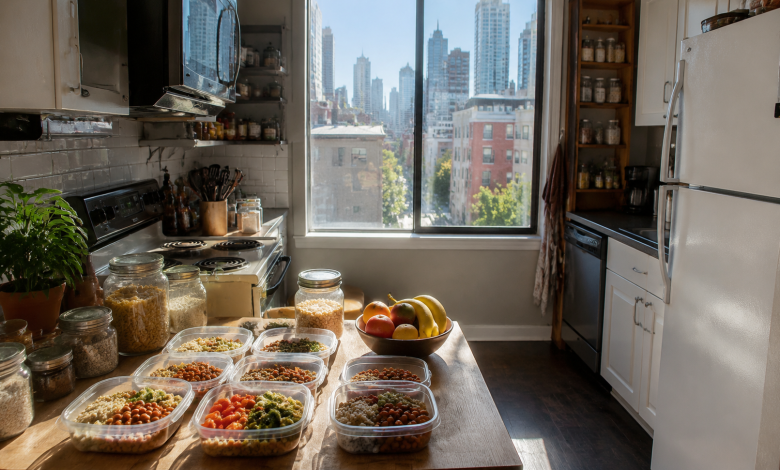
The City That Charges You Just for Breathing
San Francisco. New York. Boston. Seattle. If you live in one of these places, you already know the joke except it stopped being funny around the time your coffee hit $8. Rent takes the first punch. Groceries take the second. And eating out? That’s practically a luxury tax on the act of being hungry.
I moved to a high-cost city six years ago with a salary that looked impressive on paper until I ran the numbers. After rent, utilities, and commuting, I had roughly $150 a month for food. That’s $5a day. I didn’t choose that budget because I read some frugality blog. I chose it because math left me no other option.
What followed wasn’t misery. It was education.
Why $5 Is Harder Than It Sounds and Easier Than You Think
Five dollars a day sounds like a challenge designed to make you suffer through sad salads and instant ramen. And if you approach it without a system, that’s exactly what it becomes. But the suffering usually comes from one specific mistake: people try to eat cheap versions of expensive habits.
They buy pre-washed salad kits on sale. They grab the discounted rotisserie chicken. They stock up on “healthy” frozen meals when they’re two for $7. All of these feel smart in the moment. None of them hold up across a month.
The actual unlock is thinking in ingredients, not meals. A $1.89 bag of dried lentils contains roughly 13 servings of protein. A 5-pound bag of rice from a Korean or Indian grocery store costs around $4and lasts three weeks for one person. A dozen eggs in most cities sits between $2.50 and $4 depending on the store and the week. These aren’t exciting purchases. They’re load-bearing walls.
Once you build around load-bearing staples, the $5 ceiling stops feeling punishing. It starts feeling like a constraint that forces creativity rather than eliminating it.
The Actual Weekly Breakdown
Let me make this concrete. On $35 a week which is $5 a day here’s what a functional, genuinely nourishing week of groceries looks like in a city like Chicago or Denver, adjusted slightly for coastal markets.
Dried staples take the biggest slice: a bag of lentils, a bag of dried black beans, and a 2-pound bag of rolled oats. Together, roughly $6 to $7. These cover breakfasts and at least four dinners. Eggs, one dozen, around $3. A head of cabbage, which is criminally underrated, costs about $1.50 and can be sautéed, turned into slaw, or thrown into soup at the end of the week when it starts to wilt.
Bananas are still one of the cheapest fruits per calorie on the planet around $0.19 each at most stores. A bunch of six feeds you through breakfasts and snacks. A can of tomatoes, diced or crushed, sits around $1 and forms the base of more meals than you’d expect. Garlic, a small head, maybe $0.80. Olive oil if you already have it, or a small bottle of vegetable oil if you don’t. Salt, pepper, cumin, smoked paprika bought once, used for months.
That’s the pantry logic. You’re not buying dinner. You’re building a system that generates dinners.
Total for the week: roughly $32 to $35, depending on your city and your store.
Where You Actually Buy Matters More Than What You Buy
This is the part most budget-eating articles skip past too quickly. In a high-cost city, the gap between stores isn’t marginal. It’s massive.
A bag of dried chickpeas at a standard urban grocery chain might run $3.49. At an Asian or South Asian market which exist in virtually every major American city the same quantity is often $1.29. Produce at farmers markets near closing time gets marked down. Ethnic grocery stores in general operate on different margin structures than mainstream chains, which means their staples are consistently cheaper even without sales.
I did a test once. I bought the same list of 12 items at a Whole Foods (using their sale prices), a standard Kroger affiliate, and a Vietnamese grocery store two miles further from my apartment. The Whole Foods total was $58. Kroger came in at $41. The Vietnamese market: $26.
Same nutritional content. Same cooking potential. $32 difference.
The inconvenience of going to a less-convenient store is real I’m not dismissing it. But if you’re serious about the budget, the store choice is probably the single highest-leverage decision you can make.
Cooking Without the Collapse
Here’s where the practical psychology gets interesting. The number one reason people abandon cheap-eating plans isn’t the food. It’s the time and mental load. Coming home at 7pm, tired, hungry, and staring at a bag of dry lentils that need40 minutes of simmering that’s the moment the $14 Thai delivery order wins.
Batch cooking solves this, but only if you’re honest about when you’ll actually do it. Sunday afternoon works for some people. Saturday morning works for others. Whenever it is, two hours of cooking once a week eliminates the decision fatigue that kills the plan mid-Wednesday.
A pot of lentil soup withcanned tomatoes, cumin, and cabbage makes six servings. A pot of black beans seasoned with garlic and smoked paprika makes five. Cook a large batch of rice. Hard-boil six eggs. That’s breakfast sorted for five days and dinners sorted for most of the week. Lunch is a bowl you assemble from whatever you made the night before.
It’s not glamorous. But it’s also not deprivation. Lentil soup made properly with good aromatics, a splash of vinegar at the end, maybe a soft egg on top is genuinely satisfying food. It’s the kind of food that half of the world has built culture around for centuries.
The Thing Nobody Warns You About
Social eating is where $5 a day gets complicated, and it would be dishonest to pretend otherwise.
You can eat for $5 a day inside your apartment all week and hit your budget perfectly. Then a work lunch happens. Or a friend’s birthday dinner at a restaurant where the cheapest entrée is $22. Or a networking happy hour where the minimum social buy-in is two drinks you didn’t budget for.
I don’t have a perfect answer here, because there isn’t one. What I learned to do was treat social eating as a separate category entirely something I’d plan for and save toward, rather than trying to squeeze it into the $5 daily envelope. On the days I packed lunch and ate dinner at home, I was essentially banking a small surplus for the moments when the city demanded I show up somewhere that cost money.
The budget isn’t a wall you live inside. It’s a baseline you return to.
Six Years Later
I earn more now. I don’t still eat on $5 a day, not strictly. But the pantry logic stuck. The store habits stuck. The batch cooking stuck. I still buy dried beans over canned most of the time. I still think about what a cabbage can do before I reach for something pre-packaged.
Living in an expensive city forces a kind of financial clarity that cheaper places don’t. Every dollar has competition. You learn fast which purchases actually improve your life and which ones are just convenience theater. Food, it turns out, is one of the clearest places to see that distinction because when you cook something simple from scratch and it’s good, you feel the truth of it directly.
The $5 day isn’t about punishment. It’s about knowing exactly what food costs when you stop outsourcing the thinking.