5 Common Nighttime Habits That Are Secretly Aging Your Face.
5 Common Nighttime Habits That Are Secretly Aging Your Face
You do everything right during the day. SPF in the morning, a decent moisturizer, maybe even a vitamin C serum if you’re feeling ambitious. But somewhere between dinner and sleep, a handful of habits quietlyundo a lot of that effort and most people have no idea it’s happening.
The frustrating truth about premature skin aging is that it rarely comes from one dramatic cause. It accumulates. It’s the small nightly routines, repeated hundreds of times a year, that carve their way into your skin before you ever notice the damage. Some of these habits feel harmless. A few might even feel like self-care. That’s what makes them so easy to ignore.
Sleeping on a Cotton Pillowcase
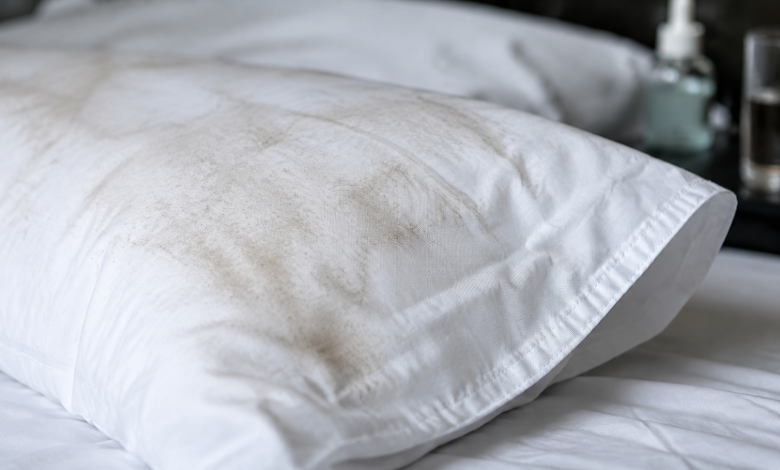
This one tends to get dismissed as vanity nonsense, but the mechanics behind it are real. When you sleep on a standard cotton pillowcase, your face doesn’t glide it drags. For six to eight hours, the fabric grips your skin and holds it in compressed, folded positions. Over time, those positions become creases, and those creases become permanent.
Dermatologists have a name for these: sleep lines. Unlike expression lines, which form from repeated muscle movement, sleep lines form from sustained external pressure. They tend to show up vertically on the cheeks and forehead, and because they develop while you’re unconscious, most people never connect them to their sleeping surface.
Silk and satin pillowcases reduce that friction significantly. Your skin moves with the fabric rather than against it. It’s a simple swap, and it works not as a miracle cure, but as a genuine reduction in one source of mechanical stress your face endures every single night.
Skipping the Neck and Chest
Here’s a quiet irony in most skincare routines: people invest heavily in caring for their face, then stop abruptly at the jawline. The neck and chest get whatever’s left over which is usually nothing.
The skin on your neck is thinner than the skin on your face and has fewer sebaceous glands, meaning it produces less of its own natural oil. It loses elasticity faster, shows UV damage earlier, and has almost no tolerance for neglect. When someone’s face looks noticeably younger than their neck, it’s almost always because the neck has been forgotten for years.
The chest compounds the issue. Most people sleep in positions that fold the chest skin side sleepers especially. If a moisturizer or retinol gets applied nowhere near that area, the skin there ages on a completely different timeline than the rest of you.
Extending your routine two or three inches south isn’t extra effort. It just requires remembering that the face doesn’t end at the chin.
Drinking Alcohol Before Bed
A glass of wine to wind down feels reasonable. It might even feel like it helps you sleep, and in a narrow technical sense it does alcohol shortens the time it takes to fall asleep. What it disrupts is the quality of that sleep, particularly the deep restorative stages where the body does its actual repair work.
But beyond sleep disruption, alcohol has a direct biochemical effect on skin. It’s a diuretic. It depletes the body’s water stores and lowers levels of antioxidants in the blood. It also triggers an inflammatory response that breaks down collagen over time. Regular nighttime drinking even moderate amounts accelerates the loss of skin firmness and contributes to persistent puffiness around the eyes and jaw.
The morning-after look of someone who drank the night before isn’t just tiredness. The redness, the swelling, the dullness those are visible signs of systemic dehydration and inflammation. When that becomes a nightly pattern, the skin doesn’t fully recover between episodes.
Using Your Phone in the Dark
The blue light conversation has become so ubiquitous that people have started tuning it out. But there are actually two separate mechanisms worth paying attention to here, and neither gets enough specific attention.
The first is the obvious one: blue light exposure close to bedtime suppresses melatonin production, which delays sleep onset and reduces sleep quality. Since the skin does most of its cellular renewal during deep sleep that’s when growth hormone peaks and cell turnover accelerates anything that shortens or fragments that sleep directly impairs the skin’s ability to repair itself.
The second mechanism is less discussed. Emerging research suggests that visible light, particularly blue and violet wavelengths, can generate free radicals in skin tissue directly, independent of sleep disruption. The effect is smaller than UV damage, but it’s not negligible, especially given how close most people hold their phones to their faces and how long they stare at them.
There’s also a postural component. Holding a phone at chest or lap level while lying down means the neck is flexed forward, skin compressed, for extended periods. That repeated folding night after night contributes to the horizontal neck lines increasingly showing up in people who are still in their twenties.
Not Washing Your Face Before Bed
This is the oldest advice in skincare, and it somehow remains the most ignored. Going to sleep with the day’s accumulation on your skin pollution particles, oxidized sunscreen, excess sebum, whatever environmental debris has settled on your face means all of that sits against your skin for eight hours in a warm, enclosed environment.
Pollution in particular is worth understanding more specifically. Urban air contains particulate matter small enough to penetrate the outer layers of skin and trigger oxidative stress and inflammation. Studies have linked long-term pollution exposure to accelerated collagen breakdown and increased pigmentation. Sunscreen that has been sitting on your face all day has oxidized by evening and is no longer protecting you it’s just another layer of residue.
The skin’s barrier function naturally decreases at night. Transepidermal water loss increases. This means the skin is actually more permeable after dark, which makes whatever is sitting on its surface more likely to interact with the deeper layers. Falling asleep without cleansing isn’t neutral. It’s actively working against the skin’s natural repair cycle.
A thorough cleanse before bed doesn’t have to be a ten-step ordeal. One genuinely effective cleanser, used consistently, clears the way for everything else the skin does while you’re unconscious.
What connects all five of these habits is that none of them feel like damage while they’re happening. That’s the defining feature of cumulative skin aging it’s invisible in the moment and irreversible in hindsight. The face you see in ten years is partly being written right now, in the dark, in the small choices that feel too minor to matter.
They’re not.