Dirt Cheap Secrets to Lush Greenery in a Limited Space
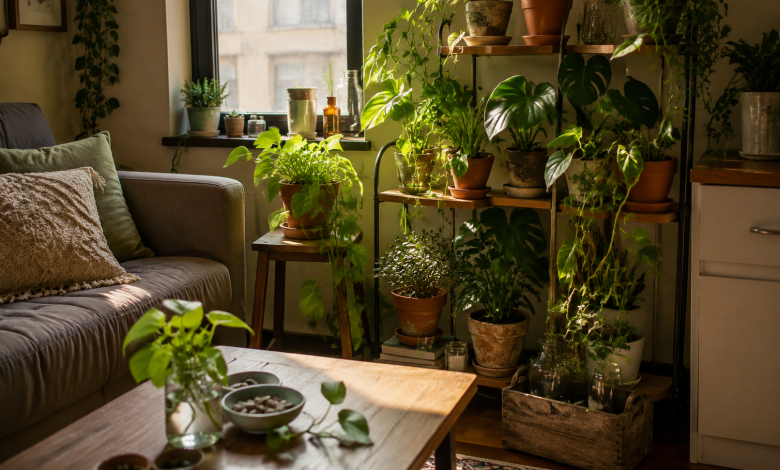
There’s a particular kind of envy that hits when you scroll past someone’s apartment balcony overflowing with trailing pothos, fat-leafed monstera, and cascading herbs all of it looking effortlessly abundant, like the plants just decided to cooperate. You assume they have better light, more money, or some inherited green thumb you simply weren’t born with. But here’s the honest truth: most of the lushest small-space gardens you’ve ever admired were built on almost nothing. Repurposed containers, propagated cuttings, a few bags of soil, and a lot of patience. The secret isn’t money. It’s knowing which moves actually matter.
Start With Propagation, Not the Plant Shop
The single most expensive habit a beginning plant person develops is buying new plants. A six-inch pothos at a garden center costs what a cutting from a neighbor costs nothing. Propagation the practice of growing new plants from cuttings, divisions, or leaf segments is how serious gardeners have always expanded their collections without expanding their budgets.
Water propagation is the easiest entry point. Snip a healthy stem just below a node (the small bump where a leaf meets the stem), strip the lower leaves, and drop it in a glass of water near a bright window. Within two to four weeks, most common houseplants pothos, philodendron, tradescantia, coleus will have developed roots sturdy enough to transplant into soil. You’ve just turned one plant into two for free.
The social layer matters here too. Plant communities on Reddit, Facebook, and neighborhood apps are full of people giving away cuttings, trading varieties, and helping beginners identify what they’ve got. A single afternoon spent engaging with a local plant swap can stock an entire shelf. These communities run on generosity, partly because propagation makes abundance so easy to share.
The Container Myth and What Actually Works
Walk into any garden supply store and you’ll be confronted with terracotta pots, ceramic glazed planters, and fabric grow bags at prices that add up fast. The implication is that the container matters enormously. It does but not in the way those price tags suggest.
What a container actually needs to do is hold soil, drain excess water, and not poison your plant. That’s it. A five-gallon bucket from a hardware store with a few drainage holes drilled into the bottom grows tomatoes as well as any forty-dollar ceramic pot. Wooden producecrates lined with burlap make beautiful herb boxes. Colanders from the thrift store drain so well they’re practically engineered for herbs that hate wet feet, like thyme and oregano.
The material does affect moisture retention terracotta dries out faster than plastic, which matters if you travel or tend to forget watering days. But beyond that practical consideration, the container is largely aesthetic. A coat of spray paint, some twine wrapped around a tin can, or even a deliberately mismatched collection of thrifted pots develops a character that expensive coordinated sets never quite achieve.
Light Is the Only Thing You Can’t Cheap Out On
Here’s where the honest reckoning happens. You can substitute almost any supply in the garden soil can be amended, containers can be improvised, fertilizer can be composted. Light is the one variable that genuinely limits what you can grow, and no amount of creative budgeting changes the physics.
Before buying a single plant, spend three days watching how light moves through your space. Which windows get direct sun in the morning? Does any wall get afternoon light? Are there spots that never see the sun at all? This assessment costs nothing and prevents the single most common mistake in small-space gardening: buying plants that simply cannot survive where you intend to put them.
South-facing windows in the northern hemisphere are gold they receive the most consistent and strongest light throughout the day and will support almost anything. East-facing windows offer gentle morning sun, ideal for ferns, calatheas, and most herbs. North-facing windows are the challenge, though far from hopeless. Low-light champions like ZZ plants, snake plants, pothos, and cast iron plants were practically designed for dim conditions.
If your space is genuinely dark, grow lights have become cheap enough to seriously consider. Basic LED grow bulbs screw into standard lamp fixtures and cost less than ten dollars. They’re not a perfect substitute for natural light, but they’ll keep a collection alive and growing through a shadowy winter or a windowless corner.
Soil Strategy on a Shoestring
Bagged potting mix is an unavoidable cost, but it’s one worth managing intelligently. Generic store-brand potting soil is usually adequate the premium branded versions often just add perlite and a slow-release fertilizer you can source separately and much more cheaply. A large bag of perlite (volcanic rock that improves drainage and aeration) goes a long way when mixed into basic soil, and a single bag can outlast dozens of plantings.
For outdoor containers or raised beds, consider what’s already available locally. Many municipalities offer free or reduced-cost compost. Community gardens sometimes sell finished compost by the bucket. Coffee shops will often give away used coffee grounds, which add nitrogen to soil. Crushed eggshells, banana peels composted into a simple pile, dried fallen leaves all of these cycle back into the soil and reduce what you need to buy.
The deeper principle is that healthy soil biology does most of the work. Plants in dead, compacted, nutrient-depleted soil demand constant fertilizer just to survive. Soil that’s rich in organic matter, well-aerated, and alive with microbial activity grows plants that are naturally resilient, naturally lush, and comparatively low-maintenance.
Vertical Space Is the Square Footage You Already Have
In a limited physical footprint, the instinct is to work outward another shelf, another table, another corner claimed. But in almost every small space, the vertical dimension goes almost entirely unused. Walls, fences, the undersides of shelves, window frames, railings these are the square footage hiding in plain sight.
A single tension rod in a window can support several hanging planters. A wooden pallet leaned against an outdoor wall and fitted with landscape fabric becomes a vertical herb garden. Macramé hangers, which are cheap to buy and easier to make than they look, turn ceiling hooks into prime growing real estate. Climbing plants like sweet potato vine, nasturtiums, or even small-fruiting cucumbers can be trained up a trellis made from bamboo stakes and twine, turning a foot of horizontal space into six feet of vertical garden.
The psychological effect of vertical planting is significant too. A collection of plants that sits only at floor and table level reads as a modest collection. The same number of plants, distributed vertically from floor to ceiling, reads as a jungle. The density of layered greenery creates a sense of abundance that transcends the actualcount.
The Underrated Power of Repetition
One of the quietest secrets of beautiful small-space gardens is repetition. Not variety repetition. Three or four varieties planted densely and repeatedly throughout a space creates cohesion and visual lushness in a way that twenty different species never quite manages. When you propagate freely, this becomes easy: one generous pothos cutting becomes ten plants, and ten plants placed at different heights and angles transforms a space completely.
Choose a few plants that genuinely thrive in your conditions, then multiply them relentlessly. Let them get big. Don’t repot prematurely into larger containers if a slightly root-bound plant is otherwise healthy and cascading beautifully. The fullness that characterizes the best small gardens isn’t usually the result of many different expensive specimens it’s the result of knowing a few forgiving plants extremely well, and giving them exactly what they need to overflow.