Is Scalp Oiling Actually Causing Your Dandruff? What Dermatologists Say
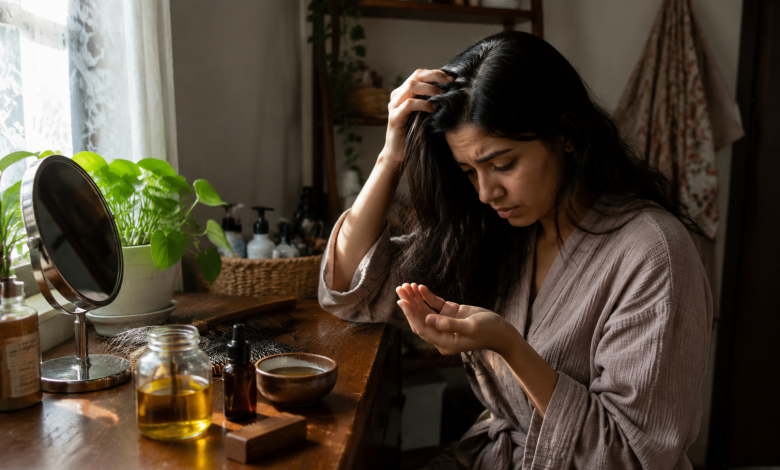
There’s a ritual that has been passed down through generations in countless households warming a few tablespoons of oil, massaging it into the scalp, wrapping the hair in a towel, and leaving it overnight. Coconut oil, castor oil, olive oil, tea tree blends. The practice feels ancient, grounding, almost medicinal. And for a long time, it was considered unquestionably good for your hair.
Then the dandruff showed up.
For many people, the timeline is suspiciously clear. They start oiling regularly, and within a few weeks, the flaking begins or worsens. It’s easy to dismiss it as coincidence, or to blame a new shampoo, a change in weather, stress. But dermatologists are increasingly willing to say what many patients have suspected: yes, scalp oiling can absolutely trigger or worsen dandruff, and the biology behind it is not complicated once you understand what dandruff actually is.
Dandruff Isn’t About Dryness That’s the First Misconception toUndo
The most persistent myth about dandruff is that it signals a dry scalp. This is almost the opposite of the truth. Dandruff clinically recognized as a mild form of seborrheic dermatitis is fundamentally linked to a yeast called Malassezia. This organism lives on virtually every human scalp. The problem begins when it proliferates beyond a certain threshold.
Malassezia is lipophilic. In plain terms: it feeds on fat. The sebum your scalp naturally produces is its primary food source. When Malassezia metabolizes these lipids, it releases byproducts oleic acid among them that irritate the scalp in people who are sensitive to it. That irritation accelerates skin cell turnover. The cells pile up faster than they shed, and what you see on your shoulders is the result.
Now bring oil into the equation. When you apply coconut oil, olive oil, or any rich lipid-heavy product to your scalp, you are essentially delivering a feast directly to the organism that’s causing the problem. You’re not treating a dry, suffering scalp. You’re fueling a microbial imbalance.
Why Some Oils Are Worse Than Others
Not all oils behave the same way on the scalp, and dermatologists are careful to draw this distinction. Coconut oil, for example, has demonstrated antifungal properties in some laboratory studies, which has made it a popular recommendation in wellness circles. The reality in clinical practice is messier. While coconut oil can inhibit certain fungal strains in a petri dish, applying a thick occlusive layer of it to a scalp that’s already prone to Malassezia overgrowth doesn’t replicate those lab conditions. The sheer volume of lipids delivered can outweigh any incidental antifungal effect.
Olive oil is similarly complicated. It’s high in oleic acid the same compound that Malassezia produces as a byproduct and that irritates susceptible scalps. Applying it liberally is, from a microbial standpoint, fairly counterproductive.
Castor oil presents a different set of issues. It’s extraordinarily thick, which means it’s difficult to fully remove with a single wash. Residue left on the scalp creates a humid, occluded environment. That’s an ideal condition for microbial growth not just Malassezia, but potentially bacteria as well, which can contribute to scalp inflammation that mimics or compounds dandruff symptoms.
Lighter oils certain fractionated coconut oils, squalane, or jojoba tend to be better tolerated. Jojoba in particular is technically a liquid wax rather than a true oil, and its composition closely mimics human sebum, which means it’s less likely to dramatically upset the scalp’s existing balance. But even these carry risk if overused or left on for extended periods.
The Occlusion Problem Nobody Talks About
There’s a mechanical dimension to scalp oiling that goes beyond what specific oil you’re using. When oil sits on the scalp especially under a shower cap or towel overnight it creates occlusion. The pores along the scalp surface are effectively sealed. The natural shedding process, which relies on some degree of airflow and moisture regulation, gets disrupted.
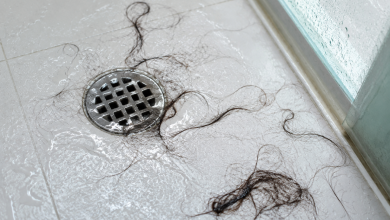
This is particularly significant for people who already have a tendency toward folliculitis, scalp acne, or seborrheic dermatitis. An occluded environment encourages the conditions under which these issues escalate. And because the scalp is out of sight, people often don’t notice early signs of irritation until they’re washing out the oil and watching flakes pour down the shower drain.
There’s also the question of washing. If you can’t fully remove the oil in one shampoo session which is genuinely difficult with heavier oils you’re leaving behind a layer of residue that continues to feed Malassezia between wash days. Some people whoco-wash or use sulfate-free shampoos are particularly susceptible here because their cleansers simply aren’t formulated to cut through a significant oil load.
So Why Do So Many People Swear by Scalp Oiling?
This is where it gets genuinely interesting, because the answer isn’t that those people are wrong or imagining things. A significant portion of people who oil their scalps regularly experience no dandruff whatsoever, and some even report improvements in scalp health. The divergence comes down to individual biology specifically, how reactive your scalp is to Malassezia byproducts.
Dandruff is not simply about having Malassezia on your scalp. Almost everyone does. It’s about whether your scalp mounts an inflammatory response to its metabolic activity. That reactivity has a genetic component. People whose scalps are less reactive can oil frequently without consequence. People with a stronger predisposition to seborrheic dermatitis are walking a much thinner line.
Hair texture and density also play a role. People with verycoarse, dense, or curly hair hair types that are structurally drier and benefit more from oil application along the hair shaft often need the moisture that oil provides. The challenge is learning to apply oil to the hair itself rather than the scalp, a distinction that takes some practice but makes a substantial difference in dandruff outcomes.
Dermatologists often hear from patients who say they’ve oiled their hair their whole lives without issue, and then suddenly their scalp is a mess. That shift frequently coincides with a hormonal change puberty, postpartum, perimenopause or a period of elevated stress, both of which can increase sebum production and alter scalp pH. The oiling practice didn’t change. The underlying scalp environment did.
What Dermatologists Actually Recommend
The clinical consensus isn’t that scalp oiling is universally harmful. It’s that scalp oiling is inappropriate for scalps that are already inflamed, flaking, or prone to seborrheic dermatitis. If you have active dandruff, adding oil to the scalp is, in the words of more than one dermatologist, like adding wood to a fire and hoping it’ll put itself out.
For people who want to maintain an oiling practice without triggering flakes, the guidance is fairly consistent. Apply oil from the mid-lengths to the ends of the hair, not the scalp. If you do apply to the scalp, use a minimal amount of a lighter oil, leave it on for no more than thirty minutes, and use a clarifying or antifungal shampoo to wash it out thoroughly. Avoid overnight oil treatments if you have any history of dandruff.
For active dandruff, zinc pyrithione, selenium sulfide, and ketoconazole shampoos remain the most evidence-supported treatments. These work by directly targeting Malassezia proliferation which is the actual source of the problem, not some surface-level dryness that more oil will solve.
The broader takeaway is about understanding cause rather than just chasing symptom relief. Dandruff that gets worse after oiling isn’t a mystery or bad luck. It’s a biological response to a well-understood mechanism. And that means it’s entirely addressable once you stop reaching for the oil jar and start asking what your scalp is actually telling you.