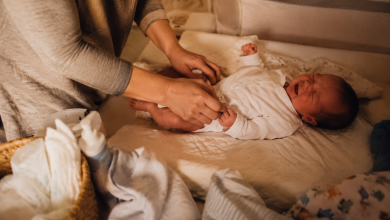
Too Hot or Too Cold? How to Dress Your Newborn for Sleep in Any Season
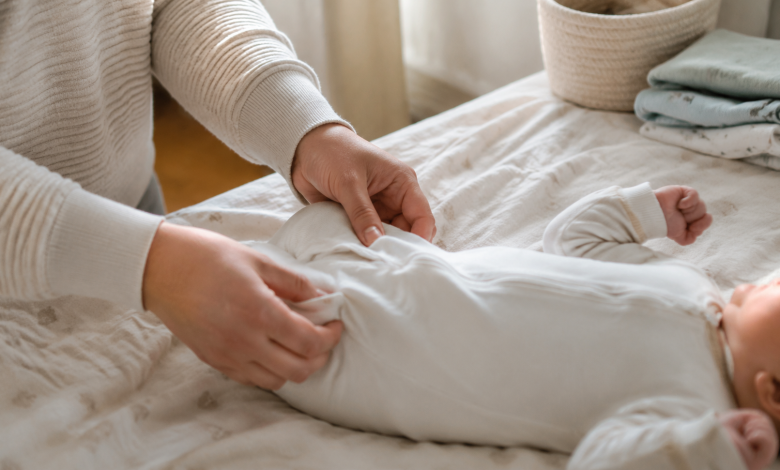
The Fear Every New Parent Knows
It’s 2 a.m. You’re standing over the crib, hand hovering an inch above your baby’s chest, trying to decide if she’s too warm or not warm enough. The room feels fine to you, but you’re not a newborn. You’ve been here before checking, second-guessing, pulling up the blanket, then pulling it back down. That quiet anxiety is something almost every new parent carries through those early months, and it’s not irrational. It comes from a real and important truth: newborns cannot regulate their own body temperature the way adults do.
A baby’s thermoregulatory system is still developing at birth. Unlike toddlers or older children, newborns lose heat rapidly through their heads and skin surface, and they can’t shiver to warm themselves or sweat efficiently to cool down. That biological reality means the responsibility falls entirely on the caregiver and getting it wrong in either direction carries risks.
Overheating in infants has been consistently linked to increased SIDS risk. Underdressing a newborn in cold weather leads to heat loss that their small bodies struggle to compensate for. Neither extreme is harmless. And yet, most parenting guides reduce this to a single rule “add one layer more than you’d wear” and call it done. That rule isn’t wrong, but it’s incomplete. Real-world dressing depends on the season, the room, the baby’s age, and what materials you’re actually working with.
Understanding the “One Extra Layer” Rule and Where It Falls Short
The one-extra-layer guideline exists because it’s a useful starting point, not because it’s a complete system. It assumes your own comfort level is calibrated correctly, which isn’t always true new parents are often sleep-deprived and running warm from stress, or conversely, sitting still and feeling chilly while the room sits at a perfectly healthy70°F.
The American Academy of Pediatrics recommends keeping the sleep environment between 68°F and 72°F (20°C to 22°C) year-round. That range exists because it’s comfortable for a lightly dressed infant without requiring supplemental bedding which means no loose blankets, no sleep positioners, no pillows. A fitted sleep surface and appropriate clothing are the entire system.
So the real question isn’t just “how many layers?” it’s “what kind of layers, and how do you adjust them as conditions change?”
Dressing for Summer: The Heat You Don’t Always Feel
Summer sleep is where many parents underdress their concerns along with their babies. The logic seems obvious it’s hot, so dress lightly but the nuances get complicated fast.
A room cooled by central air to 70°F at 9 p.m. may climb back to 75°F or 78°F by 3 a.m. as the AC cycles off or struggles against outdoor heat. A baby dressed perfectly for bedtime can wake up sweating two hours later. If you’re using a fan to circulate air rather than a thermostat-controlled system, temperature drift is even less predictable.
In genuine summer heat, a single-layer cotton onesie is often the right choice. Lightweight, breathable fabrics cotton muslin is especially good allow airflow without trapping heat. A swaddle in muslin rather than fleece or thick jersey accomplishes the same comforting wrap effect without the insulation risk.
The signs of overheating are worth knowing by heart: sweaty hair, flushed skin, rapid breathing, or a baby who seems irritable despite being fed and rested. The chest and back of the neck are the most reliable places to check skin temperature. If those spots feel hot and damp, the room or the clothing is too warm.
Dressing for Winter: Warmth Without the Hidden Dangers
Cold-weather dressing feels instinctively safer the impulse to bundle is strong, and it feels protective. The danger is that over-bundling is just as real a risk as underdressing, and it’s more common because warmth feels nurturing in a way that coolness doesn’t.
The core principle in winter is layering strategically without creating trapped heat. A long-sleeve onesie as a base layer, followed by a footed sleeper on top, works well in most indoor winter environments. If the room genuinely runs cold below 68°F a wearable blanket or sleep sack rated for the temperature adds warmth without the suffocation risk of loose bedding.
Sleep sacks have become one of the most useful tools for year-round dressing. They come in TOG ratings a unit measuring thermal resistance ranging from 0.5 TOG for summer to 2.5 TOG for cold winter rooms. Choosing the right TOG removes a lot of the guesswork: a 1.0 TOG sleep sack over a cotton onesie is appropriate for a room around 69–72°F, while a 2.5 TOG paired with a light onesie covers temperatures down to around 61°F.
What you want to avoid in winter: thick hats indoors during sleep. A common instinct especially in the first days home from the hospital is to keep a hat on the baby while sleeping. Outdoors, that makes sense. Indoors, in a properly heated room, a hat traps significant heat because the head is where infants lose so much of their body temperature. It can contribute to overheating even when the rest of the room feels cool.
The In-Between Seasons Nobody Talks About
Spring and fall present a different kind of challenge, and it’s one that gets less attention precisely because it feels like the “safe” middle. But in-between seasons are defined by variability a 65°F afternoon can become a 52°F night, and a room that needed no climate control at 7 p.m. might need the heat on by midnight.
This is where checking the room temperature at actual sleep time not just before bed matters more than season-based rules. A small digital thermometer left in the baby’s room is genuinely worth having. It removes the guesswork from that late-night hover over the crib.
Transitional seasons also bring layering challenges because the temperature range can fall between the neat categories that TOG-rated products address. A 1.0 TOG sleep sack over a short-sleeve onesie on a 68°F night might be slightly underdressed; adding a long-sleeve layer underneath bridges that gap without reaching for a heavier sack.
Reading Your Baby’s Signals
No system replaces attentiveness to the actual child in front of you. Every baby runs slightly differently some are naturally warm sleepers who generate more body heat, others seem to always wake with cold hands. Cold hands and feet, by the way, are not reliable indicators of overall temperature in newborns. The peripheral circulation in infants is immature, so hands and feet often feel cool even when the core body is perfectly warm.
The chest, back of the neck, and upper back are your real data points. Warm and dry means the temperature is right. Hot,clammy, or sweaty means too warm. Cool to the touch at the core not just the extremities means add a layer.
A fussy, hard-to-settle baby who has no obvious hunger or discomfort is sometimes simply uncomfortable from temperature. It’s not always the first thing parents check, but it’s worth eliminating early.
A Note on Room Sharing and Its Temperature Complications
The AAP recommends room sharing for at least the first six months. That recommendation comes with a temperature complexity that’s easy to overlook: adults and infants don’t share the same thermal comfort zone. Adults sleeping in the same room generate body heat, which raises ambient temperature slightly. A room that feels comfortable to two adults at 70°F might register73°F or 74°F by morning if the heating system doesn’t compensate.
If you’re room sharing, checking the room temperature near the baby’s sleep surface not the thermostat on the wall across the room gives you a more accurate reading. Thermostats measure air at a fixed point; a baby in a corner near a heating vent, or next to an exterior wall, may be experiencing a different microclimate entirely.
The Bigger Picture
Dressing a newborn for sleep isn’t a problem you solve once and stop thinking about. It shifts with the seasons, with the baby’s growth, with the changing quirks of your specific home. What worked at four weeks may need adjustment at twelve weeks, because babies grow fast and their physiology shifts too.
The parents who navigate this most confidently aren’t the ones who memorized the perfect rule they’re the ones who got comfortable checking, adjusting, and trusting their own observation over time. That 2 a.m. hover over the crib isn’t a failure of knowledge. It’s attentiveness. Keep doing it, and get a room thermometer.