An Introvert’s Paradise: Places Where You Can Be Alone Without Feeling Lonely
An Introvert’s Paradise: Places Where You Can Be Alone Without Feeling Lonely
The Difference Between Solitude and Loneliness
There’s a distinction most people never bother to make. Loneliness is theache of wanting connection and finding none. Solitude is something else entirely it’s the quiet you choose, the space you carve out not because the world has left you, but because you need to leave it for a while. For introverts, this isn’t a philosophical concept. It’s a daily survival strategy.
The challenge is that modern life doesn’t make solitude easy to find. Open-plan offices, loud cafés, the constant hum of notifications even our homes can feel like places where privacy is a negotiation. So the question becomes practical: where do you actually go when you need to be alone without the hollow feeling that usually comes with it?
The answer isn’t one place. It’s a whole constellation of them, and the best ones share a quality that’s hard to name but instantly recognizable they hold you without demanding anything from you.
Libraries as Living Proof
A good library is one of the last truly democratic spaces on earth. You don’t need to buy anything. You don’t need to perform enthusiasm or make small talk. You can sit for hours with a book you have no intention of finishing, and nobody will ask you what you’re doing there.
What makes libraries work for introverts isn’t just the quiet. It’s the shared understanding. Everyone in a library has, in some unspoken way, agreed to the same social contract: we are here together, and we will leave each other completely alone. There’s comfort in that proximity the awareness that other humans exist nearby, that you’re not marooned while still being insulated from the friction of actual interaction.
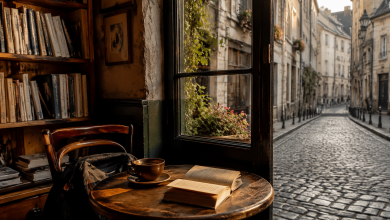
The older the library, the better, usually. High ceilings, wooden reading tables, the smell of paper that’s absorbed decades of other people’s concentration. These spaces carry a weight that tells your nervous system it’s safe to slow down.
The Particular Magic of Museums on Weekday Mornings
Come on a Tuesday at ten in the morning and you’ll understand something about museums that weekend visitors never do. The galleries are nearly empty. The guards stand quietly in corners. You can spend twenty minutes in front of a single painting without anyone nudging past you or narrating loudly to their children.
Museums offer a specific kind of solitude that libraries don’t quite match they give you something to look at. For introverts who find pure emptiness slightly unnerving, this is a gift. Your eyes have work to do. Your mind can wander without the self-conscious feeling of sitting alone doing nothing.
There’s also something deeply reassuring about being surrounded by objects that have outlasted everyone who made them. A Roman vase, a medieval manuscript, a painting completed before the country you live in existed these things put your own need for quiet in a generous perspective. You are a small, temporary creature who needed an hour to yourself. That’s fine. That’s human.
Walking Trails and What Movement Does to the Mind
Solitude in motion is different from solitude at rest. A trail through the woods or even a long urban walk through quieter streets gives the introvert’s mind the processing time it genuinely needs without the slightly performative quality of “going somewhere to be alone.”
You’re not sitting in a corner nursing a coffee. You’re moving through the world, which feels less like retreat and more like participation on your own terms.
Research on what’s sometimes called “awe walks” walks specifically taken in environments that feel larger than yourself suggests they reduce self-referential thinking. In plain terms, you stop ruminating. The constant mental chatter that exhausts introverts in social situations begins to quiet, not because you’ve suppressed it, but because the landscape has given your brain something better to do.
Empty beaches early in the morning work the same way. So do botanical gardens. So does any trail where the trees are old enough that they make you feel appropriately small.
The Underrated Case for Sitting Alone in a Café
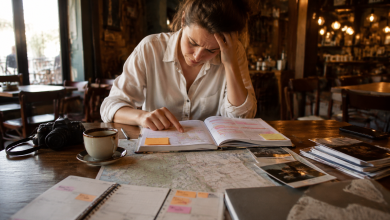
This one feels counterintuitive, but it’s real. A busy café the kind with enough ambient noise that individual conversations blur together can be an extraordinary place for an introvert to feel both alone and gently alive to the world.
The key word is ambient. You’re not expected to engage with the sound. It washes past you. Your laptop is open, or your notebook, or you’re just watching people move through the street outside. The noise actually helps, in the way that white noise helps people sleep: it provides a consistent backdrop against which your own thoughts become easier to hear.
This is different from the loneliness of being in a loud bar where everyone is visibly having a connected experience except you. A café during working hours has its own kind of solitude-in-company. People are focused on their own things. The social texture is loose, undemanding. You can leave without saying goodbye to anyone.
When Home Becomes the Right Answer
For all the external options, it’s worth acknowledging what home can be when it’s properly set up for the introvert’s needs and how often it fails at that.
The problem with defaulting to home is that it often comes loaded with obligations. The dishes. The email you can see from here. The awareness that a housemate or partner is in the next room and might need something. Home solitude, for many people, is interrupted solitude which is actually more draining than no solitude at all.
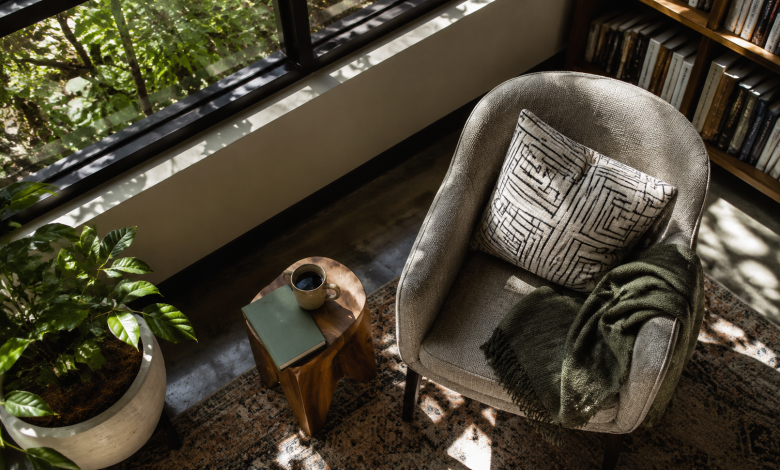
But when those conditions are right when you have a room, even a corner, that genuinely belongs to your quiet hours home becomes the deepest option on this list. You’re not performing solitude for a public space. You’re not managing the logistics of getting somewhere. You’re just in your own life, in your own skin, with the door closed and the next few hours belonging entirely to you.
The introvert’s paradise is not a single location pinned on a map. It’s a felt quality the sense that for now, you don’t owe the world your attention, and the world has graciously agreed. Finding the places that reliably give you that feeling is less about geography and more about learning to read what a space is silently asking of you.
Some spaces ask nothing. Those are the ones worth keeping.