The Scariest Part of Parenting: How to Cut Newborn Nails Without the Drama
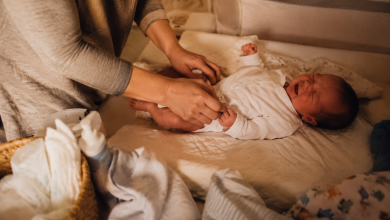
There’s a particular kind of dread that hits new parents around day five or six at home. The baby is sleeping. The room is quiet. And then you notice it those tiny, razor-thin fingernails, already long enough to leave scratches across that perfect new skin. Your first instinct is to do something about it. Your second instinct is to put it off indefinitely.
Nobody warns you about this in the prenatal classes. You spend hours learning about breathing techniques and swaddling and skin-to-skin contact, but the nail situation catches almost every new parent completely off guard. It shouldn’t be this frightening, and yet it is.
Why Newborn Nails Feel Like a Trap
Part of what makes this so nerve-wracking is the scale problem. A newborn’s fingertip is the size of a small pea. The nail on that fingertip is thinner than paper and curved in ways that make it nearly impossible to identify where nail ends and skin begins. And the baby? The baby has no interest in cooperating. Even in deep sleep, a newborn can twitch, startle, and flail with surprising force.
The fear isn’t irrational. Accidentally nicking a baby’s finger is genuinely common, and it bleeds a lot more than you’d expect because newborn skin is thin and blood vessels are close to the surface. A tiny nick turns into what looks like a crime scene, which then triggers a spiral of guilt that a first-time parent really doesn’t need.
But here’s the thing that often gets lost in all the anxiety: those nails absolutely have to be dealt with. Newborns have little control over their hands, which means they scratch themselves constantly across their faces, their eyes, their own cheeks. Some babies come home from the hospital already marked up. Avoidance isn’t actually a safe strategy.
The Mittens Debate
For about the first week, scratch mittens can buy you some time. Most newborn onesies come with fold-over cuffs that do the same job. They’re not a long-term fix babies need to feel their hands for sensory development, and keeping mittens on 24 hours a day creates its own problems but they can take the edge off while you work up your nerve.
What nobody tells you is that mittens are also notoriously bad at staying on. A newborn will lose a mitten in approximately eleven minutes. So while it’s worth using them in the early days, don’t treat them as a permanent solution or a way to permanently dodge the issue.
At some point, you just have to do the nails.
Timing Is Everything
The single most important variable in a successful nail trim is not the tool you use. It’s when you do it.
Newborns sleep deeply after feedings the kind of heavy, limp-limbed sleep where the whole body goes slack and nothing short of a smoke alarm is going to wake them. That window, roughly 20 to 40 minutes into a post-feed sleep, is your opening. Not when they’re drowsy but still blinking. Not when they’ve been asleep for two hours and might be cycling into lighter sleep. Right in that sweet spot of total-body relaxation.
Some parents swear by doing it while nursing or bottle feeding the baby’s attention is fully occupied, the hand you’re not feeding from tends to stay still, and the whole thing can be over in two minutes. Others find this impossible to coordinate, especially early on when feeding itself is still a learned skill. Read your own situation honestly. What works for a calm, experienced breastfeeder at week eight is not what works for a sleep-deprived parent at day nine.
Good lighting matters more than people acknowledge. A dim room feels soothing, but you genuinely cannot see what you’re doing. Bring in a lamp. Use your phone’s flashlight if you have to. The few seconds of setup are worth it.
Tools: The Real Breakdown
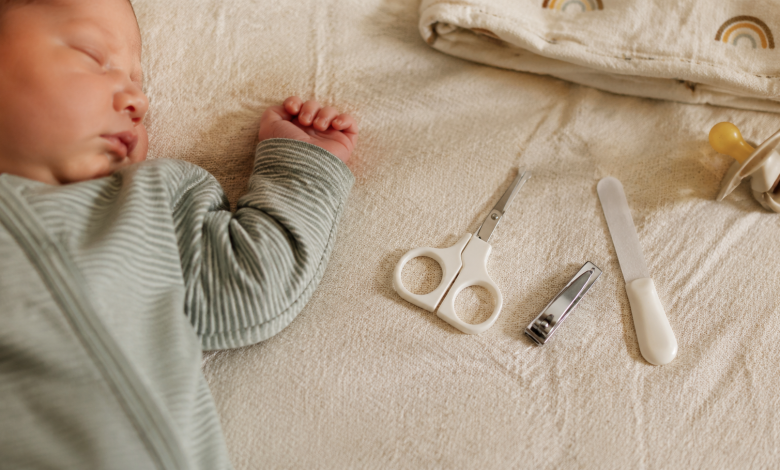
The baby nail care aisle is bewildering. You’ll find traditional clippers, files, electric trimmers, curved scissors, and multi-piece sets that look like they were designed for a surgeon. Here’s an honest assessment of what actually works.
Baby nail files the cardboard kind are the lowest risk option and the right choice for the first couple of weeks. They’re slow, yes, but they’re impossible to misuse in a way that causes injury. The downside is that they don’t work well once nails get longer and thicker. Filing also requires more sustained contact with a moving target, which can become its own challenge.
Baby nail scissors with rounded tips are favored by many pediatric nurses and pediatricians. The rounded tips mean a slip is less likely to puncture skin, and the curved blade follows the natural arc of the nail better than a straight clipper. If you’re going to invest in one good tool, this is probably it.
Electric nail files the spinning drum kind, often marketed under brand names like ZOLI Buzz B have developed a real following among parents who feel completely uncoordinated with manual tools. They’re quiet, they’re gentle, and they’re hard to misuse badly. The main criticism is that they take longer per finger and run out of charge at the worst possible moments. Keep them charged.
Traditional baby nail clippers work fine but demand a steadier hand than most new parents have. The blade is small, the mechanism requires a crisp motion, and any hesitation mid-squeeze tends to result in a ragged edge rather than a clean cut. If you’re already anxious, the clipper can amplify that anxiety in a feedback loop that makes it harder to be precise.
Whatever you choose, don’t use adult nail clippers. The scale is completely wrong.
The Actual Technique
Once you’ve chosen your moment and your tool, the mechanics matter.
Hold the fingertip firmly but gently press the pad of the finger down and slightly back to create separation between the nail and the skin underneath. This is the move most people skip, and it’s the one that prevents most nicks. You’re essentially giving yourself a clearer view of where the nail actually ends.
Cut in a single decisive motion. Hesitation is where injuries happen. If you feel yourself second-guessing halfway through, stop, reposition, and start the cut over rather than following through with a shaky motion.
For very young newborns, don’t try to get the whole hand done in one sitting if it’s not working. Do four fingers and call it a win. Come back to the thumb tomorrow. The goal is done, not perfect-and-complete-in-one-session.
Toenails are easier than fingernails babies barely notice, the nails are smaller and flatter, and there’s less risk of a flailing hand knocking your grip. Do them whenever. They also grow more slowly and may only need attention every few weeks.
When You Do Nick the Skin
It happens. It has happened to virtually every parent who has ever done this, including pediatric nurses who do it professionally.
Apply gentle pressure with a clean cloth or piece of gauze. Don’t use a bandage newborns can choke on them if they work loose. The bleeding will stop quickly. Resist the urge to put your mouth on the wound; oral bacteria can cause infection in young infants. A simple, clean cloth and a minute of pressure is all you need.
The baby will cry less than you think. The shock of the sensation registers more than the actual pain. You will feel worse about it than the baby does, and that’s fine. Guilt is part of parenting. So is moving on.
Building the Habit
Once you do it a few times successfully, something shifts. The dread doesn’t disappear exactly, but it scales down to something manageable. It becomes a task rather than an ordeal.
Most newborns need their fingernails trimmed every four to seven days in the early weeks they grow with startling speed. Building it into an existing routine helps. After bath time, during a post-feed contact nap, on a Sunday morning before anyone else is awake. Rituals absorb anxiety in ways that random scheduling never does.
By the time your baby is three months old, you’ll be doing this with one hand and half your attention. That moment when something that once felt impossible becomes automatic is one of the quiet victories of early parenthood. Not the kind that makes the highlight reel, but the kind that matters.