Zero Grass, Maximum Vibes: No-Mow Solutions for Compact Yards
The Lawn Is a Lie We’ve Been Told Long Enough
There’s a particular kind of Saturday afternoon dread that homeowners know well. The sun is out, the weekend is yours, and yet the lawn mower is already vibrating in the garage like a to-do list with an engine. For small yard owners especially, the ritual feels absurd spending real time and money maintaining a patch of grass roughly the size of a studio apartment, just to keep up appearances in a neighborhood where everyone else is doing the same thing.
The American lawn, as we know it, was never really about beauty. It was about status. It emerged as a symbol of leisure the idea that you had enough land not to farm it, enough time not to work it. That history doesn’t make your weekend chores feel any more meaningful. And for compact yards, the math never quite balanced: the cost of upkeep, the water consumption, the fertilizer, the weeding all of it disproportionate to a space where you could fit maybe two lawn chairs and a dog.
But here’s what’s changed. Homeowners with small outdoor spaces are increasingly opting out, not just for laziness or principle, but because what replaces grass is, genuinely, more beautiful, more useful, and far more interesting.
Ground Covers That Actually Do the Work
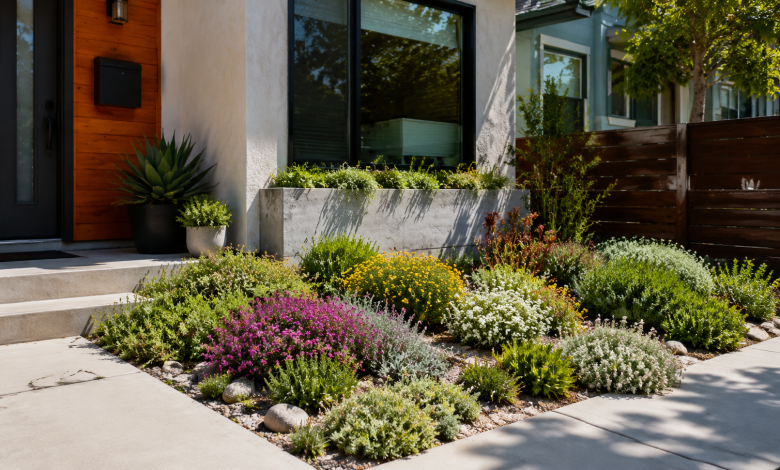
The first and most practical swap is the ground cover low-growing plants that spread laterally, suppress weeds, and require almost no maintenance once established. Creeping thyme is probably the most talked-about option, and the hype is deserved. It handles foot traffic surprisingly well, blooms with tiny purple flowers in early summer, and smells faintly herbal when you walk across it. On a hot afternoon it releases just enough fragrance to make your yard feel intentional, curated like someone who thought about this.
Creeping Jenny is another solid performer, particularly in partly shaded yards where grass tends to thin out and look sad. Its chartreuse color catches light in a way that grass simply doesn’t. For something denser and more lush, woolly thyme creates a carpet-like texture that photographs extraordinarily well and manages dry conditions without complaint.
Clover deserves its own conversation. For years it was treated as a weed an unwelcome intruder in the monoculture lawn. That reputation has fully reversed. White clover fixes nitrogen in the soil, meaning you skip fertilizer entirely. It stays low, stays green through drought, and brings in pollinators all summer. In a small yard, a clover lawn creates a meadow-adjacent softness that grass, with all its stiff uniformity, could never achieve.
Gravel, Stone, and the Japanese Garden Logic
Hard landscaping gets a bad reputation for feeling cold or industrial, but that’s a failure of execution, not concept. A gravel courtyard done right and they get done right all the time in Japanese, Mediterranean, and contemporary American garden design is one of the most calming outdoor spaces you can create.
The key insight borrowed from Japanese garden design is negative space. Gravel doesn’t compete with what you place in it. A single ornamental grass, a smooth stepping stone path, one well-chosen ceramic planter each element gets to breathe, to be seen. In a small yard, this matters enormously. Grass fills space indiscriminately. Gravel defines it.
Pea gravel is the most accessible starting point: affordable, easy to install, and forgiving if you want to reorganize. Decomposed granite gives a more packed, stable surface that works well if you want to use the space for seating or entertaining. Larger river rocks or flagstone create structure and slow the eye in a way that makes a compact yard feel larger than it is.
The practical advantages aren’t nothing either. No mowing, obviously. Gravel drains well, which matters in yards that collect water. It suppresses weeds when laid over landscape fabric. And it doesn’t die in a drought.
Raised Beds as the Entire Aesthetic
For small yards, there’s a compelling argument that raised beds should be the design, not just an element of it. When you orient a compact outdoor space around growing food or cutting flowers, the entire calculus shifts. The yard becomes productive. It becomes a reason to be outside.
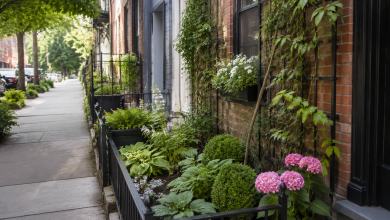
Cedar raised beds, stacked brick planters, or galvanized steel troughs arranged thoughtfully can make a yard feel like a working kitchen garden even when it’s only a few hundred square feet. The geometry of the beds themselves creates structure. Add a gravel or decomposed granite path between them, and you’ve designed something that looks deliberate and functions year-round.
There’s also a psychological dimension here. Tending plants you’ve chosen tomatoes, herbs, cutting zinnias, or even just ornamental alliums carries a different kind of satisfaction than mowing. The relationship is reciprocal. The grass just asks for more time.
Native Plants and the Low-Maintenance Myth
One argument often made against going grass-free is that alternatives require more maintenance. That argument falls apart when you choose plants native to your region. Native plants evolved for your specific soil, rainfall, and temperature range. They don’t need supplemental watering once established. They rarely need fertilizing. Many don’t need to be cut back in a meaningful way.
In the Pacific Northwest, that might mean sword fern and red-flowering currant. In the South, native sedges and muhly grass create a swaying, airy texture that moves beautifully in wind. In the Midwest, coneflowers and prairie dropseed turn a small yard into something that looks alive in a season-by-season way that a lawn never does.
The native plant approach also tends to attract local wildlife in ways that feel rewarding rather than invasive. A yard that brings in butterflies and bees in July is a yard you actually want to be in.
The Small Yard as a Design Advantage
Here’s the reframe that most people need: a small yard is not a limitation. It’s a manageable canvas. Full-scale landscape design the kind with layered planting beds, considered hardscape, focal points, and seasonal interest is actually easier to pull off in a compact space. There are fewer variables. The investment per square foot can be higher without breaking a budget. And the impact of a single well-chosen element is proportionally greater.
A ten-foot stretch of hornbeam hedge. A single Japanese maple in the corner. A bluestone patio with two chairs and a small fire bowl. A yard that small doesn’t need grass to have presence. It needs intention.
The no-mow movement, if you want to call it that, is less about rejecting lawn culture and more about recognizing what a small outdoor space actually deserves. Not the default, not the conventional, not the obligation but something chosen, something that fits the life you actually live rather than the one the neighborhood association quietly assumes you should.
Your compact yard can smell like thyme on a summer evening. It can crunch pleasantly underfoot in November. It can grow things that feed you or draw in swallows at dusk. It just has to stop pretending to be something it doesn’t have room to be.