Why Your Curls Look Like a Frizzy Mess (And How to Fix It Tonight)
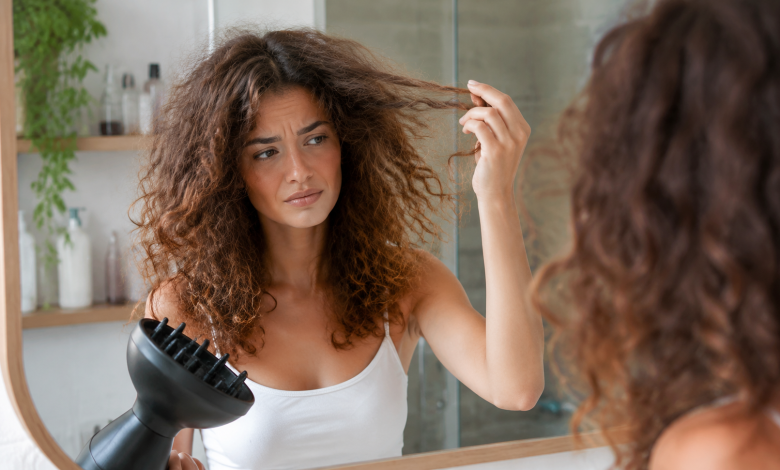
You stood in front of the bathroom mirror this morning, diffuser in hand, hoping today would be different. It wasn’t. The frizz came back that same halo of rebellion that refuses to cooperate no matter what you do. If that sounds painfully familiar, you’re not dealing with bad luck or a bad hair day. You’re dealing with a pattern, and patterns always have a cause.
Let’s get into it.
Frizz Isn’t a Texture Problem It’s a Communication Problem
Here’s the thing most people get wrong: they treat frizz like it’s the enemy. It’s not. Frizz is your hair trying to tell you something. Specifically, it’s telling you that the outer layer of each strand the cuticle is raised instead of lying flat. When those tiny overlapping scales stand up, they snag moisture from the air and swell unevenly. That uneven swelling is exactly what you see in the mirror.
Curly hair is structurally different from straight hair in one critical way: the curl pattern means the natural oils from your scalp travel down a spiral instead of a straight path. By the time those oils reach the mid-lengths and ends, they’ve barely made the journey. That’s why curly hair tends to run dry, and dry hair is vulnerable hair vulnerable to humidity, to friction, to anything that disrupts the cuticle.
So when someone hands you a bottle of anti-frizz serum and says “just use this,” they’re treating the symptom. What you actually need is to understand why your cuticle is raised in the first place.
The Real Culprits Are Probably Already in Your Bathroom
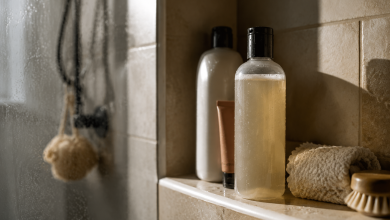
Walk over to your shower right now and check your shampoo. Does it contain sodium lauryl sulfate or sodium laureth sulfate near the top of the ingredients list? If so, that foamy lather you love is stripping your hair of its natural lipid layer every single wash. For curly hair, that’s not a minor inconvenience it’s a recurring act of dehydration. Sulfates aren’t inherently evil, but they’re far too aggressive for a hair type that already struggles to stay moisturized.
Now check your conditioner. Does it feel rich and coating in the bottle but somehow leave your hair feeling stiff or tacky once it dries? There’s a good chance it contains a heavy silicone something like dimethicone or amodimethicone that builds up over time and prevents moisture from actually penetrating the strand. You think you’re conditioning. You’re actually sealing out the very hydration your curls need.
And the towel you’re using? If it’s a regular terrycloth bath towel, you’re essentially roughing up every cuticle on your head every time you dry your hair. That friction creates physical frizz before your strands even begin to dry. A microfiber towel or a plain cotton t-shirt changes this completely they absorb excess water without creating that mechanical disturbance.
None of these are exotic problems. They’re the ordinary, unexamined habits that compound quietly over months and years until your curls look exactly like that mess in the mirror.
Water Is Everything and Most People Get This Wrong
Moisture and hydration in hair care are not the same thing, even though people use the terms interchangeably. Moisture refers to water. Hydration refers to your hair’s ability to absorb and retain it. You can apply the most expensive leave-in conditioner on the market and still end up with frizz if your hair isn’t in the right condition to hold onto what you’re giving it.
The porosity of your hair determines this entirely. High-porosity hair whether from bleaching, heat damage, or just genetics has gaps and holes in the cuticle that let moisture in fast but release it just as fast. Low-porosity hair has a tightly closed cuticle that repels water; products tend to sit on top instead of sinking in. Most people with chronic frizz fall on one of these two ends, and they’re applying products designed for the middle.
A quick test: drop a clean, dry strand of your hair into a glass of room-temperature water and wait four minutes. If it sinks to the bottom quickly, you’re likely high porosity. If it floats near the top the whole time, low porosity. This one piece of information should fundamentally change how you choose and apply every product in your routine.
High-porosity curls respond to heavier butters and oils applied while the hair is soaking wet, plus a protein treatment once a month to patch those gaps. Low-porosity curls need lightweight products and heat even just sitting under a hooded dryer or steamer for ten minutes to open that stubborn cuticle enough to let moisture in.
The Fix You Can Actually Do Tonight
You don’t need to overhaul your entire life. Tonight, you need three things: a reset, a deep moisture treatment, and a different drying approach.
Start by washing with a sulfate-free shampoo or a cleansing conditioner. If you’ve been using a silicone-heavy product for a while, do one clarifying wash first with a gentle clarifying shampoo to remove buildup but just once, because clarifying shampoos are more stripping and shouldn’t become a habit for curly hair.
While you’re still in the shower, apply a generous amount of a moisture-focused deep conditioner. Not a regular rinse-out conditioner an actual treatment. Leave it on for at least fifteen minutes with a shower cap on your head. The heat trapped inside that cap will help the product penetrate. If your hair is low porosity, lean your head into the shower steam. Rinse with cool water at the end, which helps smooth the cuticle down before you even step out.
Then change your exit routine. Flip your head over and use a microfiber towel or t-shirt to gently scrunch out the excess water never rub, never wring. While hair is still very wet (not damp, wet), apply a leave-in conditioner, work it through with your fingers or a wide-tooth comb, then layer a curl cream or gel on top. This two-product “moisturizer plus definer” approach is how you build curl structure and seal the cuticle simultaneously.
Diffuse on low heat, or if you have time, let your hair air dry without touching it. The moment you run your hands through drying curls, you’re breaking the bonds forming between strands, and that’s frizz you’re creating with your own hands.
What Changes When You Stop Chasing the Quick Fix
The honest truth about curly hair is that results are cumulative. One good wash day won’t reverse months of sulfate damage or silicone buildup but it will show you what’s possible. That first wash day when your curls clump and spring and actually behave is when something shifts. You stop fighting your hair and start working with its actual nature.
Frizz doesn’t mean your hair is broken. It means your hair has been operating in the wrong environment, with the wrong tools, based on incomplete information. Change the environment, and the hair follows. It really is that correctable.