
What Do Interior Designers Look for in a Minimalist Bed?
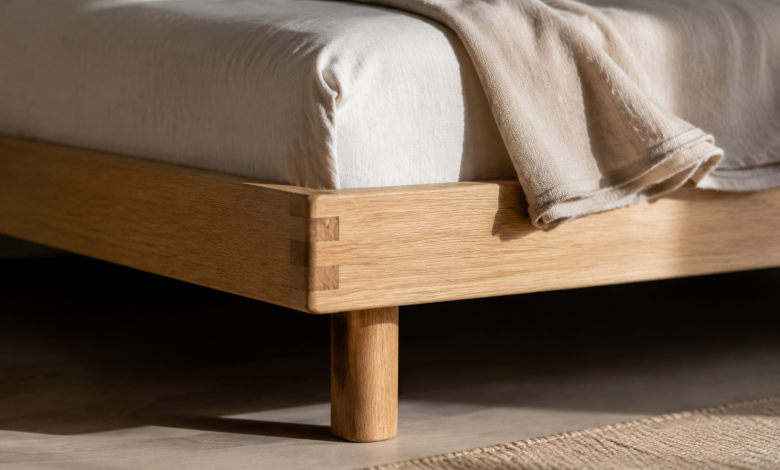
There’s a particular kind of silence that a well-designed minimalist bedroom carries. Not the silence of emptiness, but the silence of intention where every object has earned its place and nothing competes for your attention. The bed sits at the center of that silence. And for interior designers who think seriously about minimalism, it’s rarely the most dramatic piece in the room. It’s the most considered one.
Clients often assume that buying a minimalist bed means buying something plain. Strip away the ornament, the carved headboard, the upholstered curves, and what’s left? Designers who specialize in this aesthetic would push back on that idea immediately. Minimalism, they’ll tell you, is not subtraction for its own sake. It’s refinement. And a bed designed under that philosophy demands more scrutiny, not less.
The Line Is Everything
When a designer walks into a showroom or scrolls through a manufacturer’s catalog evaluating bed frames, the first thing they’re reading is silhouette. The outline a bed makes against a wall or floating in the middle of a room tells them almost everything about whether the piece will hold up in a stripped-down space.
In a maximalist room, imperfect lines get absorbed into surrounding texture and pattern. In a minimalist room, they’re exposed. A headboard that angles even slightly off-square, legs that taper inconsistently, a platform edge that doesn’t sit level these things read immediately and permanently. Designers use words like “clean” and “honest” when they describe lines they trust. What they mean is lines that don’t apologize for themselves. Lines that don’t try to do too much.
Low-profile frames tend to dominate serious minimalist interiors not just for aesthetic reasons but for spatial ones. They lower the visual center of gravity in a room, which creates a sense of calm that higher beds simply don’t produce in the same way. There’s also a relationship between the bed and the ceiling that designers think about carefully. A low bed with a high ceiling is a composition. It gives the room breathing room in the vertical plane, which makes the horizontal space feel even more deliberate.
Material Honesty Over Surface Appeal
Pick up any shelter magazine from the past decade and you’ll notice that minimalist beds tend to cluster around a narrow range of materials: natural oak, blackened steel, walnut with visible grain, matte lacquer in whites or warm greys. The range isn’t arbitrary. These materials behave honestly they age in ways you can predict and respect, and they don’t pretend to be something they’re not.
Designers are particularly attentive to what happens to a material over time. A veneer that chips at the corner after two years tells a story nobody wants their room to tell. Solid wood with visible joinery that deepens in character that’s a different story entirely. The material should make sense for what the piece is doing. A steel frame that shows the logic of how it was welded together reads as authentic in a way that a pressed-wood frame coated in metallic film doesn’t.
Fabric headboards occupy an interesting middle ground. In the right context a bedroom with warm natural light, linen bedding, textured plaster walls an upholstered headboard in a natural fabric can anchor the space beautifully. But designers are careful here. The fabric needs to be the right weight, the right weave, the right backing. Thin foam padding under cheap fabric creates the kind of softness that looks right in a photograph and feels wrong in person. What they’re after is substance the sense that if you pressed your hand against the headboard it would respond with quiet resistance, not collapse.
The Question of the Headboard Itself
Whether to include a headboard at all is a genuine design question in minimalist rooms, and it’s one that gets debated more often than you’d think. A bed without a headboard can read as unfinished or overly austere. A bed with the wrong headboard can overwhelm a room that was meant to feel spare.
What many designers land on is proportion. A headboard that extends only slightly above the mattress and spans the full width of the frame no wider creates a sense of containment without visual noise. The headboard becomes a quiet horizon line rather than an architectural statement. In rooms where the wall itself has texture or color, some designers eliminate the headboard entirely and let the wall do that work. The bed becomes a platform, a stage, and the wall behind it provides the backdrop without competing.
Floating beds frames with legs set inward so the platform appears to hover became a favorite solution for precisely this reason. They reduce visual weight dramatically. The floor remains visible beneath the frame, which keeps the room from feeling interrupted. In smaller spaces especially, that unbroken sightline across the floor plane makes a measurable difference in how generous the room feels.
Joinery, Finish, and the Details That Don’t Shout
Here’s where the work gets genuinely granular. A designer evaluating a minimalist bed frame for a project isn’t just looking at the overall shape. They’re checking the corner joints. They’re running a hand along the edge of the platform. They’re looking at how the legs attach to the base and whether the hardware is visible or concealed.
This level of scrutiny isn’t obsessive it’s necessary, because in a minimalist room, the details that don’t shout are the details that do all the work. A barely-there reveal between the headboard and the side rails. The way a matte finish catches light at a raking angle. The decision to use continuous steel instead of welded sections. These are the things that separate a bed that holds up to daily life in a minimal room from one that slowly starts to feel wrong without the occupant being able to say why.
Finish consistency matters enormously. On wood pieces, grain direction should feel considered rather than random. If a frame is painted, the texture of the paint whether it’s dead flat, satin, or has a slight sheen shifts the mood of the piece and needs to align with the room’s other surfaces. A flat matte headboard in a room full of polished concrete and satin linen creates friction. The same headboard in a room with lime-wash walls and raw brass hardware creates cohesion.
Scale Relative to the Room, Not the Catalog
One of the most common mistakes clients make when buying beds independently without designer input is buying for the mattress size without considering the full visual footprint of the frame in the actual room. A California King on a platform frame with an extended headboard can consume a moderately-sized bedroom in a way that makes everything else feel provisional. Designers think in terms of negative space. How much floor remains visible around the bed? How much wall is left to breathe on either side?
In a minimalist room, the surrounding space is part of the furniture. Empty floor is not wasted floor it’s active composition. A bed that’s technically the right size for the room can still be the wrong choice if the frame adds visual mass in a way that compresses that negative space. Designers often opt for a slightly smaller frame than the client initially wanted, then offset it with bedding and lighting choices that make the bed feel intentional and complete rather than undersized.
The nightstand relationship matters here too. Minimalist beds often look best with surfaces at nearly the same height as the mattress top a floating shelf, a low wooden cube, a wall-mounted ledge. When the nightstand is substantially higher or lower than the bed, it creates a visual step that interrupts the horizontal calm that minimalist bedrooms depend on.
Why Restraint Is the Hardest Brief
A maximalist room can absorb a mediocre bed. There’s enough going on that no single piece carries the full weight of the room’s character. A minimalist room offers no such mercy. The bed is rarely the only furniture in the space, but it’s almost always the largest, and in the absence of competing visual noise, it becomes the statement whether the designer intends it to be or not.
This is why experienced designers treat the minimalist bed brief as one of the more demanding assignments in residential work. The margin for error is narrow. The material has to be right, the line has to hold, the scale has to read correctly across every viewing distance in the room. And all of that has to happen without any of it looking effortful.
That last part the effortlessness is what clients notice when they walk into a well-designed minimalist bedroom and feel immediately at rest. They don’t notice the joinery or the grain direction or the ratio of headboard height to ceiling clearance. They just feel like the room is exactly what it should be. That feeling is the result of all those decisions landing correctly at once. It looks like nothing. It takes everything.