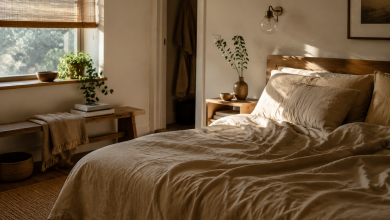
Say Goodbye to Bulky Dressers: Clever Built-In Alternatives
There’s a moment most people recognize standing in a bedroom that feels just slightly too small, staring at a dresser that takes up an entire wall and delivers maybe six drawers in return. The math never quite adds up. You give the room, the dresser takes the space, and somehow you still run out of places to put things. It’s one of those quiet frustrations of domestic life that nobody really talks about until they’ve torn out a closet and rediscovered what a room is supposed to feel like.
The dresser, in its traditional form, is a relic of a different era of homebuilding. Rooms were larger, furniture was built to last generations, and the idea of customizing your home’s storage was a luxury reserved for the wealthy. Today, things are different. Smaller square footage, smarter design culture, and a growing appetite for spaces that actually work not just look presentable have made built-in storage not just attractive but genuinely necessary for a lot of households.
Why the Dresser Is Losing the Argument
A standard six-drawer dresser occupies roughly 18 to 24 inches of depth and anywhere from 36 to 60 inches of width. That’s a significant footprint in a room where every square foot matters. But the deeper problem isn’t just the physical space it occupies it’s the dead space it creates around it. You need clearance to open drawers. You need visual breathing room so the room doesn’t feel like a furniture showroom. And you need floor space that a freestanding piece simply cannot give back.
Beyond the geometry, there’s something aesthetically limiting about a dresser. It announces itself. It dominates sightlines and interrupts the flow of a room in a way that built-in storage, by definition, does not. A well-designed built-in disappears into the architecture. The room feels larger because your eye isn’t stopping at a big wooden box it’s moving freely through the space.
The Wall Alcove Approach
One of the most underutilized opportunities in bedroom design is the recessed wall alcove. In many homes, especially older construction, there are natural niches between structural elements beside chimney breasts, flanking window bays, or tucked between load-bearing walls. These spaces often get filled with a bookshelf or left empty entirely. But with thoughtful millwork, they become built-in drawer towers that occupy zero additional floor space.
The key distinction here is depth. A built-in drawer unit recessed into an alcove can be designed with shallow, wide drawers that store folded clothes far more efficiently than the deep, narrow drawers of a standard dresser. Shallow drawers also mean you can actually see everything in them no more lost socks at the bottom of a pile.
In homes without natural alcoves, it’s possible to create the illusion of one by boxing out a section of wall with framing, adding just four to six inches of depth. Paired with floor-to-ceiling cabinetry and a consistent paint color, this built-out section reads as intentional architecture rather than added furniture.
Under-Bed Systems That Actually Work
The under-bed area is probably the most inconsistently used storage zone in any bedroom. Most people shove bins under there and forget about them, turning a potential asset into a dust-collecting chaos drawer. But purpose-built under-bed drawers whether integrated into a platform bed frame or retrofitted beneath an existing bed can replace a significant portion of what a dresser does.
Platform beds with integrated drawer systems have gotten considerably more refined in recent years. The early versions felt cheap and difficult to open; modern designs use full-extension soft-close hardware and can be configured with varying drawer counts depending on the bed size. A king platform bed with four large under-bed drawers provides storage volume comparable to a tall six-drawer dresser while consuming no additional floor space whatsoever.
For those who prefer not to replace their existing bed frame, there are lift-top systems that raise the entire mattress platform on a hydraulic mechanism, revealing a single large storage well beneath. The trade-off is accessibility you can’t easily grab something quickly the way you can with drawers but for seasonal items, extra bedding, or things you don’t need daily, it’s an elegant solution.
The Built-In Wardrobe as Total System
Perhaps the most complete departure from the traditional dresser is the full built-in wardrobe system. Rather than thinking about a closet as a place for hanging clothes and a dresser as a place for folded ones, a built-in wardrobe treats the entire storage need of a room as a single integrated problem.
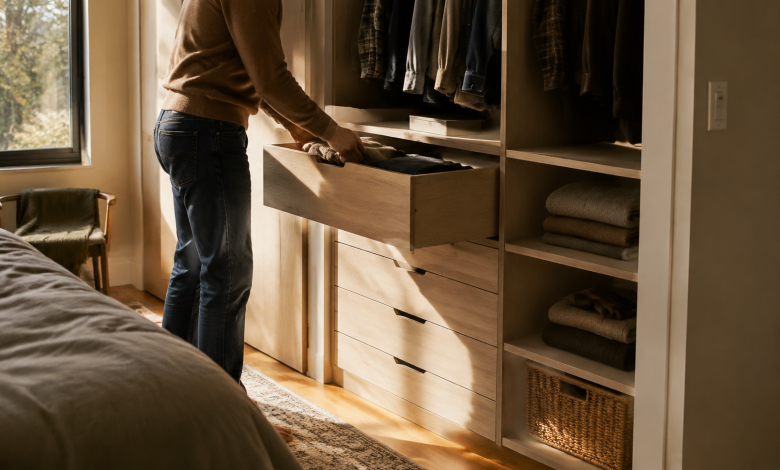
These systems typically run floor to ceiling and wall to wall across one face of the room. Inside, the configuration is entirely customizable: hanging sections for dresses, suits, and longer garments; shorter double-hang sections for shirts and folded trousers; and then crucially a tower of drawers built directly into the cabinetry. No separate piece of furniture required. Everything lives in one system, the room floor is entirely clear, and the visual effect is one of calm, organized calm rather than cluttered coexistence.
The cost is higher upfront, there’s no question about that. A professionally installed built-in wardrobe represents a real investment. But it’s worth measuring that cost against what you’re gaining: storage that is calibrated to your actual wardrobe, a room that functions and feels significantly larger, and a feature that genuinely adds resale value to a home. A dresser, by contrast, depreciates the moment it leaves the furniture showroom.
Window Seat Storage: Style Doing Double Duty
In bedrooms with bay windows or dormers, a window seat is often viewed as a charming but impractical luxury something that looks good in design magazines but doesn’t contribute much. That’s a missed opportunity. A window seat built with hinged or drawer access beneath the cushion provides substantial storage volume while adding a genuinely appealing architectural feature to the room.
The storage capacity is better suited to bulkier items: extra pillows, blankets, out-of-season clothing in flat vacuum bags, even shoes stored in neat rows. It won’t replace the function of a dresser entirely, but paired with a modest closet drawer tower, it completes the picture without introducing any additional furniture.
Thinking in Vertical Feet, Not Square Feet
One mental shift that makes built-in alternatives suddenly feel very practical: stop measuring storage in terms of floor area and start measuring in vertical feet. A dresser, sitting at four feet tall, uses about ten square feet of floor but only engages roughly the bottom third of the room’s vertical volume. A built-in column of drawers running from floor to ceiling uses half the floor footprint and captures two to three times the storage volume.
This is why built-ins consistently outperform freestanding furniture in real-world storage capacity, even when they look far less imposing. They work with the room’s full geometry instead of sitting in the middle of it.
The shift away from the bulky dresser isn’t just a design trend. It’s a more honest reckoning with what rooms are for and what furniture should actually be doing inside them. When storage becomes part of the architecture, a bedroom stops being a place where furniture competes for dominance and starts being a place that genuinely works around the way you live.