The Best Destinations for Late-Blooming Solo Travelers (40+ and Beyond)
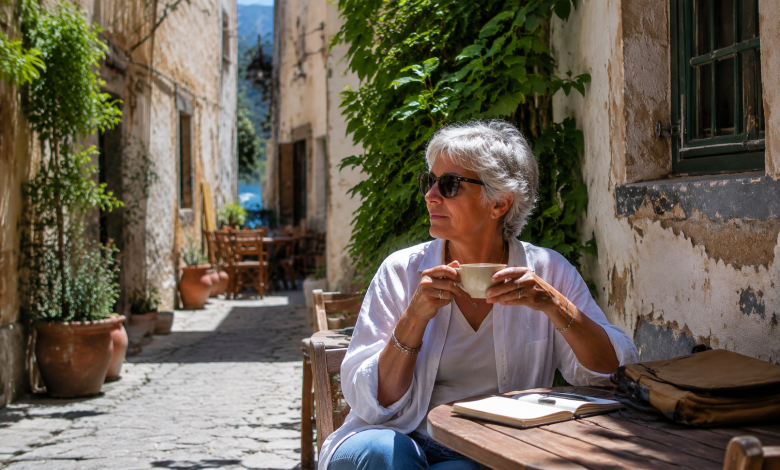
There’s a particular kind of freedom that arrives later in life not the reckless, backpack-and-a-prayer freedom of your twenties, but something quieter and more deliberate. You know what you like. You know what drains you. And somewhere between the kids leaving home, a career shift, or just a long-overdue conversation with yourself, you realize: now is actually the right time.
Solo travel after 40 isn’t a consolation prize. For a lot of people, it’s the first time they’ve ever traveled entirely on their own terms. No compromises on the itinerary. No one else’s food preferences or budget anxieties shaping the day. And the destinations that tend to reward this kind of traveler most aren’t necessarily the flashiest or the most Instagrammed they’re the ones that offer depth, safety, ease of connection, and the slow pleasure of actually absorbing a place.
Here’s where late-blooming solo travelers tend to find their stride.
Lisbon, Portugal: The City That Doesn’t Rush You
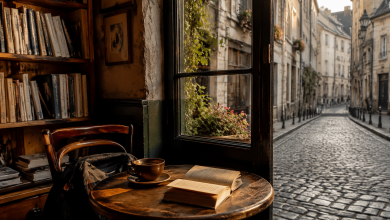
Lisbon has a quality rare in European capitals it feels genuinely unhurried. The city moves at a pace that rewards lingering. You can spend an entire afternoon in a single café in Alfama, listening to fado drift through a half-open window, and feel like you’ve done exactly enough.
For solo travelers over 40, Lisbon checks nearly every practical box. It’s walkable, relatively affordable by Western European standards, and has an unusually high tolerance for people dining alone a small but real consideration when you’re navigating solo meals for the first time. The locals aren’t aggressively chatty, but they’re warm when you meet them halfway.
There’s also a surprising expat community here, particularly of Americans and Northern Europeans who came for a long weekend and never quite left. For travelers who want the option of connection a conversation over wine, a shared day trip to Sintra it’s not hard to find. And for those who want solitude, Lisbon’s hills and miradouros offer plenty of quiet corners to think without feeling lonely.
Kyoto, Japan: Structured Solitude Done Right
Japan is one of those destinations that sounds intimidating until you actually arrive. Then everything clicks. The trains run on time to a degree that feels almost philosophical. The signage in major cities is bilingual. Convenience stores stock genuinely good food at midnight. The infrastructure, in short, takes care of you which matters enormously when you’re navigating alone and don’t want logistics eating your mental bandwidth.
Kyoto specifically rewards the solo traveler who has outgrown the need to pack every hour with activity. The city’s ancient temples and moss-covered gardens are designed for contemplation. Fushimi Inari, the famous shrine with its thousands of torii gates winding up the mountain, is best walked slowly and early in the morning, before the tour groups arrive. At that hour, with mist still sitting low over the cedar trees, it’s the kind of experience that doesn’t translate well to a photo but stays with you for years.
There’s also the matter of Japanese solo travel culture itself. Dining alone at a counter whether it’s a ramen bar, a tiny izakaya, or a chef’s omakase is entirely normalized, even celebrated. No one is watching. No one thinks you’re sad. You’re just a person eating excellent food and paying attention.
Oaxaca, Mexico: Depth Without the Grind
Mexico gets dismissed by anxious travel planners who conflate one country’s geography with a single news headline. Oaxaca, in the southern highlands, operates in a different register entirely. It’s a UNESCO-listed city with a culinary tradition that food writers spend entire careers circling, and a local arts scene ceramics, textiles, mezcal production that rewards curiosity in every direction you turn.
Solo travelers in their40s and 50s often find Oaxaca more satisfying than the more obvious Mexican beach destinations. Puerto Vallarta and Tulum have their pleasures, but Oaxaca gives you something to actually engage with. Cooking classes run by local women teaching mole technique from scratch. Day trips to Monte Albán, the ancient Zapotec ruins perched on a leveled mountaintop with a view that puts the scale of human history in perspective. The mezcal bars of the Jalatlaco neighborhood, where the owner will often explain the production process if you show genuine interest.
The city is compact enough to feel knowable within a few days, but layered enough that a week barely scratches the surface. And because it draws a thoughtful, culturally curious crowd, conversations with fellow travelers tend to be more interesting than the average resort chatter.
Edinburgh, Scotland: For the Reader, the Walker, the Thinker
There are cities that reward extroverts and cities that reward introverts. Edinburgh, with its geological drama, its literary history, and its particular brand of dry-humored sociability, has a rare gift for both. The city looks the way a city in a novel should look dramatic, slightly gothic, layered with stories.
For solo travelers who love walking, Edinburgh offers some of the best urban hiking in Europe. Arthur’s Seat, the ancient volcano in the middle of the city, can be climbed in under two hours and offers a view that reframes everything you thought you understood about scale. The Royal Mile is best explored on foot, slowly, ducking into closes and courtyards that don’t appear on any map.
Scotland also has a pub culture that’s uniquely accessible to solo travelers. Walking into a pub alone in Edinburgh rarely feels awkward the bar is a legitimate social space, not just a waiting room for groups. Order a whisky, bring a book, and you’ll likely end up in a conversation anyway.
New Zealand’s South Island: When You Want Something Bigger
Not every solo trip after 40 is about slowing down. Some people arrive at this chapter wanting to prove something to themselves to hike further than they thought possible, to kayak in a fjord at dawn, to rent a campervan and not speak to anyone for four days except at petrol stations and trailheads.
The South Island of New Zealand was practically built for this. Queenstown anchors the adventure economy, but the quieter revelation happens when you drive north through the Haast Pass, or camp near Lake Tekapo under skies so dark you can see the Milky Way as an actual structure overhead. The country is English-speaking, the roads are manageable, and the culture has a specific kind of unpretentious warmth that makes solo travelers feel immediately welcome rather than observed.
There’s also something about the scale of the landscape the Alps, the fiords, the glacial plains that has a recalibrating effect on perspective. Problems that felt weighty before departure have a way of shrinking when you’re standing in Milford Sound watching a waterfall drop150 meters into still water.
A Word About the Internal Shift
Every experienced solo traveler will tell you that the destination matters less than you think. What you’re really navigating is the first day the first meal alone, the first evening with nothing scheduled, the first moment of actual silence in which you realize you’re entirely responsible for what comes next.
That moment is uncomfortable for about twenty minutes. Then something loosens.
Late-blooming solo travelers often describe their first solo trip as the experience they didn’t know they’d been waiting for. Not because it was perfect, and not because every destination delivered exactly what was promised. But because at some point over a bowl of Oaxacan black bean soup, or on a train platform in Kyoto, or watching the light change over Edinburgh’s castle they stopped narrating the experience for an imaginary audience and just started living inside it.
That shift, whenever it arrives, is the whole point. The destination is just the door.