Casual Chic: How to Style Sweatpants Without Looking Like You Just Woke Up
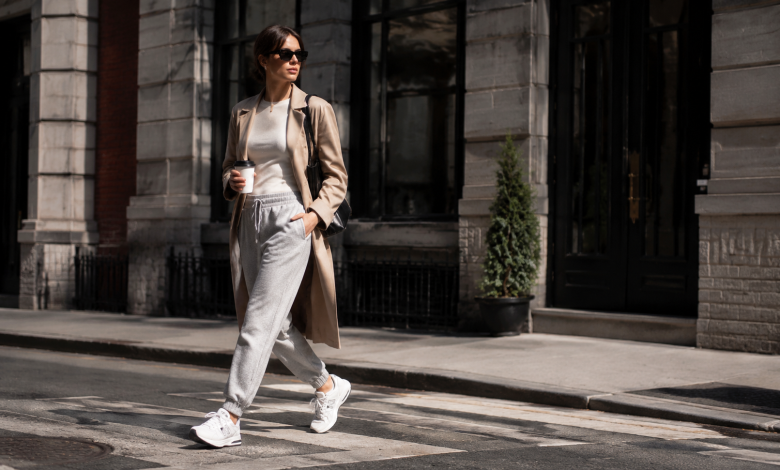
The Sweatpants Paradox
There was a time, not so long ago, when wearing sweatpants outside your apartment was a quiet admission of defeat. You were sick, hungover, running to grab toilet paper at midnight, or all three. The garment carried a social tax. People noticed. People judged. And somewhere in the collective unconscious, sweatpants became shorthand for giving up.
Then something shifted. It happened gradually, then all at once, the way most cultural reversals do. High fashion houses sent models down runways in elevated joggers. Street style photographers in Milan started capturing editors in grey marl sweats paired with structured blazers and kitten heels. The pandemic, of course, accelerated everything. When the entire world worked from the waist up on Zoom calls, sweatpants stopped being a concession and became a baseline. The question was never going to be whether we’d keep wearing them after lockdowns lifted. The question was always going to be how.
And that how is where most people stumble. Because there’s a razor-thin line between looking intentionally relaxed and looking like you lost a fight with your alarm clock. The difference lives in details that seem small until you miss them.
Fabric Tells the Whole Story
Let’s start with the most overlooked element. Not every pair of sweatpants is created with the same purpose, and the fabric is doing about seventy percent of the communication before you even add a single accessory.
Thin, pilled cotton with a faded elastic waistband reads as sleepwear regardless of what you put on top. That’s just physics. The eye registers texture before silhouette, and threadbare jersey sends an unmistakable signal. You’re not styling around that. You’re fighting against it, and you’ll lose.
What you want instead is weight and structure. French terry with a bit of body. Ponte-blend joggers that hold a crease. Even heavyweight fleece, provided it’s clean-lined and not decorated with a university logo from 2009. The fabric should look like it was chosen, not defaulted to. A pair of tapered sweatpants in a dense cotton-poly blend looks entirely different from the shapeless things bunched at the bottom of your gym bag, even if both technically qualify as sweatpants.
Color matters here too, but probably not in the way you’d expect. Black is the obvious safe choice, and yes, it works. But the most interesting casual-chic combinations often come from unexpected neutrals. Oatmeal, slate, deep olive, washed navy. These shades signal a palette awareness that black doesn’t require. They suggest you thought about how this piece fits into a broader outfit rather than grabbing whatever was closest.
The Intentionality Principle
Here’s the real secret that stylists understand and most people don’t articulate: an outfit reads as intentional when it contains at least one element of contrast. Something that clearly does not belong in a lazy context.
Sweatpants with a white tee and sneakers? That’s loungewear. You’re comfortable, and that’s valid, but it’s not styled.
Sweatpants with a white tee, sneakers, and a camel wool overcoat? Now there’s a conversation happening between the pieces. The coat doesn’t belong in the same universe as the sweats, and that tension is exactly what creates visual interest. The brain registers the juxtaposition and interprets it as a deliberate choice rather than an accident.
This principle works across multiple axes of contrast. You can play with formality, putting a silk blouse above the waist and relaxed cotton below. You can play with structure, pairing a tailored blazer with the softness of a jogger. You can play with finish, adding polished leather accessories to an otherwise matte, casual outfit. The key is that at least one element has to punch above the weight class of the sweatpants themselves.
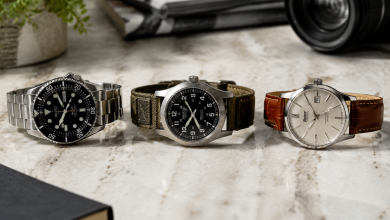
A structured handbag does this. So does a pair of pointed-toe mules. A watch with some heft. Gold hoops that catch light. Sunglasses with clean architectural lines. None of these items require effort in the way a full outfit does, but each one acts as a signal flare that says this was a choice.
Proportion Is Doing the Heavy Lifting
Silhouette might be the single biggest differentiator between sweatpants that look styled and sweatpants that look surrendered. And the rule is simpler than people make it: balance volume.
If the bottom is relaxed and wide, the top needs to be fitted or at least tucked. A cropped sweater over wide-leg sweats creates a defined waistline and a clear shape. An oversized hoodie over the same wide-leg sweats creates a rectangle, and rectangles read as pajamas no matter how expensive the fabric.
The inverse works too. Slim, tapered joggers can handle a longer, more relaxed top because the lower half is already doing the work of providing structure. An oversized button-down, half-tucked, falling to mid-thigh over fitted joggers? That’s an outfit editorial photographers would stop you for.
The ankle is also doing more work than you think. Sweatpants that puddle over your shoes create an unfinished look, like the outfit happened to you rather than being built by you. A clean break at the ankle, whether from a cuff, a tapered cut, or a cropped hem, tells the eye where the pant ends and the shoe begins. That definition matters. It’s the difference between a deliberate silhouette and a blur.
Shoes Change Everything, Every Time
You could nail every other element and still undermine the entire look with the wrong footwear. This is where people get tripped up most often, because the instinct with sweatpants is to go casual all the way down to the ground. And that instinct is the enemy.
Slides and flip-flops anchor the outfit in domesticity. Running shoes do the same unless they’re fashion-forward silhouettes worn clean. The goal is a shoe that introduces either polish or edge.
White leather sneakers, kept pristine, work almost universally. They’re casual but considered. Loafers, especially in a rich leather or suede, instantly elevate the entire lower half of an outfit. Ankle boots with a slight heel add structure and height, pulling joggers into territory that reads far more intentional. Even a clean pair of Chelsea boots shifts the context entirely.
For warmer weather, a strappy flat sandal or a minimalist mule does the work of signaling that the sweatpants are a style choice rather than a convenience. The shoe is the punctuation mark at the end of the sentence, and you want it to land with clarity.
The Grooming Factor Nobody Mentions
This might be the least discussed and most impactful element of pulling off sweatpants outside the house. Your face and hair carry context.
An outfit that includes sweatpants reads as intentional when the person wearing it clearly did not just roll out of bed. Clean hair, even if it’s pulled back simply. A bit of under-eye concealer if that’s your thing. Earrings in. Brows groomed. These micro-signals communicate to observers that you are awake, alert, and in control of your appearance, which in turn reframes the sweatpants as a deliberate wardrobe choice rather than evidence of a rough morning.
This isn’t about performing polish. It’s about cohesion. When your face says I’m put together, your sweatpants get to say I’m choosing comfort on my own terms. Without that cohesion, the sweatpants tell a different story entirely.
Context Still Has a Vote
None of this exists in a vacuum. A pair of styled sweatpants works beautifully for brunch, errands, a creative office, travel days, coffee meetings, gallery openings if you’re bold about it. They don’t work for your partner’s parents’ anniversary dinner or a client presentation, and no amount of cashmere layering will change that.
Part of dressing well has always been reading the room. Sweatpants styled with intention can enter far more rooms than they once could, but they still can’t enter all of them. Knowing where the line is, and being honest about it, is part of what makes the look work when you do deploy it. You’re not wearing sweatpants because you don’t own real pants. You’re wearing them because today, in this context, they’re exactly right.
The beauty of casual chic has never been about replacing effort with laziness. It’s about redirecting effort. Less time spent on complicated layering systems or uncomfortable fabrics, more thought given to proportion, texture, and the small details that signal awareness. Sweatpants just happen to be the perfect canvas for that philosophy. They give you comfort as a starting point and ask only that you finish the thought.