
Stop Touching That Dial! Why Manual Adjustments Ruin Your Energy Bill
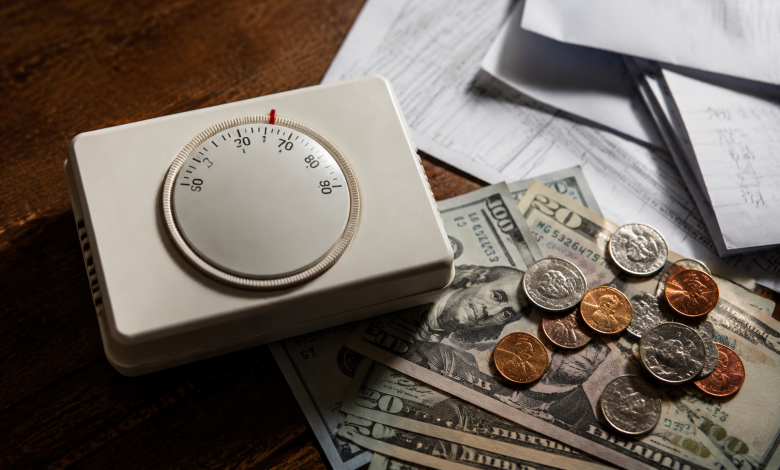
The Thermostat Is Not a Volume Knob
There’s a particular kind of confidence that comes over people when they walk into a room that feels too warm. Hand goes straight to the thermostat. Dial cranks down not to72, but to 65, because surely thecolder the setting, the faster it’ll cool down. It won’t, of course. That’s not how any of this works. But the habit persists, repeated in millions of homes every single day, and it quietly bleeds money out of every energy bill like a slow leak nobody notices until the pipe bursts.
The thermostat is not a gas pedal. Setting it lower doesn’t make your HVAC system work harder in the short term and then ease up it just keeps running until it reaches whatever temperature you dialed in, then overshoots your comfort zone entirely. You’ll be reaching for a blanket in twenty minutes. Then you’ll nudge it back up. Then a few hours later the sun sets and the house cools naturally and you’ll forget you ever touched it. That sequence crank down, overshoot, adjust, forget is one of the most expensive habits in modern domestic life, and almost nobody connects it to the number at the bottom of their utility bill.
What Your HVAC System Actually Does When You Interfere
Heating and cooling systems are engineered around cycles. A properly sized unit runs, reaches a target temperature, shuts off, and waits. That startup phase the moment the compressor kicks on and the system ramps up is where the real energy draw happens. Every unnecessary cycle you trigger with a manual adjustment is another startup, another peak-load moment, another micro-event your meter dutifully records.
When you manually adjust the thermostat multiple times throughout the day, you’re not customizing your comfort. You’re fragmenting the system’s operating logic into a series of incomplete cycles. The unit never quite settles. It chases a moving target. And chasing a moving target is, mechanically speaking, the least efficient thing a climate control system can do.
There’s also the humidity variable, which most people don’t think about until they notice the air feels “off” even when the temperature seems right. Humidity regulation happens as a byproduct of the cooling cycle the coils pull moisture from the air as they run. Short, interrupted cycles don’t give the system enough time to complete that process. So you end up with a room that hits 72 degrees but feels like 78 because the air is still loaded with moisture. Which means you reach for the thermostat again.
The Smart Thermostat Promise and the Way People Break It
Programmable and smart thermostats were supposed to solve this. Set a schedule, let the machine handle it, stop thinking about it. The energy savings data from early smart thermostat deployments was genuinely promising studies by Nest and independent researchers found average savings between 10 and 15 percent on heating costs alone, with similar figures for cooling in warm climates. That’s real money over the course of a year.
But those numbers assume people actually leave the schedule alone.
The consistent finding across adoption studies is that a significant portion of people who install smart thermostats continue to manually override them on a near-daily basis. They’re paying for intelligence and then immediately second-guessing it. The algorithms built into modern smart thermostats are trained on local weather data, occupancy patterns, thermal mass of the home, and historical usage. When you override them because the room “feels a little stuffy,” you’re substituting a decade of engineering for a momentary gut reaction. The gut usually loses that comparison.
There’s a psychological element worth sitting with here. Manual control feels productive. Touching the thermostat feels like doing something. It triggers the same satisfaction loop as adjusting a setting on any device the sense that you’ve intervened and improved the situation. The problem is that this feeling is almost entirely disconnected from the actual thermal and financial outcome. You’ve done something. You just haven’t done anything useful.
Seasonal Adjustments Are the Quiet Culprit
The single-event override is annoying enough. But the more insidious pattern is the seasonal one, and it plays out in almost every household without anyone framing it as a problem.
Late October arrives. It gets cold fast one night unusually cold,colder than expected. Someone bumps the heat up several degrees. The weather moderates within three days, but the thermostat stays where it was put, because nobody remembers to reset it or nobody wants to bother. The house runs several degrees warmer than it did the previous October, not because anyone made a deliberate decision about comfort, but because of a reactive adjustment to a single cold night that nobody ever reversed.
Multiply that by both ends of every seasonal transition, in both directions, and you’ve got a system that’s been quietly running above or below its optimal setting for weeks at a time, multiple times a year. The cost doesn’t show up as a spike on the bill it shows up as a baseline that’s just a little higher than it should be, month after month. That’s the kind of creeping inefficiency that’s hardest to notice and easiest to fix.
The Real Cost Isn’t Just the Electricity
There’s a mechanical dimension to all of this that goes beyond the monthly statement. Every unnecessary heating or cooling cycle adds wear. Compressors have a finite number of starts before they fail. Heat exchangers fatigue under repeated thermal stress. Filtersclog faster when the system runs more hours than it needs to. The HVAC industry has a useful concept called “runtime hours” the cumulative total of time a system spends actively running and that number is one of the strongest predictors of when major components will need replacement.
A homeowner who manually adjusts their thermostat several times a day, every day, is adding runtime hours that a set-and-forget approach would never generate. The incremental cost per adjustment is nearly unmeasurable. The cumulative cost over five years might mean the difference between a compressor that runs fine and one that fails in the middle of August and needs a $2,000 replacement.
None of this factors into how people think about the simple act of touching a dial. It feels like a trivial gesture. The long-term math says otherwise.
Letting the System Be Smarter Than You
The fix isn’t complicated, though it requires resisting a deeply ingrained behavioral pattern. Set your thermostat either on a programmed schedule or by configuring the learning mode on a smart device and then genuinely leave it alone. Not mostly alone. Actually alone. When you feel an impulse to adjust it, pause long enough to ask whether you’re responding to a sustained condition or a momentary sensation. Those are different things that warrant different responses.
If you consistently find the schedule isn’t working for how your household actually lives, then yes, update the schedule. That’s a deliberate, thoughtful revision. That’s fine. What’s not fine what costs real money is the reflexive, moment-to-moment tinkering that undoes the logic the system is trying to execute.
Your HVAC equipment was designed by engineers who spent careers understanding airflow, thermal dynamics, and load cycles. Your utility company charges you by the kilowatt-hour without sentiment. The thermostat sitting on your wall is the interface between those two realities. Every time you reach for it on impulse, you’re paying someone, somewhere, for the privilege of feeling briefly in control.
The dial doesn’t need your help. It needs you to leave it alone.