Is Medical-Grade Worth the Hype? Dermatologists Weigh In.
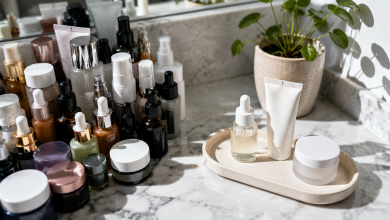
Walk into any Sephora today and you’ll notice something has quietly changed. The shelves aren’t just stocked with moisturizers and serums anymore they’re lined with products that sound like they belong in a physician’s office. “Clinical strength.” “Dermatologist-formulated.” “Medical-grade.” The language has shifted, and with it, so has the price point. A single jar of something labeled medical-grade can run $200, $300, even more. Which leaves a lot of people asking the same reasonable question: is there actually something different inside that jar, or are we paying for the language on the label?
The answer, as most dermatologists will tell you, is genuinely complicated. Not because they’re being evasive, but because the term “medical-grade” itself occupies an odd regulatory space one with real meaning in some contexts and almost none in others.
What the Term Actually Means (and What It Doesn’t)
Here’s the fundamental tension: “medical-grade” is not a term regulated by the FDA. There is no official certification process, no government body signing off on a product before a brand slaps that phrase on the packaging. In theory, any company could call its moisturizer medical-grade and face no legal consequence. That alone should give consumers pause.
What dermatologists typically mean when they use the term in their own clinical context refers to products with higher concentrations of active ingredients, formulations designed for stability and bioavailability, and a demonstrated track record in peer-reviewed research. The distinction is less about the label and more about where the product comes from and what it’s been put through.
Dr. Shereene Idriss, a board-certified dermatologist based in New York City, has spoken publicly about this distinction on multiple platforms. Her position reflects a broader consensus in dermatology: the products sold through physician offices or medical spas tend to undergo more rigorous testing than what you’d find in a standard retail environment, but the word itself guarantees nothing. “Medical-grade is a marketing term,” she’s noted, “not a medical one.”
That gap between marketing language and actual formulation science is where things get interesting.
The Concentration Argument
One of the most frequently cited reasons dermatologists lean toward medical-grade products or at least toward professional-channel skincare is ingredient concentration. Vitamin C serums available over the counter often cap out at around 10to 15 percent L-ascorbic acid. Professional formulations can push past 20 percent, sometimes with added stabilizers to prevent oxidation. Retinoids are an even sharper example. Retinol, available in drugstore products, converts to retinoic acid in the skin over multiple steps, which means lower efficacy at equal doses. Prescription tretinoin, which is retinoic acid already, works faster and more directly and some physician-dispensed retinaldehyde formulations sit in a potent middle ground.
The argument here isn’t snobbery. It’s chemistry. A0.025% retinol in a beautifully packaged department store serum and a 0.1% retinaldehyde in a clinical formula are not doing the same thing to your skin, regardless of how similar their marketing copy sounds.
But concentration isn’t the whole story. Stability matters enormously. Vitamin C is famously unstable it degrades quickly when exposed to light and air. The delivery system, the pH of the formula, the type of packaging, all of it affects whether the active ingredient actually survives long enough to reach your skin in working condition. Many professional-grade formulations invest more in this aspect of product design. Many drugstore brands, to their credit, have started to as well.
The Honest Case for Drugstore Skincare
It would be intellectually dishonest to make this entirely a one-sided argument. Some over-the-counter products are genuinely excellent. CeraVe, developed with dermatologist input and built around ceramide technology, has become a clinic staple recommended freely by some of the most respected names in dermatology not because it’s cheap (though it is), but because it works. The same goes for certain sunscreens, barrier repair creams, and basic niacinamide formulations that perform reliably in clinical practice.
There’s also the question of what most people actually need from their skincare. The average person trying to maintain a healthy moisture barrier and protect against UV damage doesn’t necessarily require a $400 growth factor serum. Good SPF, gentle cleansing, a solid moisturizer the foundational work of skincare is accessible at any price point. When dermatologists are pushing back against the medical-grade hype, this is often what they’re protecting: the idea that effective skincare shouldn’t require a second mortgage.
The real problem emerges when marketing successfully convinces people that anything without a clinical pedigree is inadequate. That anxiety is expensive, and it’s manufactured.
Where the Line Gets Blurry
The skincare landscape has grown complicated enough that even dermatologists don’t entirely agree on where to draw the line. Some physicians sell their own branded product lines from their offices. Some of those lines are genuinely thoughtful formulations backed by clinical work. Others are marked up dramatically on the strength of the doctor’s name rather than the formula’s performance. A physician-dispensed product is not automatically superior to something sold at a pharmacy. It’s just sold in a different channel.
Meanwhile, brands that operate purely in the consumer market SkinCeuticals, Obagi, Revision Skincare maintain something close to clinical positioning through rigorous research programs and by limiting distribution. SkinCeuticals’ C E Ferulic, retailing around $170, has more peer-reviewed data behind it than most products at any price point. That research investment is real and not cheap to produce. You are, in part, paying for it.
The nuance is that the presence of research doesn’t guarantee a product is right for you specifically and the absence of extensive research doesn’t make a product useless.
What Dermatologists Actually Recommend
When you strip away the brand positioning and the marketing narratives, most dermatologists’ actual recommendation framework comes down to a few consistent principles. Sunscreen first, always and the best sunscreen is the one you’ll wear daily without complaint, regardless of price. Retinoids for aging, acne, and texture concerns and here, prescription options genuinely outperform over-the-counter alternatives for most people, so a conversation with your dermatologist is worth having. Vitamin C for antioxidant protection and brightening and yes, quality formulation matters enough here that spending more on a stabilized product can be worth it.
For everything else, the evidence supports a more skeptical consumer stance. Peptide complexes, stem cell extracts, exotic botanical ingredients with three-syllable scientific names the clinical evidence behind most of these is thin, and the price tags they command are frequently more about positioning than performance.
The dermatologists most worth listening to are consistently the ones who don’t sell their own product lines. They have less financial incentive to steer you toward expensive options, and their recommendations tend to reflect what actually works in clinical practice rather than what moves product off a shelf.
The Real Question Underneath the Hype
The debate over medical-grade skincare is really a debate about how much the skincare industry can be trusted to tell you the truth about what you need. The honest answer is: partially, and with significant financial conflict of interest built into nearly every recommendation you encounter.
Medical-grade products can be worth it. Some of them represent real advances in formulation science, real investment in clinical data, and real differences in how effectively actives are delivered to the skin. But the term itself is not a guarantee of any of that. It’s a signal, not a certification and like most signals in a market shaped by aspiration and anxiety, it rewards the skeptical reader more than the credulous one.
Your dermatologist’s actual opinion, given in an appointment where they’ve looked at your skin and your goals, is worth more than any product label ever will be.