
From Drafty to Cozy: Transforming an Old House with Modern Climate Tech
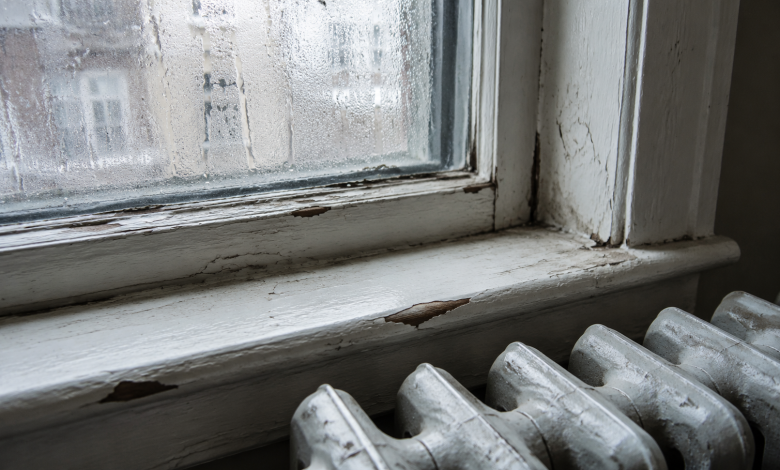
The House That Winter Never Quite Left
There’s a particular kind of cold that doesn’t come from the outside. It seeps. It accumulates in corners, along baseboards, beneath doors that haven’t sealed properly in decades. Anyone who has lived in an old house a Victorian row house, a 1940s Cape Cod, a farmhouse built before central heating was a given knows exactly what this feels like. You turn the thermostat up and somehow stay cold anyway. The radiators knock and hiss. The windows sweat. The heating bill climbs toward something embarrassing while you sit under two blankets wondering whether your house is actually heating you or just heating the street outside.
Old houses have character. They also have gaps. And for millions of homeowners across the country, the tension between loving what a century-old structure looks like and tolerating what it feels like in January has become one of the defining frustrations of residential life. The good news and this is real news, not the tepid “good news” of minor improvements is that the last few years have produced a generation of climate technologies that were specifically designed to work with older, imperfect building stock. Not against it. With it.
Why Old Houses Fail at Temperature
Before you can understand the solutions, it helps to sit with the problem a little longer. Most pre-1970s homes were built under assumptions that no longer hold: energy was cheap, insulation standards barely existed, and the idea that a house should function as a sealed thermal envelope hadn’t yet entered mainstream construction thinking. The result is a building type that leaks air at a rate modern builders would consider almost negligent.
Infiltration the technical term for uncontrolled air leakage is the enemy. Cold air finds its way in through electrical outlets on exterior walls, through the gap where your plumbing stack exits through the roof, through the sill plate where your house sits atop its foundation, and through those charming but single-pane windows that look so good in photographs and perform so poorly at everything else. A blower door test, where a technician pressurizes your house and measures how fast it leaks, will often reveal that an older home exchanges its entire volume of interior air several times per hour. A well-sealed modern home might do it once. That difference is your heating bill, your cold spots, and the reason your ankles are always freezing even when your thermostat reads 70.
The old answer to this problem was more heat push enough warm air into a leaky vessel and eventually you’ll overwhelm the losses. It worked, barely, when natural gas cost almost nothing. It’s a less convincing strategy now.
The Smart Thermostat Is Just the Beginning
Most people’s entry point into home climate tech is the smart thermostat. Nest, Ecobee, Honeywell Home the category is crowded and reasonably mature. If you haven’t made this switch yet, you should, but it’s worth being honest about what it will and won’t do. A smart thermostat won’t fix a drafty house. What it will do is stop you from heating that drafty house when nobody is in it, learn your schedule well enough to pre-condition rooms before you wake up, and give you visibility into your consumption patterns that most homeowners have never had before.
That visibility is underrated. When you can see that your system ran for six hours overnight to maintain68 degrees on a night when it was 35outside, you start asking different questions. You stop thinking of heating as a background utility and start thinking of it as a system with inputs and outputs and with inefficiencies worth finding.
The smarter thermostats now integrate with room sensors, which matters enormously in older homes where temperature stratification is severe. A two-story house with a single thermostat in the hallway is essentially flying blind. The sensor might read 70 while the bedroom above the garage hovers at 58 and the kitchen sits at 75. Room sensors break that blindness. They let the system make decisions based on where people actually are rather than where the thermostat happens to live.
Heat Pumps and the Old House Objection
The most significant shift in residential climate technology over the past decade is the rise of the heat pump specifically the cold-climate heat pump, a category that quietly crossed a credibility threshold around 2018 and has been gaining ground ever since. Traditional heat pumps lost efficiency dramatically once outdoor temperatures dropped below freezing, which made them a poor fit for northern climates. Cold-climate variants, sometimes called hyper-heat or ultra-low-temperature systems depending on the manufacturer, maintain useful heating capacity down to minus fifteen or minus twenty degrees Fahrenheit. That changes the calculus considerably.
The old house objection to heat pumps was always delivery. Heat pumps work best with low-temperature distribution radiant floors, oversized panel radiators, or in-room fan coils. They struggle when asked to push air through undersized ductwork at temperatures hot enough to compensate for poor insulation. But theductless mini-split format largely dissolves this objection. A mini-split doesn’t use your existing ductwork at all. It consists of a compact outdoor compressor unit and one or more indoor air handlers mounted high on interior walls, connected by refrigerant lines that require only a three-inch hole through your exterior wall. The installation is surprisingly non-invasive for an old house where tearing into walls andceilings is often a nightmare scenario.
What makes mini-splits genuinely transformative in older homes is zoning. Each indoor unit operates independently. The bedroom gets conditioned only when the bedroom is occupied. The finished attic, perpetually the hardest space to regulate in any old house, gets its own unit calibrated to its own exposure. You stop trying to solve a room-by-room problem with a whole-house sledgehammer.
Sealing First, Then Heating
Here’s where a lot of homeowners get the sequence wrong. They invest in new equipment before addressing the envelope, then wonder why their energy bills didn’t drop as much as promised. The unsexy but honest answer is that a better furnace or a heat pump is a more efficient engine; it still has to overcome the same losses if you haven’t addressed air sealing and insulation.
The building science community has a phrase for this: tighten first, then ventilate. Reduce your uncontrolled air leakage through attic air sealing, rim joist insulation in the basement, weatherstripping around doors and windows, and foam around penetrations and your existing equipment will immediately perform better. Your new equipment will perform even better than that. The work is not glamorous. Crawling around a basement with a can of spray foam lacks the satisfaction of unboxing a new thermostat. But the return on investment is often higher than any single equipment upgrade.
Blown-in insulation has become a particularly good match for old houses because it doesn’t require opening walls. A contractor drills small holes in exterior siding, fills the wall cavities with dense-pack cellulose or fiberglass, and plugs the holes. From inside, nothing changes. From a thermal standpoint, you’ve effectively added a jacket to your house.
Air Quality as the Overlooked Variable
Here’s something that doesn’t come up enough in conversations about old-house comfort: when you start sealing a house that has been leaking freely for a hundred years, you can inadvertently create air quality problems. Old houses were “breathing” not because anyone designed them that way but because they couldn’t help it. Seal them tightly and you may find that moisture, radon, or combustion byproducts that used to escape now accumulate.
The answer is controlled ventilation an energy recovery ventilator (ERV) or heat recovery ventilator (HRV), devices that exhaust stale indoor air while recovering most of its thermal energy and using it to temper incoming fresh air. They’re common in high-performance new construction and relatively uncommon in retrofitted old homes, which is a gap worth closing. An ERV in particular handles moisture transfer in addition to heat, making it the better choice in climates where humidity management matters in both summer and winter.
Pairing tighter air sealing with mechanical ventilation is not a contradiction. It’s the logical completion of the same project. You stop leaking energy accidentally and start exchanging air deliberately, on your terms, through a process that costs you almost nothing in thermal energy.
Living in the Layered House
None of this happens in a single weekend, or a single season, or probably even a single year. The most comfortable old houses are usually the ones whose owners treated them as ongoing projects adding a layer of improvement at a time, in an order that respects both budget and physics. Smart thermostat first, because it’s cheap and immediately useful. Air sealing next, because it multiplies every other investment you make. Better insulation where accessible. Then, when the time comes to replace aging equipment, a cold-climate heat pump sized correctly for what your house has become, not what it was when the last contractor measured it.
The character of an old house its proportions, its materials, its accumulated history doesn’t have to cost you comfort. It doesn’t have to cost you a fortune in energy every winter. Modern climate technology has finally matured to the point where it works with the quirks of old construction rather than demanding the clean slate of a new build. The drafty house and the cozy house don’t have to be different buildings. Often they’re separated by a sequence of decisions, made patiently, in the right order.