If You Only Take One Solo Trip in Your 20s, Make It This One
There’s a specific kind of loneliness that only exists in your 20s. It’s not the crushing kind it’s more like a low hum. A persistent awareness that you’re supposed to be figuring something out, but you’re not sure what, and the people around you seem equally lost but nobody’s saying so out loud. You fill the days. You make plans. You stay busy enough that the hum goes quiet for stretches at a time.
Then someone in your orbit books a solo trip and comes back different. Not dramatically different not some eat-pray-love transformation complete with a new accent. Just… steadier. More themselves. And you start wondering what exactly happened over there.
Here’s what happened: they got uncomfortable alone, in a foreign place, with no one to default to. And it turned out that was exactly what they needed.
The Trip That Doesn’t Let You Hide
Most travel, even the adventurous kind, comes with a built-in escape hatch. You have a companion. You have a tour group. You have a packed itinerary that decides for you. When something goes wrong a missed bus, a bad meal, a hotel that looks nothing like its photos you turn to someone else. You laugh it off together. The discomfort gets distributed.
Solo travel removes all of that. And the destination matters enormously here, because not all solo trips are created equal. A long weekend in a city where you speak the language, where the infrastructure is seamless, where you can pull up Google Maps and get anywhere in eight minutes that’s a nice trip. It might even be a great trip. But it probably won’t change you.
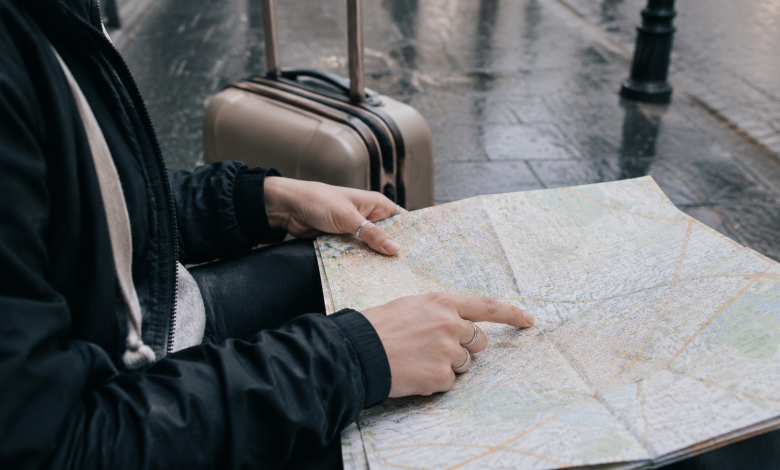
The trip that changes you is the one where you’re genuinely disoriented. Where the street signs are in a different alphabet. Where ordering food requires patience and a bit of humility. Where you have a full evening with nowhere to be and nobody expecting you, and you have to decide what to do with that not what looks good on a story, not what someone else suggested, but what you actually want.
That specific pressure is rare. Most of our days are spent responding. Solo travel in an unfamiliar place forces you to initiate.
Why Southeast Asia Keeps Coming Up
Ask ten people who traveled solo in their 20s where they went, and at least six of them will say Southeast Asia. Thailand. Vietnam. Indonesia. The Philippines. There’s a reason this region dominates the conversation, and it’s not just the cost of flights or the fact that a week in Chiang Mai won’t wreck your savings.
It’s the texture of the place. Southeast Asia has this quality of being deeply alive in public markets that start at5am, temples that are genuinely in use, street food scenes that function as the social center of entire neighborhoods. As a solo traveler, you’re not consuming the culture from behind glass. You’re sitting on a plastic stool next to locals eating the same bowl of noodles. The entry point is low. The rewards are immediate.
There’s also the infrastructure that’s been quietly built up for independent travelers guesthouses, night buses, ferry routes that connect islands but not so over-developed that it feels like a theme park. You can still get lost. You can still end up somewhere that isn’t on any list.
Vietnam in particular has a geographic logic that suits solo travel beautifully. You can move north to south (or reverse) with each stop genuinely distinct. Hanoi has a northern grit to it, all motorbikes and lake reflections and Old Quarter chaos. Hội An feels almost impossibly charming, a lantern-lit town that manages to stay human despite the tourism. Saigon moves at a pace that will either overwhelm or energize you, usually both within the same afternoon.
None of these places are secrets. That’s fine. The point was never to find somewhere untouched the point is to find yourself untouched by the familiar.
The Part Nobody Talks About Enough
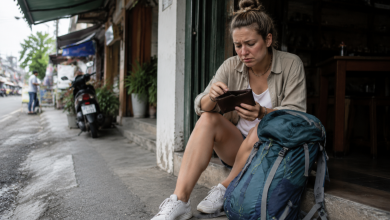
The loneliness. People romanticize solo travel in ways that gloss over the hours that are genuinely hard. The dinner alone at a restaurant when you’d rather have someone to talk to. The Sunday afternoon in a guesthouse when you’re tired but not tired enough to sleep and there’s nothing particularly compelling outside and you just sit there with the fan going.
Those moments are not the enemy of the trip. They’re actually the whole point.
When you’re uncomfortable and alone with no one to perform for, you find out what your natural instincts are. Do you go outside anyway? Do you strike up a conversation with the person reading at the next table? Do you write? Do you sit there and let the discomfort exist without immediately medicating it with your phone? What do you actually do when there’s no social contract dictating the answer?
Most people in their 20s have very little data on themselves in that condition. Their social life is dense. Their schedule is full. The quiet gaps get filled before they can tell you anything. A solo trip a real one, long enough and far enough creates an extended experiment in unwitnessed living. You learn things about your own temperament that you simply cannot learn any other way.
On the Fear of Going Alone
The objection that comes up most often isn’t money or time, though those are real. It’s fear. And specifically, for women traveling solo, it’s a fear that gets reinforced by well-meaning people who treat “careful” as synonymous with “don’t.”
The fear is worth taking seriously. Parts of the world are harder and less safe to navigate as a woman alone, and pretending otherwise would be dishonest. But the answer to that reality isn’t abstaining it’s researching, connecting with other solo female travelers who’ve done the exact route you’re considering, trusting your instincts over politeness when something feels off, and building in the kind of accommodations that give you security without sacrificing independence.
Thousands of women do this every year. They come back not just intact but with a specific confidence that comes from having trusted their own judgment in unfamiliar territory. That confidence doesn’t stay in the trip. It travels back with you.
For anyone, regardless of gender, fear before a solo trip is almost always a sign you’re doing something meaningful. The trips that scare you a little in the planning stage tend to be the ones that do the most work.
What You’re Actually Investing In
The money you spend on this trip and you don’t need much, especially in Southeast Asia is not paying for photos or passport stamps or a checklist of experiences. It’s paying for an extended period of self-knowledge that you cannot get in any other format.
Therapy gives you insight. Journaling gives you reflection. A solo trip in a genuinely foreign place gives you evidence. It shows you who you are when you’re tired and lost and slightly sunburned and trying to communicate something important to someone who speaks a different language and you have to figure it out anyway. That evidence becomes a reference point. Long after the trip ends, you’ll find yourself drawing on it on the memory that you’ve handled harder things than whatever is currently stressing you out.
Your20s will offer you plenty of comfortable choices. A trip that asks something real of you that puts you in beautiful discomfort, alone, far from anyone who already knows your story is one of the few that pays dividends for decades.
Go somewhere that makes you a little nervous. Book the ticket before you feel fully ready. That feeling of not-quite-ready is not a warning. It’s the trip telling you it’s the right one.