
7 Bed Frames That Sneakily Hide Your Clutter
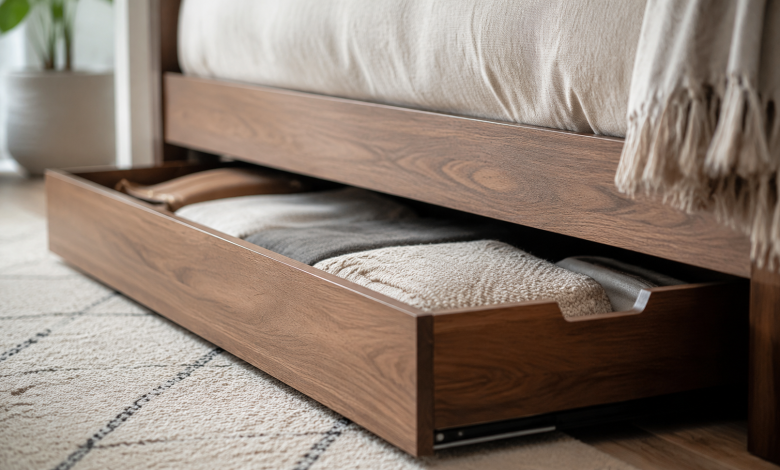
There’s a particular kind of exhaustion that comes from looking at a bedroom that never quite feels restful. The bed is made, the pillows are fluffed, and yet something is off. Look a little lower. There it is the tangle of storage bins shoved under the frame, the rogue shoebox, the stack of books that didn’t make it to any shelf. The floor-level chaos that sabotages the whole room.
Most people treat storage as an afterthought, something to bolt on or slide under once everything else is settled. But the smartest bedroom designs treat the bed itself as the anchor of a hidden organization system. The frame isn’t just a place to rest your mattress it’s square footage. In a city apartment or a smaller home where every inch carries weight, a bed that secretly swallows your clutter isn’t a luxury. It’s a survival strategy.
These seven bed frames understand that assignment completely.
The Classic Platform Bed with Drawers
Platform beds with built-in drawers have been around long enough that they’ve shed their boxy, utilitarian reputation. The modern versions are genuinely elegant low profile, clean lines, often available in upholstered finishes that make the whole frame feel like a piece of furniture rather than a glorified filing cabinet.
What makes them work isn’t just the drawers themselves, but how they integrate. The storage sits flush with the frame, so nothing protrudes, nothing looks improvised. Pull one open and you’ve got full-depth space for extra bedding, off-season sweaters, or the kind of miscellaneous household items that otherwise colonize closet floors. The better designs include soft-close mechanisms, which is a small thing until you’ve experienced the satisfaction of a drawer that glides shut in near silence at midnight.
The one honest caveat: drawer-style frames work best when the drawers become intentional zones. Treat them like junk drawers and they’ll behave like junk drawers. But assign a purpose to each one linens in the left, out-of-rotation clothing on the right and you’ve effectively added a dresser’s worth of storage without adding a single piece of furniture.
Ottoman Bed Frames
The ottoman bed is the storage maximalist’s answer to the platform drawer bed. Instead of side-access drawers, the entire mattress base lifts up hydraulically, in the better models to reveal a cavernous, uninterrupted storage well beneath the sleeping surface.
The sheer capacity is almost unreasonable in the best possible way. Bulky items that resist categorization the spare duvet, the camping gear, the holiday decorations that don’t warrant a dedicated closet bin all disappear beneath the lift. Because the space is one continuous open area rather than divided drawers, you can fit oddly shaped items with no problem.
The hydraulic lift mechanism is worth paying attention to when shopping. Gas-lift pistons that hold the mattress up without assistance while you rummage are significantly more practical than ones that require you to prop the mattress with one hand while reaching in with the other. It sounds minor until you’re doing it in the dark at 11pm trying to find an extra blanket.
Ottoman beds do sit slightly higher than flat platforms, which some people find useful (easier to get in and out of bed) and others find less appealing aesthetically. But for anyone who genuinely needs to store volume, the trade-off is almost always worth it.
Beds with Headboard Shelving
The clutter problem in most bedrooms isn’t just floor-level. Nightstands accumulate at a pace that defies logic the water glass, the phone, the charger, the book, the lip balm, the second book you’re also reading. Before long, the nightstand is full and a secondary pile starts forming on the floor beside it.
Bed frames with integrated headboard shelving address this with a kind of quiet genius. Built-in ledges, cubbies, and sometimes even closed compartments sit within the headboard structure itself, expanding the functional surface area without expanding the footprint. The nightstand stays cleaner because there’s simply more designated space. Some models include USB ports and built-in lighting, which removes the charging cable spaghetti situation entirely.
The visual effect is also worth noting. A headboard that looks like furniture that has visual weight and intentional structure anchors a bedroom in a way that a plain padded slab never can. The room looks finished in a way that’s hard to articulate but immediately noticeable.
Floating Bed Frames with Underlit Storage
Floating beds frames that are wall-mounted or designed to appear visually suspended above the floor play a clever spatial trick. The gap between the base and the floor reads as open space, which makes the room feel less crowded even when that gap is being used for storage.
The key is organization. Because the area beneath a floating frame is visible, whatever goes under it needs to look deliberate. Matching storage bins with lids, low-profile baskets in a unified material, a row of identical shoe boxes any of these work because the eye sees order rather than accumulation.
Some floating frame designs include LED strip lighting along the underside, casting a soft glow that both highlights and motivates tidiness. It’s harder to let things get messy under a bed that’s subtly lit. The aesthetic pressure is, in this case, a genuinely useful organizational tool.
Bookcase Bed Frames
For readers, the bookcase bed is almost an unfair amount of function packed into one piece. The headboard extends into full shelving units on either side, sometimes with a connecting bridge above the head of the bed, creating a built-in library effect that doubles as a display wall.
Books live there, obviously, but so do plants, framed photos, small objects, and anything else that would otherwise require a separate surface. The visual organization these frames create tends to make a room look more curated than cluttered the difference between a wall of bookshelves and a pile of books is entirely about intentionality, and these frames supply that intentionality architecturally.
They’re particularly effective in bedrooms that lack the wall space for freestanding furniture, where every available surface feels competed over. The bed becomes the furniture.
Beds with Under-Frame Platforms or Trundle Systems
Trundle beds often get filed under “for children’s rooms,” which does them a disservice. A well-designed bed with a trundle beneath it a low rolling platform that slides out on wheels is an extraordinarily practical solution for anyone who hosts guests regularly but doesn’t have the room to maintain a dedicated guest bedroom.
When the trundle isn’t serving as a sleep surface, it becomes a rolling storage unit. Flat items, extra mattress pads, folded blankets anything that benefits from being kept off the floor but doesn’t fit neatly in a drawer finds a home on the trundle platform. The wheels mean it can be pulled out, accessed, and slid back in without disrupting anything else.
Some newer designs have moved away from the traditional low trundle in favor of lift-up storage platforms on wheels essentially a low ottoman bed oncasters that nests beneath the main frame. The functionality is the same but the storage volume is considerably larger.
Upholstered Storage Frames with Side Panels
The last category is less about a single storage mechanism and more about how a frame is constructed. Upholstered beds with solid side panels rather than open legs or exposed feet create a natural visual barrier between the floor and the mattress surface. The space underneath is hidden from view simply because the frame’s structure blocks the sightline.
This matters more than it sounds. The psychological experience of a bedroom changes meaningfully when you can’t see the floor beneath your bed. Even if the storage underneath is moderately organized rather than immaculate, the concealment creates the impression of tidiness. The room reads as calmer.
Pair that concealed under-bed space with low-profile, stackable storage containers the kind that roll oncasters and are easy to pull out and you have a system that’s both invisible and genuinely functional. The frame does the aesthetic heavy lifting. The containers do the organizational work. The room stays somewhere between a retreat and a storage unit, which is the real goal most of us are quietly aiming for.