
How to Master the Local Bus System in Any Country
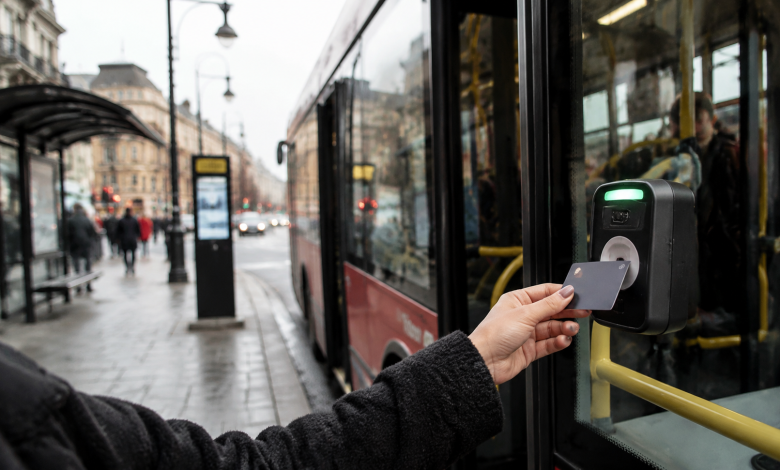
There’s a particular kind of confidence that comes from boarding a city bus in a foreign country without hesitation sliding your card, finding a seat, and arriving at your stop like you’ve been doing it for years. Most travelers never get there. They stick to taxis and ride-apps, paying four times the price to avoid the low-grade anxiety of figuring out a system that wasn’t designed with them in mind. Which is a shame, because the local bus is often the single best window into how a city actually works.
This isn’t a guide about downloading the right app or memorizing route numbers. Those tactics matter, but they’re downstream of something more fundamental: learning how to read a transit system as a system recognizing its internal logic, its social codes, its failure patterns. Once you understand that layer, any bus network in the world becomes legible.
Start with the Shape of the City, Not the Map of the Routes
Before you look at a single bus line, spend twenty minutes understanding the city’s geography. Is it organized around a central hub with routes radiating outward, like spokes? Or is it a grid city where buses run parallel and perpendicular, and you transfer between them? Knowing this changes everything about how you navigate.
In Bangkok, for example, the bus system only makes sense once you accept that the city runs along the Chao Phraya River and a handful of major arterial roads. Most routes either hug those corridors or branch off them. Once you see that, the map stops looking like chaos and starts looking like a tree. In Buenos Aires, the colectivos operate on an almost Cartesian logic numbered routes that tell you, roughly, which corridor they serve. The number isn’t random; it’s a coordinate system with history baked in.
This orientation step is something most travelers skip. They go straight to “how do I get from A to B” without ever asking “how does this city organize movement.” The second question makes the first much easier.
Learn the Payment System Before You Need It
Nothing exposes a newcomer faster than fumbling at the fare machine while a line forms behind them. Payment infrastructure varies wildly by country and even by city within the same country. Some systems are cash-only, some require a dedicated transit card, some accept contactless bank cards, some use QR codes. A few, like certain routes in Cairo or parts of Southeast Asia, operate on a honor system where a conductor walks through and collects fares after you’ve already sat down.
The safest move is to observe before you board. Stand near a bus stop for a few minutes. Watch how people pay. Are they tapping cards? Handing coins to a driver? Holding up phones? You’ll understand the basic mechanic in under three minutes without ever opening a guidebook.
If a transit card is required, get it early ideally before you need to make a time-sensitive trip. The card itself is almost always purchased at a central station, a convenience store near a main terminal, or a machine at a major stop. Trying to figure this out when you’re already running late is a reliable way to miss your bus and spend money on a cab anyway.
One detail people consistently overlook: some systems charge differently depending on how far you travel, while others charge a flat rate regardless of distance. Knowing which type you’re dealing with changes your calculation. In Seoul, the T-money card deducts a base fare plus a distance surcharge, and free transfers are available within a short window. In Mexico City, the same fixed fare gets you across the entire urban bus network. These aren’t just logistical details they determine whether you should be breaking your trip into segments or riding straight through.
Reading the Bus Itself
The bus stop is an information environment if you know how to decode it. Route number, direction of travel, major stops along the corridor most of these appear on the front display or on posted schedules at the stop. But the real information is often more subtle.
In many countries, the destination listed on the bus is the terminal, not the street. So in Istanbul, a bus showing “Taksim” is heading toward Taksim, but that doesn’t tell you where along the route it’s currently running. You need to know the route’s general corridor to know if it passes through where you’re going. This is where a quick look at a map even a screenshot you’ve taken offline saves considerable confusion.
Seating culture matters more than most travelers expect. In Japan, priority seats near the door are vacated almost automatically for elderly passengers, and you’ll draw quiet disapproval if you stay seated when someone needs that space. In many parts of Latin America and West Africa, seats near the driver are considered the most secure, and locals with long experience often choose them deliberately. In Morocco’s grand taxis and shared minibuses, you don’t depart until the vehicle is full trying to negotiate an earlier departure by paying for multiple seats is sometimes possible, sometimes insulting, and always a negotiation.
When the System Breaks Down
Every bus system has failure modes. Knowing them in advance is what separates a mildly inconvenient detour from a genuinely lost afternoon.
Strikes are common in parts of Southern Europe, South America, and North Africa. Drivers, particularly in unionized systems, will sometimes walk off mid-route without warning. If your bus suddenly empties and the driver opens the doors in an unlikely location, follow the other passengers they know what’s happening even if you don’t, and they’re already recalculating.
Routes can be informally suspended or diverted during festivals, protests, or road construction. In cities with active street markets, like Marrakech or Hanoi, certain arteries become physically impassable on market days and buses quietly reroute without any announcement. If your stop doesn’t appear and the bus keeps going, don’t panic get off at the next logical intersection and reorient.
The social solution to system failure is to ask. This feels harder than it is. In most cities, a simple gesture toward a bus stop with a questioning look will get you pointed in the right direction. You don’t need the local language to communicate “does this bus go here” a map on your phone screen and eye contact will do it. People generally want to help, and transit questions are one of the few areas where strangers feel qualified to assist.
Building Fluency Over Days, Not Hours
The last thing worth understanding about local buses is that genuine comfort takes time. The first ride is always the hardest. The second is easier. By the fifth or sixth, you’ve absorbed the ambient logic of the system the pacing of stops, the way the driver signals departure, the unspoken rule about which door to use.
This is actually an argument for using buses even on short trips you could easily walk, especially in the first few days somewhere new. You’re not just moving through space; you’re accumulating experience that pays compound interest. The traveler who spends thirty minutes on the wrong bus on day two usually ends up, by day four, navigating with a fluency that makes the whole city feel smaller and more human.
Buses go where people actually live and work. They follow rhythms that taxis don’t the school-run crowd at eight in the morning, the market vendors at noon, the long-distance workers catching the last run at midnight. Riding them is, among other things, a form of reading. And like any good text, the local bus system rewards the kind of attention most people never think to bring.