5 Sneaky Habits Sabotaging Your Hair Growth Journey
You’ve tried the oils, the supplements, the scalp massages at midnight. You’ve watched enough hair growth videos to start your own channel. And yet the length just isn’t coming. The thickness feels like a rumor. Every time you think you’re making progress, something pulls you back to square one.
Here’s the uncomfortable truth most hair content won’t say directly: the problem is rarely what you’re not doing. More often, it’s what you’re quietly doing wrong, day after day, without realizing it. These aren’t dramatic mistakes. They’re subtle, habitual, baked into your routine so deeply that they’ve become invisible. And invisible problems are the hardest kind to fix.
The Ponytail That’s Always Just a Little Too Tight
It feels secure. It looks clean. You’ve worn it this way for years. But that satisfying tension at your temples? That’s traction and over time, traction is one of the most consistent ways to derail hair growth at the edges and crown.
Traction alopecia doesn’t announce itself. It’s gradual. First you notice your hairline looks a little higher than you remember. Then the baby hairs that used to line your temples start to thin. By the time the pattern becomes undeniable, the follicles in that area have often been under stress for months or years.
The damage compounds quietly because tight styles feel like they’re protecting your hair keeping it neat, preventing manipulation, holding everything in place. But a follicle under constant pulling tension isn’t resting. It’s struggling. And struggling follicles produce thinner, weaker strands over time, until eventually they stop producing at all.
Switching to looser styles isn’t about giving up on sleekness. It’s about learning where the line is. Your scalp should never feel pulled. Your edges should never be flattened into submission. A style that requires force to achieve is telling you something.
Washing on a Schedule Instead of Listening to Your Scalp
There’s this persistent idea that less washing equals more growth that somehow your natural oils, left undisturbed for days or weeks, will feed the follicle and produce length. It’s not entirely wrong in theory. But in practice, most people use “protective stretching” as justification for letting buildup accumulate far past the point of benefit.
Product residue, sebum oxidation, dead skin cells when these sit on the scalp too long, they don’t nourish. They clog. They create an environment where inflammation brews quietly, where fungal imbalance becomes more likely, where the scalp’s own signaling gets disrupted. You might not feel it as pain or see it as visible flaking. You might just notice that your hair seems stuck at the same length regardless of effort.
On the other end of the spectrum, washing every single day with harsh sulfates strips the scalp of everything, including what it actually needs to maintain barrier health. The follicle environment becomes reactive constantly trying to compensate for over-stripping by overproducing sebum, which then demands more washing.
Your scalp has a rhythm. The goal is to learn it, not override it with someone else’s schedule.
The Protein-Moisture Imbalance Nobody Diagnoses Correctly
Most people have heard about protein and moisture balance in hair care. Far fewer actually understand how to identify which side they’re deficient in and the consequences of getting it wrong are real.
Hair that lacks protein becomes limp, stretchy, almost gummy when wet. It breaks with minimal tension and loses its shape quickly. The natural response is to load it with moisturizing products, conditioners, leave-ins which makes everything worse, because the strand is already over-saturated and under-structured.
Hair that lacks moisture, on the other hand, feels brittle and rough. It snaps rather than stretches. It looks dull even right after washing. People often respond to this by reaching for protein treatments, which only deepen the rigidity and increase breakage.
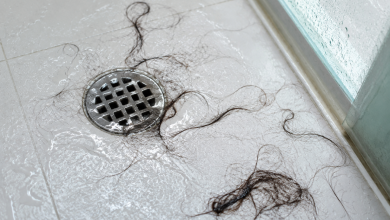
The sneaky part is that breakage looks the same no matter the cause. You find hair in your hands, on your pillow, in the drain and you blame growth when the real issue is retention. You’re not failing to grow hair. You’re growing it and losing it at the same rate, caught in a cycle that keeps your length perpetually stuck.
Learning to read your hair’s texture, elasticity, and response to products takes time. But it’s one of the highest-value skills in any hair care practice.
Underestimating What Happens While You Sleep
Eight hours of friction every night. That’s what cotton pillowcases deliver a slow, nightly abrasion against strands that are already dry from hours without moisture input. Cotton fibers are rough at a microscopic level. They grab and snag. They pull moisture out of the hair cuticle through simple absorption. By morning, you’re waking up to frizz, tangles, and breakage that you’re attributing to everything except the surface you slept on for a third of your life.
Silk and satin aren’t luxury accessories. They’re functional surfaces that allow hair to move without resistance, retain moisture through the night, and reduce the mechanical damage that accumulates silently over months. The difference in breakage rates between someone who sleeps on cotton versus satin, everything else being equal, is measurable.
Protective styles at night matter too loose braids, a low pineapple, a satin bonnet. Not because nighttime manipulation is inherently damaging, but because unprotected hair tangles, and tangle removal in the morning is where a significant percentage of daily breakage actually happens.
Treating Hair Growth Like a Surface Problem
This might be the deepest sabotage of all, and the hardest to confront.
Hair growth is a systemic process. The follicle is a living structure fed by blood vessels, regulated by hormones, influenced by inflammation, and dependent on nutritional availability at the cellular level. When growth stalls or sheds increase, the surface the strand you can see and touch is almost never where the problem lives. It’s a symptom, not a source.
Iron deficiency is one of the most common and most chronically underdiagnosed contributors to hair loss, particularly in women. The body deprioritizes non-essential functions including robust hair production when iron stores are low, often long before anemia becomes clinically apparent. Ferritin levels in the low-normal range can be enough to slow growth noticeably.
Chronic stress, disrupted sleep, thyroid imbalances, crash dieting all of these redirect resources away from follicle function. You can apply every topical treatment in existence and still see minimal results if the internal environment isn’t supporting growth. The body simply doesn’t consider hair a priority when it’s in survival mode.
This isn’t an argument against topical care. Scalp health, product choices, and physical handling absolutely matter. But they matter in the context of a body that has the resources to actually grow hair. Chasing length with serums while ignoring what’s happening internally is like watering a plant with the perfect technique while it sits in concrete.
The most effective approach treats hair growth as what it actually is a reflection of whole-body health, maintained through consistent, quiet, unsexy habits over time. Not a project to be optimized. A relationship to be understood.