How to Stop Buying Clothes You Never Wear
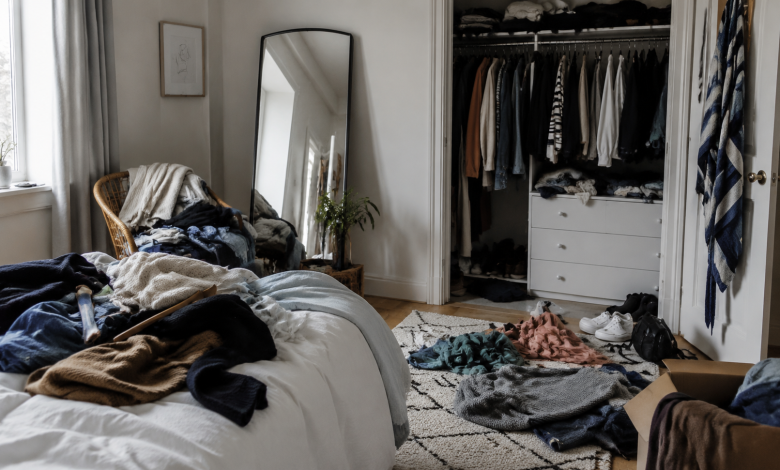
I counted four gray sweaters in my closet last spring. Nearly identical. Three still had tags. The fourth I’d worn exactly once, to a dinner where I spilled marinara on it within the hour and never bothered to clean it.
That pile of unworn clothes wasn’t a fashion problem. It was a thinking problem. And once I figured out what was actually going on in my head every time I clicked “add to cart,” the spending mostly stopped on its own. Not all of it. I’m not a monk. But most of it.
If you want to stop buying clothes you never wear, you have to stop blaming your willpower and start looking at the moment right before the purchase. That’s where the whole thing lives.
Why You Keep Buying Clothes You Never Wear
Here’s the part nobody likes to hear. Most unworn clothes aren’t bought for the person you are. They’re bought for a person you’re hoping to become.
The linen blazer is for the version of you who hosts effortless backyard dinners. The structured trousers are for the you who finally got the office job with the dress code. The bright dress is for a vacation that exists mostly in your imagination. You’re not shopping for your life. You’re shopping for a fantasy of it.
And stores know this. The whole experience is built to sell you the feeling, not the fabric.
I used to think I bought clothes because I needed them. Turns out I bought them because the act of buying felt like progress. Like I was doing something about my life by acquiring the costume for a better one. The clothes just sat there afterward, quietly reminding me the transformation never came.
The Trap of Impulse Clothes Shopping
There’s a specific kind of high that comes with impulse clothes shopping, and pretending it doesn’t exist is how people fail. You walk past a window, or you’re killing time on your phone in line at the pharmacy, and suddenly there’s a sale. Forty percent off. Today only.
But the discount is doing something sneaky to your brain. It’s reframing the question. You stop asking “do I want this?” and start asking “can I afford to miss this deal?” Those are completely different questions. One is about the item. The other is about fear.
I fell for this constantly. My worst stretch was a couple of years ago, working from home, ordering things at 11 p.m. because the day had been long and a package arriving felt like a small reward. Half of it didn’t fit. A quarter of it I forgot I’d even bought until the box showed up. My friend Devon called it “stress retail,” and she wasn’t wrong.
What Actually Worked For Me
So let me tell you what I tried first, because it failed, and the failure is the useful part.
I tried a total ban. No new clothes for a year. Cold turkey. It lasted about six weeks before I cracked and bought two things I didn’t need, plus a third out of sheer rebellion. Restriction made me want it more. Anyone who’s ever dieted knows exactly how that movie ends.
The thing that finally worked wasn’t a rule. It was friction.
Add a Waiting Period
I put a72-hour rule on anything over twenty dollars. See something I want, I don’t buy it. I screenshot it, drop it in a notes file, and wait three days. That’s it.
You’d be amazed how much desire just evaporates. Maybe two out of ten things still feel worth it after the wait. The other eight were never about the clothes. They were about a mood, a Tuesday, a bad meeting. The waiting period doesn’t fight the urge. It just outlasts it.
Shop Your Own Closet First
Before buying anything, I make myself put together three outfits using only what I already own. Sounds tedious. It is, a little. But it does two things at once.
It reminds you that you already have options, and it shows you the actual gaps. Usually the gap isn’t “another sweater.” It’s one specific thing a belt, the right shade of shoe that would make six things you already own suddenly wearable. That’s a far better thirty dollars than a seventh sweater.
The One-Question Test
When something passes the waiting period, I ask one question. Not “is this cute?” Everything is cute. The question is: what am I wearing this with, and where am I going in it?
If I can’t name a real top, a real pair of pants, and a real place I’ll actually go not a hypothetical, an actual thing on my calendar it doesn’t come home. This single question killed more bad purchases than every budget I ever made.
How to Build a Wardrobe You Actually Wear
Now here’s where I get a little contrarian, and some people are going to disagree with me.
I don’t think the answer is a tiny capsule wardrobe of thirty perfect pieces in beige. That trend gets sold as the cure, but for a lot of people it’s just a prettier version of the same fantasy. You’re still shopping for an idealized minimalist who doesn’t exist. You just spent more per item to do it.
The real move is messier. Pay attention to what you reach for. Not what you think you should wear, what you actually grab on a normal day when nobody’s watching. For me it turned out to be the same three or four things on rotation, and almost none of them were the “investment pieces” I’d agonized over. They were the cheap, comfortable, slightly boring stuff that fit my real life.
So I started buying more of what I already proved I’d wear. Less of the costume. The closet got smaller and somehow I had more to wear. Funny how that works.
What To Do With The Clothes You Never Wore
The unworn stuff still in your closet is doing damage, by the way. Every time you open the door, those tags are a tiny reminder of money wasted and decisions you don’t want to face. It quietly makes you feel worse about getting dressed, which strangely makes you more likely to shop for relief.
Pull them out. Be honest. If you haven’t worn it in a year and it isn’t seasonal, it’s not coming back. Sell it, donate it, hand it to a friend. Devon got my gray sweaters, minus the marinara one. She wears them more than I ever did.
Keeping unworn clothes around as “potential” is just storing your regret where you have to see it every morning. Let it go. You’ll buy less once you’ve seen, in one pile, what overbuying actually looks like. [internal link: how to declutter your closet without regret]
The Quiet Shift
Will youever buy something you don’t wear again? Probably. I still do, once in a while. The goal was never perfection.
What changed is that I stopped treating a shopping cart like a mood fix. The clothes I own now mostly get worn, and the ones I don’t buy don’t haunt me. I genuinely couldn’t tell you the last time I bought something with the tags still on it three months later.
I might be wrong about the capsule wardrobe thing. Plenty of people swear by it and they’re not all kidding themselves. But for me, the fix was never about owning the right number of things. It was about catching myself in that small window between the urge and the click.
So next time you feel that pull toward something you don’t need what version of yourself are you actually trying to buy?