From Brittle to Bouncy: Restoring Elasticity in Chemically Treated Hair
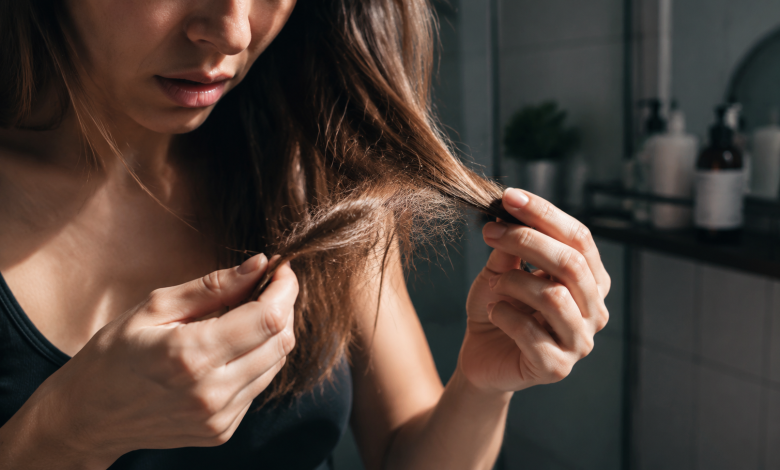
The Moment You Realize Something Has Changed
There’s a specific feeling most people recognize but rarely have words for the moment you run your fingers through your hair and it just doesn’t feel right. Not dry exactly, not tangled, but somehow hollow. Like the strand beneath your fingertips has lost whatever it was that made it alive. That feeling has a name: elasticity loss. And for anyone who has gone through chemical treatments coloring, bleaching, perming, relaxing it’s less a possibility than an inevitability if the process isn’t handled with care.
Elasticity is one of those qualities we take for granted until it disappears. Healthy hair can stretch up to 50% of its length when wet and return to its original shape without snapping. That bounce, that give, that resilience it all depends on the structural integrity of the hair’s cortex, where keratin protein chains are held together by disulfide bonds and hydrogen bonds in a kind of invisible architecture. Chemical treatments, particularly those involving alkaline agents or oxidizing compounds, interrupt that architecture in ways that aren’t always immediately obvious but accumulate over time.
What Chemistry Actually Does Inside the Strand
Bleaching is probably the most dramatic example. When hydrogen peroxide and an alkaline developer lift the cuticle and begin oxidizing the melanin granules inside, they don’t stop neatly at the pigment. The same oxidative process begins degrading the proteins themselves specifically thecysteine-rich matrix proteins that give hair its flexibility. This is why over-bleached hair doesn’t just lose color; it becomes porous, gummy when wet, and prone to snapping at the slightest tension.
Relaxers and perms work through a different mechanism but arrive at a similar destination. Both processes break the disulfide bonds those sulfur bridges between protein chains in order to reshape the hair’s curl pattern. Relaxers break them and don’t reform them in a new configuration; perms break them and reform them around rods. Either way, if the timing is off, the pH isn’t controlled, or the neutralization step is rushed, you end up with fewer intact bonds than you started with. The hair becomes structurally compromised even if it still looks fine in the mirror.
Color treatments sit on a spectrum. A semi-permanent gloss that simplycoats the shaft does relatively little damage. A permanent color that requires lifting the natural pigment first does considerably more. What most people don’t realize is that the cumulative effect of repeated coloring even gentle coloring adds up. Each session opens the cuticle, each rinse stresses the weakened cortex, each blowout on already-compromised strands removes a little more of what’s left.
Elasticity as a Diagnostic Tool
Before any restoration strategy can work, it helps to understand where your hair currently sits on the spectrum. The wet stretch test is remarkably informative: take a single strand, wet it, and gently pull both ends. Hair with good elasticity stretches noticeably and snaps back. Hair with moderate damage stretches but doesn’t fully return. Hair with severe elasticity loss either barely stretches at all already broken down or stretches too far and snaps with minimal force, which signals that the protein matrix has been so degraded the bonds can no longer hold tension.
That last scenario the hair that stretches almost like chewing gum is often misdiagnosed. People see their hair stretching and assume it’s just over-moisturized. But that gummy, overly elastic response is actually protein deficiency. The cortex has so few intact structural proteins that the strand has lost its ability to hold a shape under load. Moisture and protein exist in a balance, and both extremes cause problems. This is important because the instinct when hair feels dry and rough is to pile on conditioner but for severely compromised hair, that can make things worse before it makes them better.
Rebuilding From the Inside Out
The restoration process is slower than most people want it to be. That’s probably the most important thing to accept upfront. Hair that has been processed aggressively over months or years cannot be fixed in a weekend.
Protein treatments are the foundation of any real recovery plan. Hydrolyzed proteins keratin, wheat, silk, quinoa are small enough in molecular size to penetrate the cuticle and fill gaps in the cortex. They temporarily reinforce the weakened protein matrix, improving both elasticity and tensile strength. The key word is temporarily; protein treatments don’t permanently repair broken bonds, but they provide the scaffolding the hair needs while it grows and as subsequent chemical services become less aggressive.
Olaplex and its category of bond-building treatments work on a more targeted level. The active chemistry (bis-aminopropyl diglycol dimaleate in the original formula) reconnects broken disulfide bonds directly, which is a fundamentally different mechanism than surface conditioning or even protein filling. Used consistently as a standalone treatment not just as an add-on during color it measurably reduces the cumulative damage from repeated chemical processing. The research behind these products is legitimate, and for hair that’s been through significant bleaching or chemical straightening, they’ve become close to essential.
Moisture, of course, still matters. Ceramides help seal the cuticle and reduce porosity, which means the water the hair absorbs during washing doesn’t escape as quickly. Deeply moisturizing masks particularly those with humectants like glycerin or honey alongside film-forming ingredients give the strand the flexibility it needs to move without cracking. But the sequencing matters: protein before moisture on severely compromised hair, not the other way around.
The Role of Porosity in Everything
High porosity hair, which is almost universally the result of chemical damage, is simultaneously the most receptive to treatment and the hardest to treat. It absorbs product enthusiastically but loses it just as fast. The cuticle is lifted and irregular, which means water and conditioning agents flow in and out without much resistance. This is why some people feel like no product ever “works” on their damaged hair they’re not imagining it. The treatment they applied this morning has largely washed out by afternoon.
Cold water rinses help by temporarily flattening the cuticle. Leave-in treatments with light oils (argan, camellia) create a surface seal that slows moisture loss without weighing the strand down. Avoiding heat or at least using a thermal protectant that forms a genuine barrier, not just a silicone coat reduces the further lifting and cracking of an already-compromised cuticle.
There’s also something to be said for managing expectations around heat styling. A curling iron at 400°F on hair that’s already lost significant protein is like running a cracked piece of porcelain through a kiln. The existing weak points amplify under heat, and the result is breakage that seems to come out of nowhere.
Trimming Isn’t Defeat
One of the more emotionally charged conversations in hair restoration is the trim conversation. There’s a persistent belief that trimming stunts growth or that avoiding scissors preserves length. Neither is true, but both myths have remarkable staying power.
The ends of chemically treated hair are the oldest, most processed, most structurally degraded part of the strand. Split ends don’t stay at the tip; they travel upward, splitting the cortex progressively and turning a fixable situation into an irreversible one. Regular trimming not aggressive cutting, just removing the compromised ends actually preserves more length over time than letting the damage migrate northward.
For someone genuinely trying to restore elasticity while maintaining length, the practical approach is to trim every eight to ten weeks, keep chemical services spaced as far apart as the desired outcome allows, and treat each new inch of growth as the healthy canvas it is. The goal is to gradually replace the damaged sections with hair that’s been processed more carefully or not at all.
When Patience Becomes the Strategy
Recovery from significant elasticity loss is, at its core, a long game. The bond-building treatments help. The protein-moisture balance helps. Reducing heat and chemical frequency helps. But the most reliable thing that restores elasticity to chemically treated hair is new growth inches of hair that never experienced the insult in the first place.
This isn’t a defeatist conclusion; it’s a realistic one. The scalp produces roughly half an inch of new growth per month. That growth, handled gently, protected from further damage, and supported with thoughtful product choices, is structurally sound from the start. Over a year or two, the ratio of damaged to healthy shifts meaningfully. The hair begins to behave differently. The bounce comes back not as a product of any single treatment, but as the natural result of the strand returning to what it was always capable of being.