From Varsity Jackets to Pleated Skirts: Preppy Athleisure Is Taking Over
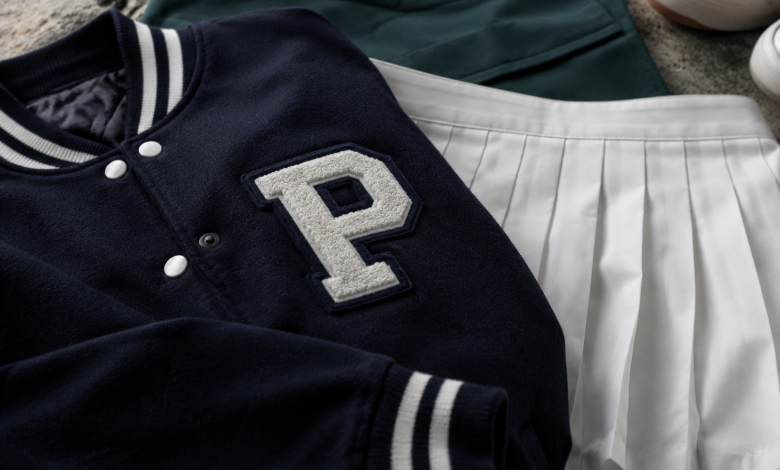
Something shifted in the way people dress for movement. Not overnight, and not because a single designer declared it so, but through a slow accumulation of choices made by women walking into pilates studios wearing cable-knit vests over their sports bras, and men pairing rugby-striped polos with tapered joggers on Saturday mornings. The athletic wardrobe has acquired a prep school accent, and it sounds nothing like the minimalist whisper that dominated activewear for the past decade.
The intersection of preppy style and athletic function is not entirely new. Tennis whites have always carried a country club air, and rowing blazers existed long before they became a brand name. But what is happening now goes deeper than aesthetic nod or heritage callback. It is a full-scale merger, a new sartorial language that refuses to choose between the locker room and the library.
The Death of the Neutral Uniform
For years, athleisure lived inside a narrow palette. Charcoal leggings, black sports bras, muted olive bombers. Brands like Lululemon and Outdoor Voices built empires on the promise of blending in, of looking put-together without looking like you tried. The visual code was restraint. Anonymity, even.
That code is cracking. Walk through any upscale gym lobby in Manhattan, Atlanta, or Austin and you will see argyle-patterned compression tops, pleated tennis skirts worn with chunky sneakers, quarter-zip pullovers in forest green and burgundy that could pass for something pulled from a 1994 Ralph Lauren catalog. The aesthetic is unmistakable. It is preppy, unapologetically so, but built on technical fabrics that wick sweat and stretch in four directions.
This is not costume. The distinction matters. When someone wears a pleated skirt with built-in shorts and moisture-wicking polyester to actually play tennis, or run errands afterward without changing, the garment is performing double duty in a way that a cotton school uniform never could. The form references tradition. The function belongs entirely to the present.
Why Now, and Why This Particular Flavor
Cultural timing explains part of it. The last few years produced a hunger for visual identity that minimalism could not satisfy. After a period defined by sameness, by the beige interiors and neutral capsule wardrobes that saturated social media from roughly 2018 to 2022, a counter-movement was inevitable. People wanted color, pattern, personality. They wanted clothes that communicated something beyond quiet competence.
Preppy style offers exactly that. It carries connotations of belonging, of leisure earned, of institutions and rituals. These connotations are complicated, loaded with class signifiers that not everyone finds comfortable. But fashion has always been a space where symbols get borrowed, recontextualized, and occasionally subverted. The woman wearing a varsity-letter cardigan over her running tights may be referencing a tradition she was never part of. That act of claiming, of wearing the code without the credential, is itself a statement.
There is also the influence of specific cultural moments. The resurgence of tennis as a social sport, driven partly by pandemic-era outdoor activity and partly by figures like Zendaya appearing in tennis-themed campaigns, reintroduced the sport’s preppy visual grammar to a generation that might otherwise have ignored it. Similarly, the ongoing popularity of padel, particularly in European and Latin American markets, brought with it a sportswear aesthetic that leans heavily into polo shirts, wristbands, and structured shorts with a distinctly old-money flavor.
The Brands Reading the Room
Alo Yoga, once synonymous with sleek studio minimalism, introduced pieces last season that flirted openly with collegiate style. Think cropped sweater vests, high-waisted pleated shorts, and embroidered crests that appeared on puffer jackets and duffel bags. The messaging was clear. This was no longer about disappearing into a yoga flow. It was about arriving somewhere and being seen.
New players have entered specifically to own this niche. Brands like Varley and Splits59 now produce collections that read like a prep school prospectus filtered through a performance fabric lens. Cable-knit textures rendered in seamless compression knit. Pleats that hold their shape through sweat and spin cycles. Collared athletic dresses that move from the court to a lunch reservation without requiring a change.
Even legacy preppy brands are crossing the bridge from the other direction. J.Crew launched a performance line. Ralph Lauren has been quietly expanding its RLX athletic sub-brand with pieces that feel less like golf-specific gear and more like everyday athleisure with a heritage finish. The convergence is happening from both sides, athletic brands reaching toward prep, and prep brands reaching toward function.
The Pleated Skirt as a Case Study
No single garment captures this moment better than the pleated skirt. It was once confined to school uniforms, cheerleading squads, and the occasional runway homage to Britney Spears circa 1998. Now it is everywhere in athletic contexts, and its evolution tells the larger story in miniature.
The modern athletic pleated skirt is engineered. Knife pleats are heat-set into synthetic fabrics that resist wrinkling. Built-in compression shorts with phone pockets sit underneath. Waistbands are elasticized and often include silicone grip strips to prevent riding up during movement. The garment performs at a high level. But its silhouette, that swinging A-line shape, the structured folds, the way it moves when someone walks, all of that belongs to a much older tradition. One that evokes field hockey pitches at boarding schools, women’s tennis in the 1970s, and a particular vision of feminine athleticism that is graceful before it is aggressive.
This is not an accident. The pleated skirt sells a feeling as much as a function. It says that movement can be elegant. That sport does not require the erasure of femininity or formality. Whether that message resonates as empowering or regressive depends entirely on who is wearing it and why, but the market has spoken clearly. These skirts sell out in hours during summer drops.
Class, Access, and the Uncomfortable Quiet Part
Any honest conversation about preppy athleisure has to acknowledge what preppy means in a broader social context. The style originated in spaces defined by exclusion. Ivy League campuses, private clubs, country estates. Its visual codes, the crests, the specific shades of green and navy, the cable knits, were originally markers of access. You wore them because you belonged somewhere that most people did not.
When those codes migrate into mass-market athleisure, something interesting happens. The signifiers detach from their original gatekeepers. A twenty-four-year-old in Houston wearing a crest-embroidered sports bra from a direct-to-consumer brand is not signaling membership in an exclusive institution. She is signaling awareness of an aesthetic, participation in a trend, maybe an aspiration toward a lifestyle that looks a certain way on Instagram.
This democratization is real, but it is also incomplete. The price points of many preppy athleisure brands remain high. A Varley tennis dress costs north of one hundred and fifty dollars.Alo’s collegiate pieces sit in a similar range. The aesthetic may be more accessible than the institutions it references, but it is not cheap. There is a version of this trend that trickles into fast fashion at lower price points, and another version that remains firmly positioned as a marker of disposable income spent on leisure.
Where the Trend Goes From Here
Trends in athleisure tend to have longer lifespans than trends in traditional fashion. People invest in performance pieces expecting to wear them for years, and the functional nature of the clothing means it does not date as quickly as a purely decorative garment might. The preppy turn is likely to hold for several more seasons, partly because it offers so many sub-categories to explore. Equestrian influences, sailing references, cricket-inspired knits, there is a deep well of heritage sport aesthetics that brands have barely begun to tap.
The more interesting question is whether this moment changes athleisure permanently. Whether the injection of pattern, structure, and historical reference breaks the stranglehold that minimalism held over the category. There are signs that it might. Consumers who have discovered that they enjoy wearing pleats and argyle and crests during their workouts are unlikely to return happily to a uniform of solid black. The vocabulary has expanded. The conversation about what athletic clothing can look like has grown louder and more varied.
On a Tuesday morning in April, a woman in a cable-knit quarter zip and a knife-pleated skort drops her daughter at school, walks into a barre class, grabs coffee afterward without changing, and sits down at her laptop looking exactly as put-together as she did at seven forty-five. She is not thinking about the semiotics of preppy style or the class implications of her wardrobe choices. She just got dressed once and it worked all day. That, more than any runway moment or brand campaign, is why this particular fusion has staying power. It solves a real problem while looking like something specific. In a market that spent years asking women to look like nothing in particular, that specificity turns out to be the thing people were hungry for all along.