Cozying Up: Styling Tips for the Ultimate Micro-Backyard
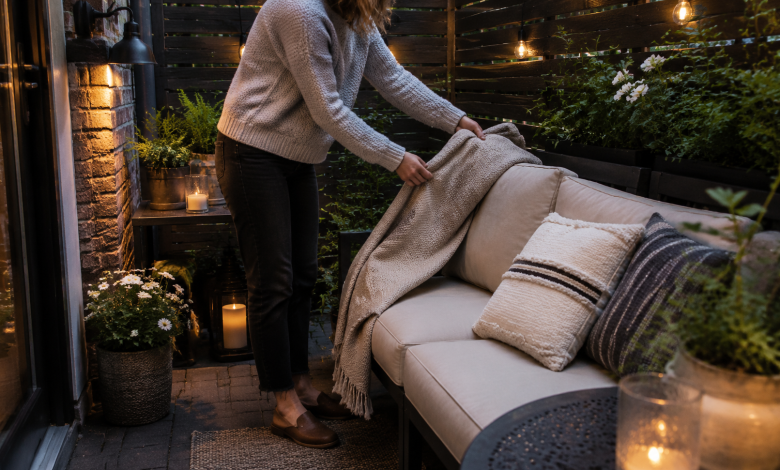
Small Space, Real Stakes
There’s a particular kind of frustration that comes with a tiny backyard. You scroll through Pinterest boards full of sweeping patios, pergolas draped in wisteria, and outdoor kitchens that cost more than some cars and then you look out your back door at a ten-by-twelve patch of concrete and a sad potted cactus. The temptation is to give up entirely, to write the space off as decorative dead weight.
That would be a mistake.
Micro-backyards those compact outdoor areas that urban homeowners and renters increasingly have to work with are actually some of the most interesting design challenges out there. They demand intentionality. Every object earns its place or doesn’t stay. The constraints, frustrating as they feel at the start, push you toward better decisions than a larger space ever would. What you end up with, when done right, isn’t a compromise. It’s a room. Just one without a ceiling.
Start With How You Actually Want to Feel
Before you buy a single thing, sit in your backyard for ten minutes. Morning coffee, afternoon quiet, evening glass of wine whatever that space is supposed to hold for you. This sounds obvious. It rarely gets done.
The reason it matters is that micro-backyards can’t afford identity crises. A larger yard can absorb a fire pit that never gets used, a dining set that’s beenrained on so many times the cushions are permanent science experiments, a hammock nobody has touched since2019. A small space can’t hide that kind of clutter. Every item sends a signal about what this space is for, and competing signals create visual noise even when the actual square footage is fine.
If your honest answer is that you want a place to drink coffee alone in the morning before the day starts, that’s your brief. It doesn’t call for a six-person dining table. It calls for one genuinely good chair, a side table with room for a mug and a book, and enough privacy that you actually feel separated from the outside world. That specificity is what turns a small outdoor patch into something that feels like yours.
Vertical Space Is Not Optional
Here’s the place where most small-backyard redesigns stall out. People think horizontally, because that’s how we move through space. But in a micro-backyard, the ground plane is finite. You cannot negotiate more of it. What you can do is claim the walls, fences, and vertical air above you.
A plain wooden fence becomes a garden when you attach modular planters to it. A bare exterior wall softens instantly with a mounted trellis and a climbing plant jasmine if you want scent, ivy if you want speed, a climbing rose if you’re willing to be patient with something beautiful. The eye naturally travels upward when there’s something to follow, and that visual lift makes a space read as larger than its measurements suggest.
String lights do this particularly well. Hung at an angle or in a canopy pattern overhead, they draw attention upward and create what designers sometimes call a “ceiling effect” the sense that the space has defined edges on all sides, which paradoxically makes it feel more contained and welcoming rather than exposed and awkward. Solar-powered options have gotten genuinely good in the last few years, so the wire management and outlet-hunting that used to complicate this approach is largely a solved problem now.
Furniture That Earns Multiple Roles
Outdoor furniture design has had something of a renaissance, and the best of it is built with small spaces in mind. The old assumption big patio set, umbrella, maybe a lounger if you’re feeling ambitious doesn’t hold in a yard where four people standing is already a crowd.
Look instead for pieces designed to shift roles. A bench with built-in storage underneath handles seating and cushion storage at once. Nesting tables can spread out for a dinner party and collapse to nearly nothing on a Tuesday evening when you just need floor space. Foldable chairs that hang on a wall hook when not in use are almost laughably practical until you’ve used them and realized how much of a difference that reclaimed square footage makes.
Material choices matter too, not just aesthetically but practically. Rattan and wicker read as warm and inviting but require some shelter from sustained rain. Powder-coated steel or aluminum holds up better to weather with minimal maintenance. Teak sits comfortably in between weather-resistant, warm in color, and the kind of thing that looks better as it weathers rather than worse. For a micro-backyard where you’re likely to be closer to your furniture and examining it more carefully than you would in a sprawling lawn situation, quality of finish becomes noticeable.
Plants as Architecture
A landscape designer once described plants not as decoration but as structural elements things that define space, direct movement, and establish enclosure. In a micro-backyard, that framing is genuinely useful.
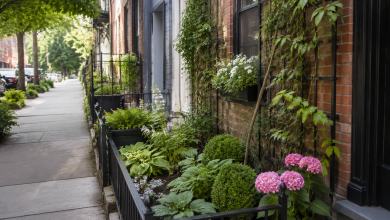
A pair of tall, slender plants flanking an entry point creates a threshold. A dense hedge or row of bamboo along one edge provides privacy screening without requiring construction. Raised beds along the perimeter establish edges, turning what was just fence-line into active, layered space. Even a single large planter with a substantial plant an olive tree, a standard lemon, a sculptural agave functions as a focal point that anchors everything else in the composition.
Layering matters here. Low ground plants, mid-height shrubs or grasses, and taller vertical elements create the sense of depth that a single flat layer of plants can’t achieve. It’s the same principle that makes a bookshelf with objects at varying heights more interesting than one where everything sits at the same level. The eye needs variation to find its way through a space.
For renters or anyone unwilling to commit to permanent planting, container gardens solve almost everything. Large pots with substantial plants feel grounded rather than temporary when the containers themselves have visual weight terracotta, glazed ceramic, or concrete all carry a permanence that small plastic nursery pots never will.
The Sensory Layer People Forget
Most styling advice stops at the visual, which leaves a significant part of outdoor experience unaddressed. A backyard is experienced with the whole body, and a small space actually amplifies this you’re closer to everything, which means sound, scent, and texture hit you more directly.
A small tabletop fountain or even a simple bowl water feature introduces sound that masks ambient street noise and creates a kind of psychological buffer between your space and whatever’s happening on the other side of the fence. It doesn’t take much the sound of moving water is disproportionately effective at making a space feel calm and removed from the surrounding city grid.
Scent is almost embarrassingly powerful as a design tool. Planting jasmine, gardenia, lavender, or rosemary near where you typically sit means the experience of being in that space comes with a sensory anchor that becomes associated with relaxation over time. It’s the kind of detail that feels indulgent to plan for and then becomes one of the things you look forward to most.
Texture comes through in the mix of materials a rough stone tile underfoot, a soft outdoor rug layered over it, the smoothness of a ceramic planter next to the rawness of weathered wood. Contrast in texture keeps a small space from feeling flat or over-designed.
Resist the Urge to Fill It
The final and perhaps most counterintuitive principle is restraint. Small spaces trigger an anxiety about emptiness every unused corner feels like a missed opportunity, and the instinct is to keep adding until the space feels complete. That instinct is usually wrong.
Empty space in a small backyard isn’t failure. It’s breathing room. A clear path through a space, a patch of open ground that doesn’t have anything on it, a wall with nothing hung on it yet these create visual rest and make the things you have chosen to include read as intentional rather than accumulated. Curated sparseness is not the same as bare or unfinished. It’s just the confidence to let a few well-chosen things carry the whole weight of the space.
That confidence, more than any specific furniture or plant choice, is what separates a micro-backyard that feels like a retreat from one that just feels small.