Bistro Style: Bringing Parisian Charm to Your Petite Patio
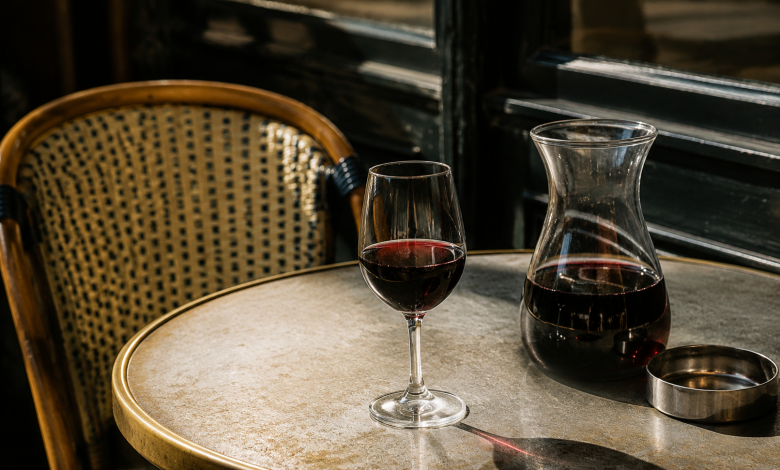
There’s a particular kind of magic that happens at a Parisian bistro around seven in the evening. The light is golden, the chairs are slightly too close together, and nobody seems to mind. A carafe of wine sits on a zinc-topped table. Someone is reading a paperback. Someone else is watching the street. The whole scene feels effortless but that effortlessness is the product of a very specific visual and emotional vocabulary that has been refined over more than a century.
Here’s the good news: that vocabulary travels. You don’t need a boulevard Haussmann or a view of cobblestones to invoke it. A small patio even a tiny one, twelve square feet of concrete behind a city apartment can hold the spirit of a Parisian bistro if you understand what actually creates that feeling, and what’s just decorative noise.
What Makes a Bistro Feel Like a Bistro
Before buying a single piece of furniture, it’s worth pausing on the question of what a bistro actually is. The word itself likely comes from the Russian “bystro,” meaning quickly a reminder that these spaces were originally working-class, unpretentious, fast. Not romantic in the self-conscious way. Romantic in the way that honest, well-worn things sometimes are.
The classic bistro aesthetic is built on a few consistent elements: wrought iron or bentwood furniture, marble or zinc surfaces, checkered or plain tile underfoot, and a density of arrangement that feels social rather than sparse. Walls tend to be warm cream, ochre, deep burgundy. There’s almost always some element of handwriting, whether a chalkboard menu or a paper tablecloth scrawled with conversation. Light is low and warm. Plants, if present, are unpretentious a potted geranium on a windowsill, not a curated succulent arrangement.
What unites all of this is a refusal of the showroom. Nothing is pristine. Everything has been used, or at least looks as though it has been.
Starting with the Furniture: The Case for Restraint
On a small patio, the furniture is doing most of the heavy lifting. Choose wrong and you’ve lost the plot before you’ve started.
The bistro table is your anchor. The classic version is round, with a cast-iron pedestal base and a small top traditionally marble, though zinc andenamel are equally authentic. The size matters: a bistro table is not a dining table trying to be intimate. It’s genuinely small, designed for two people to lean toward each other over espresso and share a plate of something. For a petite patio, this scale is a feature, not a compromise.
Pair that table with Tolix-style stacking chairs or classic bentwood cafe chairs, and you’ve established your entire tonal register in two pieces. The Tolix chair that pressed steel, slightly industrial silhouette has been manufactured in Burgundy since the 1930s. It ages beautifully, weathers without drama, and stacks when you need the space back. A set of two in matte black or olive green against a weathered stone wall is genuinely close to the original thing.
Resist the temptation to overfill the space. Three pieces of furniture that belong together will always outperform five pieces that don’t. A small bistro patio should feel like a stage set spare, intentional, slightly theatrical in its simplicity.
Surface, Texture, and the Art of Patina
One of the defining qualities of Parisian bistro style is its relationship with age. Things are allowed to look old. Paint chips. Metal rusts at the edges. Tables bear the rings of a thousand coffee cups. This is not negligence it’s a philosophy. The French have a word, “vieilli,” that means aged or matured, and in the context of interiors and objects, it carries no negative connotation whatsoever.
For a small patio, this means you should actively seek out objects with existing patina rather than trying to create it artificially. A zinc planter that’s already greening at the corners. A bistro table with a hairline crack in the enamel. Secondhand wire chairs with a little surface rust that you haven’t sanded back. These imperfections are not flaws to correct they are the material evidence of a life being lived, which is exactly what bistro style is trying to say.
If you’re working with new furniture, don’t worry. Iron and steel weather quickly outdoors. A season or two and your Tolix chairs will start to develop that honest surface complexity that no factory finish can replicate.
Underfoot, consider terracotta tiles, encaustic cement tiles in a simple geometric pattern, or even plain concrete sealed in a warm gray. The point is texture and warmth not the glossy, highly sealed surfaces associated with contemporary outdoor design. If you already have generic patio slabs, an outdoorrug in a classic stripe or a small tapis in muted reds and creams can do significant work.
Light as Architecture
Lighting is where a lot of small patio transformations succeed or fail, and it’s almost always underestimated. The bistro atmosphere that particular warmth that makes everything feel a bit more cinematic is largely a lighting effect.
String lights work, but they work much better when handled with restraint. A single strand of globe lights draped from one corner of the space to a wall hook or a potted standard tree creates intimacy without turning your patio into a wedding venue. The bulb temperature matters enormously:2200K to 2700K (labeled “warm white” or “extra warm white”) replicates the glow of incandescent light. Anything cooler reads as office, not bistro.
A small wall sconce in a classic lantern style, if you have an exterior outlet, adds a vertical element that also defines the space architecturally. The French farmhouse lantern iron cage, clear glass, simple arm is both inexpensive and immediately evocative. Mount it at eye level rather than high, so the light falls on the table rather than the sky.
Candles are not optional. A couple of thick pillar candles in simple glass hurricane lanterns on the table transform the space after dark in a way that no electrical solution can fully replicate. The movement of a flame changes the quality of an evening in a way that’s almost biological it slows things down.
Plants, Details, and the Irreducible Human Element
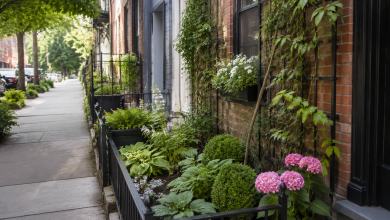
A bistro without a certain amount of vegetation feels institutional. But the plants you choose need to match the register. This is not the setting for architectural agave or trailing pothos. Think geraniums brilliant red or deep pink, planted thickly in terracotta or zinc. Think lavender in a row along a low wall, or a small rosemary standard clipped into a ball on the table between meals. Ivy is authentic, particularly if it’s been allowed to trail over an old stone or brick wall.
Herbs are deeply bistro. A cluster of thyme, flat-leaf parsley, and chervil in a window box or a row of clay pots serves the space visually and practically. It says: food is made here, and it’s made with attention. That’s exactly the message.
The details that finish the picture are small but disproportionately powerful. A classic French bistro menu holder on the table, even with a handwritten card inside listing the evening’s wine. A cotton tablecloth in Basque stripes those bold bands of red, green, and white that have been produced in the Basque Country since the seventeenth century. A small ceramic pitcher holding a few sprigs of something from the garden. An old book left open on a chair.
None of these things are expensive. All of them are specific. And specificity the willingness to choose something with a real history over something that merely suggests a history is what separates a bistro patio that genuinely transports you from one that just looks like a mood board.
The final element is you. Bistro culture is participatory. It asks you to slow down, to sit at the table with your coffee until it’s cold, to not immediately go back inside when you’ve finished eating. The furniture, the light, the plants they create the conditions. But the atmosphere only becomes real when you decide, for at least an hour, that this small square of outdoor space is exactly where you’re supposed to be.