The Weirdly Comforting Places to Visit When You Feel Completely Lost
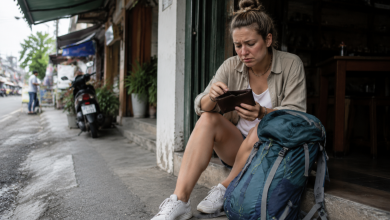
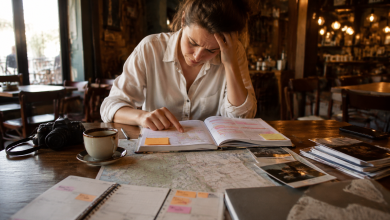
There’s a particular kind of lost that has nothing to do with maps. You know the one. Your career feels like a hallway with all the doors locked. A relationship ended or shifted into something unrecognizable. You wake up and the version of yourself you planned on becoming seems like someone else’s story. In those moments, the instinct is usually to do something productive make a list, call a therapist, book a flight somewhere warm. But sometimes the most honest response to feeling unmoored is to go somewhere that holds the feeling with you, rather than rushing you past it.
These places aren’t tourist destinations in the conventional sense. Some of them aren’t destinations at all. What they share is a quality of permission they let you feel small, uncertain, or suspended without making it a problem to solve.
A24-Hour Diner at 2a.m.
You don’t have to be a nighthawk by nature to understand why diners at odd hours carry a strange comfort. There’s something about the fluorescent light, the laminated menus, the fact that the cook has seen everything and is not moved. Everyone in a diner at 2 a.m. is there because they needed to be somewhere other than where they were. Nobody asks why.
Order coffee you don’t need. Sit by the window. Watch the parking lot. The world outside is quiet enough that you can hear yourself think, but the presence of other human beings strangers eating pie, a server refilling water without being asked keeps the silence from collapsing into isolation. Diners at that hour feel like neutral ground. Whatever you’re carrying, you can set it down on the table for a while.
Botanical Gardens on a Weekday Morning
Botanical gardens have a specific weekday morning energy that’s different from anything else. The weekend crowds are gone. The school groups haven’t arrived. What’s left is mostly retired people moving slowly between beds of labeled plants, and occasionally someone sitting on a bench who looks like they canceled their own plans to be there.
The thing about botanical gardens is that they are fundamentally indifferent to your timeline. The plants are on their own schedule, which is long and has nothing to do with your quarterly review or your situational anxiety. There’s a greenhouse in most botanical gardens usually a tropical one that feels like stepping into another atmosphere entirely. The heat hits you, the air thickens, and everything smells green. That specific sensory shift has a way of interrupting whatever mental loop you walked in with.
It’s not that nature heals you. That’s a little too clean. But gardens, curated and labeled and quietly maintained, remind you that patient attention to growing things is a legitimate way to spend a life.
A University Library You Have No Reason to Be In
Most university libraries are open to the public, at least in part, and almost nobody takes advantage of this. Which is a shame, because a university library on a Tuesday afternoon is one of the stranger, more grounding places on earth.
The students hunched over their laptops are stressed in the very particular way of people who know exactly what they’re stressed about. They have deadlines. They have subjects. Their anxiety has an address. Sitting among them when your own uncertainty is formless and spacious creates a weird, useful contrast. You remember that not knowing what you want is a different problem than having too much to do. One feels like paralysis, but it’s actually the more open condition.
Wander the stacks if you can. Pull a book on a subject you know nothing about maritime law, the history of fermentation, Central Asian linguistics and read a few pages. The goal isn’t to learn anything in particular. It’s the act of encountering serious human thought arranged in rows, evidence that people have spent their lives going very deep into very specific things, and that all of itcoexists in the same building, patient and available.
The Oldest Cemetery in Whatever Town You’re In
This sounds morbid and it isn’t. Old cemeteries, especially ones that are still maintained but no longer actively used, have a quality of compressed time that’s genuinely calming once you get past the initial resistance.
The stones mark people who were also uncertain, also lost at various points, also trying to figure out what their life amounted to. The difference is just chronology. Walking among them doesn’t make your problems feel insignificant in a dismissive way it’s more that the scale shifts. You’re a person in a long procession of people, and the procession is larger and stranger than any individual position within it. There’s something releasing about that.
Old cemeteries in northeastern American towns are often beautiful in a specific way: stone walls, mature trees, the occasional plot with decorative ironwork from the 1880s. They’re also remarkably quiet, in the way that places people treat with care tend to be.
A Foreign-Language Grocery Store Far From Home
If you’re in any city with a significant immigrant population, there are grocery stores where you will not understand the majority of what’s on the shelves. Go to one.
Walk the aisles slowly. Read labels you can’t fully parse. Look at the produce section, which will have things you don’t recognize alongside things you do. Watch other shoppers navigate the space with fluency this is their ordinary Tuesday, and you are the newcomer here, reading the same word on a package three times and still not sure what’s inside.
There’s a particular kind of humility that comes from being gently, completely outside your own context. Not threatened. Not lost in a scary way. Just reminded that the world is much larger than the version you normally move through, that other people’s ordinary lives contain entire systems of knowledge you haven’t touched. When your internal landscape feels narrow and stuck, that reminder of external vastness is oddly spacious.
An Aquarium on a Slow Afternoon
Aquariums are genuinely underrated as places to take a troubled mind. The light inside is blue and diffuse. The rooms are quiet in a way that museums rarely are. People move slowly because the animals move slowly, and that pace becomes contagious.
Standing in front of a large tank the kind with sharks and rays and schools of fish orbiting in patterns nobody choreographed produces something close to the meditative state that people spend years trying to cultivate on cushions. The fish are not performing for you. They have no idea you’re there. That indifference, paradoxically, is part of the comfort. You can watch without being watched. You can think without being asked what you’re thinking.
The jellyfish tank, which most aquariums have in some form, is especially good for this. Jellyfish are ancient and brainless and beautiful in a way that seems almost accusatory all that grace with none of the self-consciousness. Watching them is not the same as having answers. But it’s a good place to be while you wait.
Anywhere You’ve Never Had Expectations Of
The common thread in all of these places is not that they’re peaceful, exactly, or that they’re designed to comfort. It’s that none of them have any stakes attached to your presence. You didn’t go there to figure something out. You have no history there to defend. The diners don’t need you to be okay. The fish don’t need you to have a plan.
Being lost is often made worse by the pressure to already be found by your own impatience, or by the people around you who are watching. The places worth going, in that state, are the ones where your lostness is just one more unremarkable thing in the room. Where the ambient message is something like: you can be here, as you are, and that’s enough for right now.
That’s not a solution. But it’s a start.