
The Reality of Staying in 16-Bed Dorm Rooms
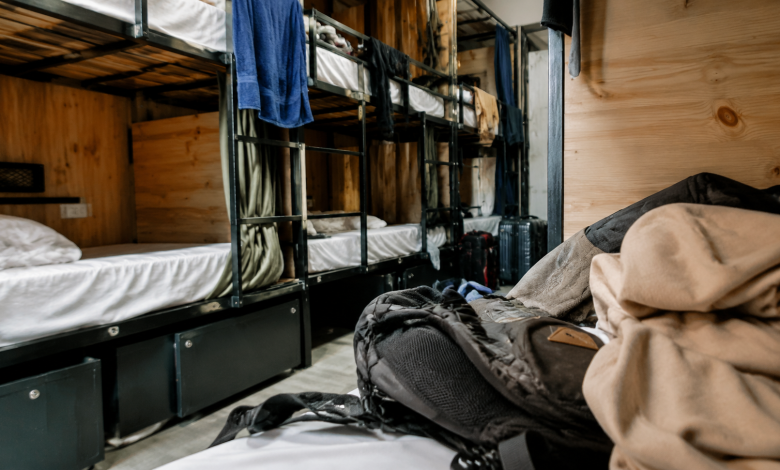
There’s a particular moment every first-time hostel traveler experiences around11 p.m. in a 16-bed dorm room. The overhead light is still on. Someone is rustling a plastic bag with what sounds like genuine malice. A stranger three bunks down is watching a video with the volume just low enough to be unrecognizable but just loud enough to be maddening. And you’re lying there, staring at the wooden slats above your face, wondering exactly what life choices brought you here.
That moment is real. But so is the morning after when the same room somehow transforms into something else entirely.
What You’re Actually Signing Up For
A 16-bed dorm is not just a “cheap hotel room.” It’s a specific social environment with its own unwritten rules, its own rhythms, and its own cast of characters that reshuffles every24 to 48 hours. Before you book one because the price looks attractive, it’s worth understanding what you’re actually walking into.
The physical space alone takes adjustment. Sixteen people sharing a room means sixteen different sleep schedules, sixteen different definitions of “quiet,” and in most hostels a bathroom situation that will test your patience in ways you didn’t anticipate. Some travelers arrive at 2 a.m. with full hiking packs. Others leave at 4:30 a.m. to catch early buses and seem to believe that tiptoeing means stamping slightly softer. The room is alive at hours when it probably shouldn’t be.
The beds themselves matter more than most booking sites suggest. Bottom bunks go fast for a reason they offer easier access and a small illusion of personal territory. Top bunks, meanwhile, come with ladder negotiations in the dark and the unsettling physics of trying to roll over quietly on a mattress that announces every movement. Curtained pods are the premium tier, giving you a thin fabric barrier between yourself and the room’s ambient chaos. In dorms without them, that privacy simply doesn’t exist.
The Social Calculus of Shared Space
What makes the 16-bed dorm genuinely interesting and genuinely difficult isn’t the sleeping arrangements. It’s the social dynamics that emerge from throwing strangers together in a space where personal boundaries are compressed to the width of a bunk.
There’s an unspoken contract in these rooms. Nobody signed it, but most people seem to know its terms instinctively: you keep noise to a minimum after 10 p.m., you don’t hog outlets, you don’t leave your wet towel draped over someone else’s ladder, and you absolutely do not turn on the main overhead light at midnight if there’s a reading light available. Most people follow these rules. Some don’t. The ones who don’t become the stories you’ll tell for years.
But the contract also has a positive side. Shared discomfort creates a kind of solidarity. You start recognizing faces. Someone hands you a locker key they found on the floor. You end up sharing travel tips with the person next to you at breakfast, someone you’d never have spoken to in any other context. The 16-bed dorm has an efficiency-of-intimacy that smaller rooms don’t precisely because the shared inconvenience breaks down the social formality that keeps strangers at arm’s length.
Some of the most interesting travel conversations happen not in rooftop bars or organized tours, but in the low-lit space of a dorm room at midnight, when two people who can’t sleep end up talking in whispers about where they’re headed and why.
Sleep Deprivation as a Feature, Not a Bug
Let’s be honest about something the travel-positive crowd doesn’t always say out loud: you will not sleep as well in a 16-bed dorm as you would in a private room. This is not a maybe. It’s a near certainty.
The question is whether you can make peace with that tradeoff. And the answer depends almost entirely on what phase of travel you’re in.
When you’re 22 and moving through Southeast Asia on a tight budget, two or three nights of disrupted sleep barely register. Your body recovers fast, your days are full, and the social texture of the dorm is part of what you came for. The exhaustion is almost atmospheric it blends into the heat and the jet lag and the general sensory overload of being somewhere unfamiliar, and you adapt.
At 35, traveling with specific work deadlines or an early morning itinerary, the same environment hits differently. The 4 a.m. rustling isn’t charming anymore. It’s a direct threat to the one meeting you can’t reschedule. This isn’t a criticism of dorm travel it’s just an honest reckoning with the fact that the16-bed dorm has an ideal user, and that user’s tolerance for sleep disruption is higher than the average traveler sometimes expects.
Earplugs help. A sleep mask helps. Booking a hostel that enforces quiet hours actually helps a surprising amount. But nothing eliminates the fundamental reality that you are sleeping in a room with fifteen other people, and their presence will register on your nervous system whether you consciously notice it or not.
The Smell, the Lockers, and the Other Details Nobody Mentions
There are things travel content doesn’t prepare you for. The smell of a16-bed dorm particularly in warmer climates is one of them. It’s not always unpleasant, but it is always distinctly human. It carries the collective scent of backpacks that haven’t been washed, shoes that have walked a long way, and sixteen bodies in varying states of post-adventure. Ventilation makes a significant difference. Budget hostels in humid cities can smell considerably worse than well-managed hostels in cooler climates, and this is worth reading reviews for before you book.
The locker situation is another underrated variable. Good hostels provide sturdy lockers large enough to fit a full backpack. Mediocre ones give you something roughly the size of a shoebox and charge you extra for the padlock. Knowing which you’re getting shapes how much you can actually relax in the room. Leaving your laptop or passport on the bunk while you shower is a risk calculus you’d rather not perform twice a day.
Power outlets are often scarce and always contested. The traveler who claims the outlet nearest their bunk on the first night has secured a significant social advantage. This sounds absurd until you’ve spent a day on an almost-dead phone looking for a free port in a full dorm room at 8 p.m.
Who Actually Thrives in These Rooms
The people who genuinely enjoy 16-bed dorm life tend to share a few qualities. They’re adaptable sleepers able to fall asleep under less-than-ideal conditions and not particularly precious about it. They’re socially open without being socially needy; they like the possibility of connection but aren’t destabilized if the room is quiet and no conversations spark. And they’ve made a conscious tradeoff: they’d rather spend less money on sleeping and more money on doing.
Solo travelers often fare better in large dorms than couples or small groups, oddly enough. The solo traveler has no one else’s comfort to manage. They can optimize entirely for their own experience grab the best available bunk, plug in immediately, assess the room’s social temperature, and decide how much to engage. Couples in a 16-bed dorm often spend half their energy navigating the gap between “this is fun and adventurous” and “I would like to have a private conversation right now,” which the room structurally prevents.
There’s also a difference between choosing a 16-bed dorm because it’s the cheapest option and choosing it because you genuinely want the experience. The first group tends to tolerate it. The second group tends to lean into it to take it on its own terms rather than measuring it against what a private room would feel like. That distinction in mindset produces dramatically different outcomes, even in identical rooms.
The 16-bed dorm isn’t for everyone, and it doesn’t need to be. But it’s also not the endurance test that people who’ve never tried it sometimes imagine. At its best, it’s a condensed version of something that travel does at a larger scale it puts you in proximity with people you’d never otherwise meet, removes the cushioning of comfort, and asks you to figure out how you actually operate when the ordinary structures of your life are temporarily unavailable.
That’s not nothing. Sometimes it’s exactly the point.