The Psychology of Low-to-the-Ground Furniture
There’s a particular feeling that comes over you when you walk into a room furnished close to the floor. It’s subtle at first maybe you assume it’s just the open space above the furniture, or the way the light seems to fill the room more generously. But the feeling lingers, and it’s not accidental. It’s psychological. And understanding why requires stepping back into how humans have related to ground-level living for centuries.
The Ancient Grammar of Sitting Low
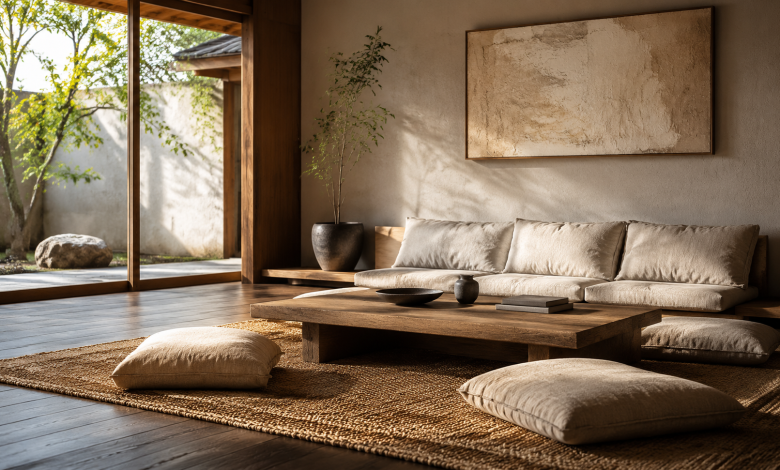
Long before the high-backed dining chair became a symbol of European refinement, most of humanity sat, ate, and slept close to the earth. Japanese culture gave us the tatami mat and the chabudai the low table around which families gathered for meals. Bedouin communities spread cushions and rugs across the ground for conversation and hospitality. Across India, floor seating was never a matter of poverty; it carried spiritual connotations, connecting the body to the earth in a gesture of humility and presence.
What these traditions share isn’t aesthetic preference. It’s a posture toward the world. Getting low to the ground changes the body’s relationship to its environment in ways that are felt before they are understood.
Why the Body Feels Differently Down There
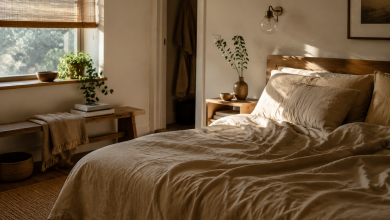
When you lower yourself onto a floor cushion or sink into a platform bed, something in your nervous system responds. Your center of gravity drops. Your peripheral vision shifts you’re no longer surveying a room from a standard human vantage point, you’re inside it differently. The walls rise around you. The ceiling lifts. The room feels larger.
Psychologists who study embodied cognition the way physical posture shapes mental states have documented that body position genuinely alters emotional tone. Sitting low and open tends to activate a parasympathetic response: slower breathing, reduced muscle tension, a kind of involuntary releasing. This isn’t mysticism. It’s the body reading its environment and concluding: here, I can let my guard down.
There’s also something to the vulnerability of it. You can’t leap to your feet quickly from a floor cushion. That physical reality communicates trust both to yourself and to anyone sharing the space with you. Formal furniture keeps the body ready. Low furniture invites it to settle.
Status, Power, and the Deliberate Rejection of Hierarchy
The history of furniture is, in large part, a history of status. Thrones are literally elevated seats. In medieval Europe, who sat at the high table mattered enormously the architecture of dining rooms was designed to make social hierarchy visible and felt. A high chair with carved armrests communicated importance. A stool communicated the opposite.
Low furniture, then, carries a kind of counter-cultural charge in Western design contexts. When Californian modernists in the 1950s began experimenting with floor-level living influenced by Japanese aesthetics filtering through postwar cultural exchange they weren’t just making a stylistic choice. They were making an argument about how people should relate to each other inside a home. Low furniture levels the room. There’s no high chair, no throne. The host and guest are physically equal.
This is part of why low furniture reads as democratic in spirit, even when it costs a small fortune. A low profile sofa by a Scandinavian designer might be aggressively expensive, yet the psychological message it sends is one of informality and ease. The contradiction is interesting: low furniture signals both restraint and sophistication, as if the owner has moved past the need to announce themselves through height.
Intimacy and the Geometry of Conversation
There’s a reason therapists think carefully about the furniture in their offices, and why good hosts consider seating before their guests arrive. The physical arrangement of bodies in a room shapes how conversation moves.
When people sit at floor level, the geometry of interaction changes. You’re closer together horizontally. Eye contact is easier to sustain without effort. The slight awkwardness of getting down to the floor together creates a small shared experience a micro-intimacy before a word is spoken. Conversations that happen around a low table, on floor cushions or a sunken seating area, tend to feel different from conversations held in upright chairs. They meander more. They go longer. People lean in rather than sitting straight.
Interior designers have understood this intuitively for decades. A sunken living room that brief obsession of1970s American architecture was never really about aesthetics. It was about engineering the conditions for closeness. The room held you.
The Trade-Off Nobody Mentions
It would be dishonest to celebrate low furniture without acknowledging what it asks of you physically. Getting up from a floor cushion in your thirties feels different than it does in your twenties. In your fifties, a platform bed with no frame becomes a quiet daily negotiation with your own body. For people with joint issues, mobility limitations, or chronic pain, the floor-level aesthetic that communicates ease can actually create the opposite experience.
This tension reveals something important about the psychology of design: environments communicate differently depending on who inhabits them. A room full of low, cushioned seating might feel like a sanctuary to one person and like an obstacle course to another. The same furniture that says “relax” to a healthy thirty-year-old might say “struggle” to an older guest trying to rise gracefully.
Thoughtful designers and homeowners navigate this. A single higher seat in a low-furniture room isn’t a failure of vision it’s evidence of care. The psychology of space only works when it accounts for the actual people inside it.
What We’re Really Choosing When We Choose Low
When someone furnishes a room close to the ground, they’re making a series of small declarations about how they want to live. They’re saying something about pace that this is a room for lingering, not passing through. About formality that guests here will be comfortable before they are impressed. About the relationship between interior space and the body that a home isn’t a stage set, it’s a physical experience.
There’s also something almost philosophical in the choice. Low furniture resists the urge to perform. A room with low, spare furniture doesn’t announce itself loudly. It asks you to come in, sit down, and be here for a while.
That quietness is increasingly rare. We live in an era of maximalist self-presentation, of rooms designed as much for photographs as for living. Low furniture, at its best, pushes back against that impulse. It says the point of the room is what happens inside it the conversations, the rest, the slow afternoons not how it photographs from the doorway.
The ground has always been where humans actually live. Not above the world, surveying it from a height, but in it, close to it, on it. Low furniture is just honest about that.