
The Art of Wild Camping: Pitching a Tent Without Getting Fined
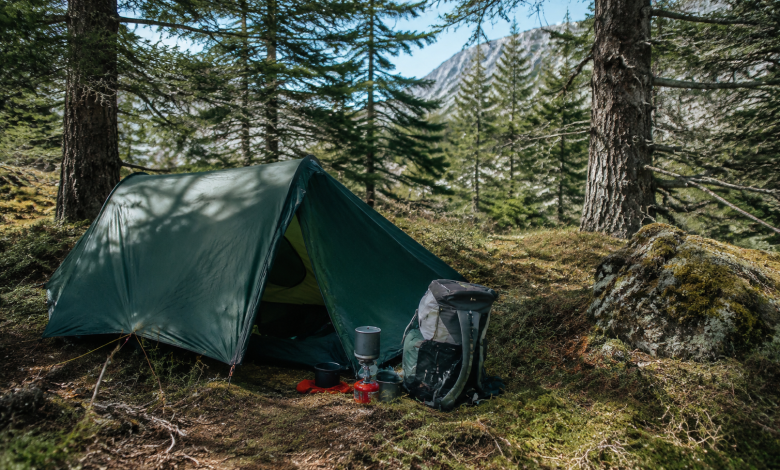
The Pull of the Unmanaged Wild
There’s a particular kind of quiet that only exists far from designated campsites. No numbered posts, no gravel parking pads, no neighbor’s generator humming at eleven at night. Just wind moving through trees you haven’t named yet, and the specific darkness that comes when there are no electric lights within five miles. That quiet is what draws people to wild camping what the British call “wild camping” and what Americans might call dispersed camping or backpacking. And yet, the growing popularity of this practice has created a complicated legal landscape that trips up even experienced outdoorspeople.
Getting fined for camping in the wrong spot isn’t just embarrassing. It can run several hundred dollars, result in gear confiscation, and in some jurisdictions, carry misdemeanor charges. More than the personal cost, there’s a deeper irony at work: the people most likely to care about protecting wild land are often the ones testing its boundaries, sometimes unknowingly.
So how do you pitch a tent somewhere that isn’t a campground without the whole thing unraveling into a bureaucratic nightmare?
Land Ownership Is the First Puzzle
Most people don’t realize how fragmented land ownership is across the American West, let alone the rest of the country. Federal land, state land, tribal land, private land, and land under easement can sit side by side with no visible boundary markers. A meadow that looks completely undisturbed might sit on private ranchland. A ridge with a sweeping view might technically fall under Bureau of Land Management jurisdiction or it might not.
The foundational rule of legal wild camping in the U.S. starts here: know who owns the land. The BLM and the U.S. Forest Service manage enormous swaths of public land where dispersed camping is generally permitted, often for free, within specific guidelines. National Parks operate differently camping outside designated sites is almost universally prohibited, and enforcement is real. State parks have their own rules, which vary dramatically by state. Some states, like Colorado, have relatively permissive dispersed camping rules on state forest land. Others treat any camping outside a marked site as trespassing.
The resource most people overlook is the interactive map system offered through the BLM’s official website, which lets you zoom into specific parcels and see land classification. Cross-referencing that with the relevant ranger district’s posted regulations takes maybe thirty minutes and can prevent a situation that ruins a whole trip.
The Distance Game: How Far Is Far Enough
Assuming you’re on land where dispersed camping is legal, the next layer is spatial. Federal guidelines on BLM and USFS land typically require camping at least 200 feet from water sources, trails, and roads. That’s not an arbitrary number it corresponds roughly to 70 adult paces, enough distance to protect riparian zones, prevent trail-user conflicts, and reduce visible impact.
In practice, this means that the flat spot right next to the creek the one that looks perfect, the one that probably gets used constantly is almost always off-limits for legal camping. And it’s not just about compliance. That flat spot next to the creek is also where sensitive vegetation grows, where bank erosion accelerates under foot traffic, and where wildlife depend on undisturbed access to water. The rule aligns with actual ecology, which is rare enough in land management to be worth noting.
The same logic applies to established trails. Camping in sight of a trail bothers other users, disturbs the sense of solitude that everyone out there is trying to find, and compresses vegetation in spots that become informal social trails over time. Finding a site that requires even a short off-trail walk makes a meaningful difference both legally and in terms of actual experience.
Leave No Trace Isn’t Just Ethics, It’s Strategy
There’s a version of wild camping that operates on the theory that if you leave no trace, nobody can prove you were there. This sounds cynical, but it’s actually consistent with the intent of Leave No Trace principles, even if the motivation differs. Rangers and land managers have limited resources. Enforcement happens when there’s evidence of impact: fire rings, trenched tent sites, cut branches, human waste near water. The camper who leaves a pristine site behind them is, functionally, invisible to the system.
Using a tent footprint or ground cloth, camping on durable surfaces like rock or dry grass rather than wet soil or vegetation, packing out everything including food scraps these aren’t just good citizenship. They’re practical measures that reduce the probability of your campsite becoming a known problem site, which is what triggers management responses like permit requirements or outright closures.
Campfires are where this most commonly goes wrong. Many areas require fire permits, impose seasonal bans, or prohibit open fires at dispersed sites entirely. A fire in a restricted area is one of the fastest ways to convert a peaceful night under the stars into a conversation with law enforcement. A backpacking stove solves the problem entirely, and it’s faster for cooking anyway.
The Permit Creep and What It Means
Something has been shifting in land management over the past decade. As backcountry use has surged, the free-range approach to dispersed camping has started contracting. More ranger districts have introduced permit systems for previously unregulated areas. The Enchantments in Washington state, the Wave in Arizona, parts of the John Muir Trail the permit lottery system has become a defining experience of serious backpacking in the U.S.
This isn’t arbitrary bureaucracy. Visitor counts in some popular wilderness areas have increased by triple digits over the last fifteen years, accelerated by social media, remote work flexibility, and a pandemic-era migration toward outdoor activity. The land hasn’t expanded to accommodate the interest. Permit systems are an imperfect but functional response to carrying capacity limits.
The practical implication is that research timelines have lengthened. A spontaneous dispersed camping trip is still entirely possible across huge areas of federal land particularly in the intermountain West, where BLM land stretches for millions of acres with relatively light use. But for anything in a recognizable or visually spectacular area, checking permit requirements six months out has become standard practice rather than overcaution.
Reading the Land Before You Commit
Beyond legality, there’s a craft to site selection that experienced wild campers develop over time. It reads almost like intuition but it’s really just accumulated observation. A site at the edge of a treeline offers wind protection and shade without compressing the meadow itself. A slight elevation above a basin gives drainage when it rains and keeps you out of the coldest air, which settles at the lowest point. Soil with visible root networks or fragile cryptobiotic crust doesn’t recover quickly from a tent being pitched on it experienced campers learn to recognize that texture and move on.
Knowing how to read a contour map well enough to anticipate these features before you arrive is one of those underrated skills that separates people who always seem to find good campsites from those who end up on rocks or in puddles. Digital tools like Gaia GPS have made this more accessible, but the underlying skill of spatial reasoning about terrain still has to be learned through practice.
Wild camping, done with this kind of attentiveness, is one of the few outdoor practices that actively rewards knowledge rather than just gear. You don’t need an expensive tent or a technical pack. You need to know where you’re allowed to be, how to get there without leaving a mark, and how to read the land well enough to sleep well once you arrive. The fine is almost always avoidable. More importantly, so is the impact that makes fines necessary in the first place.