How I Conquered My Solo Travel Anxiety (And Where I Went First)
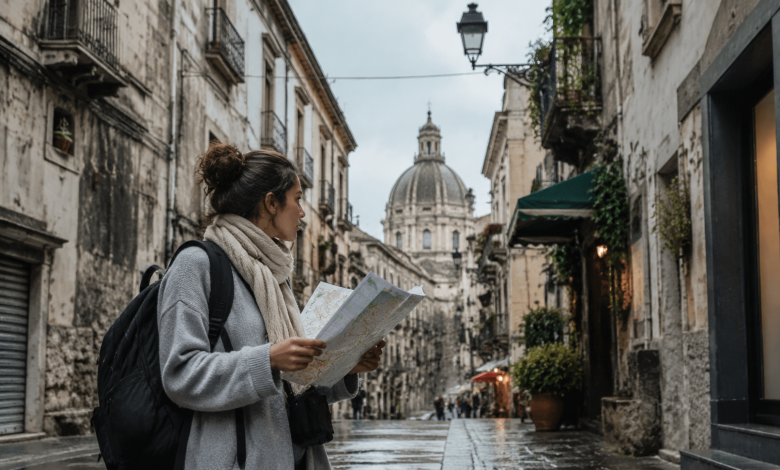
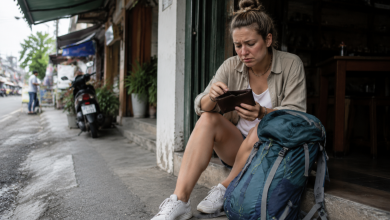
There’s a particular kind of dread that settles in around2 a.m. when you’re lying in bed, staring at a half-packed suitcase, wondering what on earth possessed you to book a solo trip to a country where you don’t speak the language, don’t know a single person, and won’t have anyone to turn to if things go sideways. That was me, three years ago. Not romanticizing it I was genuinely terrified. Not the productive kind of nervous that sharpens your senses, but the spiral kind, where one reasonable concern leads to ten unreasonable ones until you’ve mentally staged your own disappearance.
I want to talk about how I got past that. Not because I became fearless I didn’t but because I learned to move alongside the fear instead of waiting for it to leave first.
The Anxiety Was Never Really About Travel
Here’s the thing nobody told me: solo travel anxiety is rarely about logistics. Flights get delayed, hotels get lost in translation, bags go missing and somehow, people survive all of it. The real anxiety is about being alone with yourself for an extended period, with no familiar faces to reflect your identity back at you. Strip away your routines, your social role, your comfort foods and your usual Netflix queue, and who are you exactly?
That question terrified me more than any missed connection ever could.
I’d spent most of my adult life being the kind of person who needed company to feel legitimate. A restaurant meal alone felt like a public confession of failure. A movie by myself meant buying a ticket and spending two hours praying no one I knew would walk past. I wasn’t antisocial I had friends, a full calendar, a life that looked perfectly assembled from the outside. But somewhere along the way I’d confused being surrounded with being okay.
Solo travel forced me to confront a very simple, very uncomfortable fact: I didn’t actually know how to be with myself.
The Preparation That Helped (And the Kind That Didn’t)
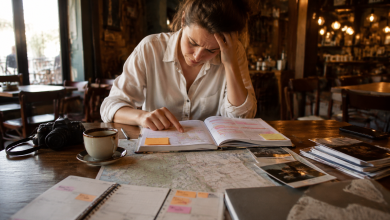
When I first started planning my trip, I went straight to the internet. I read every “solo travel safety guide” I could find, watched three dozen YouTube vlogs, joined four Reddit forums, and downloaded approximately nine different apps that promised to make traveling alone feel less alone. I color-coded a spreadsheet with backup plans for my backup plans.
None of that touched the anxiety. If anything, it fed it.
The research spiral is seductive because it feels productive. You’re doing something, you’re preparing, you’re being responsible. But at a certain point, more information doesn’t reduce fear it just gives fear more material to work with. Every safety tip I read implied a corresponding danger. Every forum thread I found about what to do “if” something went wrong trained my brain to live inside those hypotheticals.
What actually helped was much quieter and much less Instagrammable. I started taking myself out alone dinner, a long walk in an unfamiliar neighborhood, a Saturday morning at a coffee shop where I’d committed to sitting without my phone for an hour. Small rehearsals. I was training myself to exist without the social scaffolding I’d come to depend on, and to notice that nothing actually collapsed when I did.
I also talked to a therapist, which I’d recommend to anyone who feels like that suggestion is overkill. It wasn’t therapy in the dramatic, years-long-unraveling sense it was six sessions of someone helping me understand that my anxiety had a story, and that I didn’t have to accept every chapter of it as fact.
Why I Chose Portugal as My First Destination
When people ask me this, they often expect some poetic answer about longing, about a pull toward the Atlantic or a lifelong dream of cobblestones and custard tarts. Honestly? I chose Portugal because it felt manageable. Lisbon ranked consistently high on lists of safe, English-friendly destinations. The time zone difference from the East Coast wasn’t brutal. The food was approachable. The infrastructure was solid.
I was not trying to throw myself into the deep end. I was trying to wade in from the shallows, and I think that instinct was right.
There’s a version of solo travel advice that romanticizes difficulty go somewhere completely foreign, get lost, have your assumptions shattered, blah blah blah. And I think that’s genuinely meaningful, eventually. But for someone whose anxiety was real and whose self-trust was underdeveloped, starting with a hard destination would have confirmed every fear I had rather than challenged it productively. I needed early wins. I needed to arrive somewhere and discover that I could figure things out, that strangers could be kind, that being alone didn’t mean being in danger.
Lisbon gave me all of that, and more than I’d bargained for.
What Actually Happened
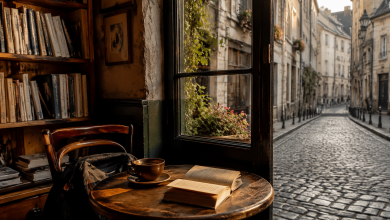
The first afternoon was rough, not because anything went wrong but because nothing felt real yet. I sat in a small café near Alfama with a glass of wine I hadn’t ordered confidently and watched the street like I was watching a movie I wasn’t sure I understood. There was no one to say “isn’t this incredible?” to. The beauty was there the light on the old buildings, the sound of fado drifting from somewhere up the hill but without someone to share it with, I didn’t quite know what to do with it.
By the second day, something had shifted. I’d navigated the tram, figured out where the good bread was, had a twenty-minute conversation in broken English and confident gestures with a man who sold me a ceramics piece I definitely didn’t need. I started noticing things differently not looking for the highlight-reel moment to describe later, but just absorbing. The pace of it. The texture. An old woman hanging laundry from a fourth-floor window. A child kicking a ball against a wall painted entirely in blue tiles.
Solo travel doesn’t make you lonely in the way people warn you it will. It makes you observant in a way that group travel rarely does, because when you’re not maintaining conversation, your senses fill the space instead.
By day four I had established a loose daily ritual morning espresso at the same counter, a few hours of wandering without a particular destination, late lunch somewhere I hadn’t planned. I’d started writing again for the first time in two years, just notes in my phone, nothing precious. Something about being removed from my ordinary life made the words come back.
That was the unexpected gift of the whole thing. Not the scenery, not the food, not even the confidence boost of having managed it alone though all of those were real. It was the rediscovery of an interior life I hadn’t realized I’d been too busy to visit.
The Part Nobody Warns You About
Coming home is strange. You’ve had this private experience really private, in the sense that no one you know witnessed any of it and there’s no shared reference point. People ask if you had fun, and you say yes, because how else do you answer in a hallway or at a family dinner? You can’t explain the fourth morning or the tram conversation or the particular quality of light on the water at Belém.
What I’d say to anyone standing where I was three years ago paralyzed, second-guessing, convinced that their anxiety was a sign they weren’t built for this is that the anxiety isn’t a signal to stop. It’s a signal that something meaningful is on the other side. The discomfort is the point, not the obstacle.
You don’t have to go far. You don’t have to go anywhere exotic or challenging or adventurous in the way social media defines adventure. You just have to go. Somewhere that’s slightly past your comfort zone but not so far that you’re setting yourself up to fail. And then you figure it out, one small thing at a time, until one afternoon you look up and realize you’ve been sitting alone in a foreign city for three hours and it feels, improbably, like exactly where you’re supposed to be.