Are You Wasting Money on Hyaluronic Acid? Here’s the Right Way to Use It.
Are You Wasting Money on Hyaluronic Acid? Here’s the Right Way to Use It.
You’ve probably spent good money on a hyaluronic acid serum that promised plump, dewy skin and ended up with a face that felt tighter and drier than before you applied it. You’re not imagining things. And no, the product isn’t necessarily a scam. The problem is more subtle than that, and it has everything to do with how this ingredient actually works.
Hyaluronic acid is one of the most misunderstood molecules in skincare. It’s everywhere drugstore serums, luxury creams, injectable fillers, lip glosses yet most people are using it in a way that works against their skin rather than for it. A little education here can genuinely save you money, frustration, and a whole lot of unnecessary flakiness.
What Hyaluronic Acid Actually Does (And What It Doesn’t)
Here’s the thing: hyaluronic acid doesn’t add moisture to your skin. It attracts and holds it. That distinction matters enormously.
Hyaluronic acid is a humectant a substance that draws water molecules toward itself and binds them. One gram of hyaluronic acid can hold up to six liters of water. That sounds incredible, and it is, but it’s also where the confusion starts. Because if hyaluronic acid is pulling water toward it, the question becomes: where is that water coming from?
In ideal conditions, it pulls from two sources: the deeper layers of your skin and the air around you. When humidity is above 70%, the atmosphere is generous enough that your skin genuinely benefits from topical HA. But most of us aren’t living in a tropical rainforest. In air-conditioned offices, heated apartments, and dry winter climates, the air simply doesn’t have enough moisture to give. So the hyaluronic acid does the only thing it can it pulls water up from the dermis and holds it at the surface, where it promptly evaporates. You’ve essentially turned your serum into a dehydration accelerator.
This is why some people swear by hyaluronic acid and others think it’s overhyped. Both groups are right, depending entirely on their climate and how they’re using it.
The Application Window Nobody Talks About
Timing is everything with this ingredient, and the skincare industry isn’t exactly shouting this from the rooftops.
Hyaluronic acid needs to be applied to damp skin not wet, not dry, but that brief window right after cleansing when your skin still has surface moisture on it. Two to three minutes after your shower or after patting your face with a damp cloth is the sweet spot. At that moment, there’s enough ambient moisture for the HA to work with, and you’re giving it a head start before evaporation takes over.
Apply it to completely dry skin and you’re setting yourself up for that paradoxical tightness. The serum sits on a moisture-depleted surface, has nothing to bind to except whatever it can pull from deeper tissue, and the cycle of dehydration begins.
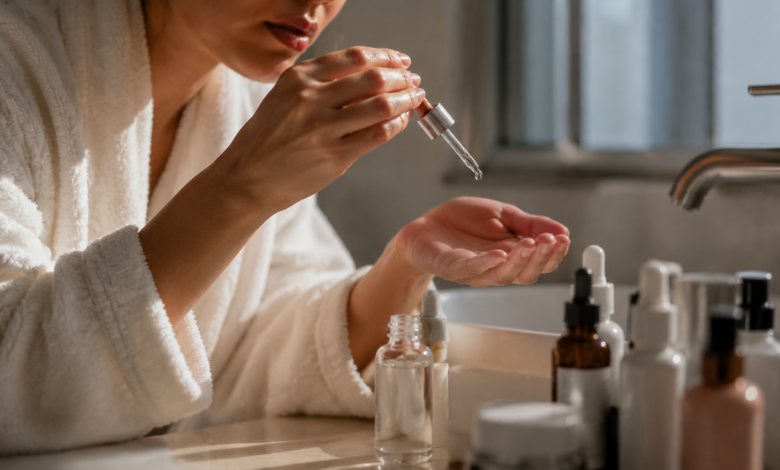
There’s a practical ritual shift here that takes almost no extra effort: keep a small spray bottle of water or floral water near your sink. After cleansing, mist your face lightly, then apply yourHA serum immediately. It sounds almost embarrassingly simple, but the difference in how your skin responds is real.
Molecular Weight: The Detail That Separates Mediocre Products From Genuinely Good Ones
Not all hyaluronic acid is created equal. The molecular weight of theHA in a formula determines where it actually works on your skin, and this is the detail that separates mediocre products from genuinely useful ones.
High molecular weight HA (typically above 1,000 kDa) sits on the surface of the skin. It creates a film that feels smooth and plumping but doesn’t penetrate. It’s excellent for immediate comfort, for reducing water loss, and for that fresh-faced glow in photos. But it’s not doing anything structural.
Low molecular weight HA (below 50 kDa) can penetrate into the upper layers of the dermis. It works more slowly and the effects are subtler in the short term, but it genuinely supports the skin’s natural matrix over time. There’s also some research suggesting that very low molecular weight HA can trigger mild inflammation at high concentrations something worth knowing if you have reactive skin.
The best products use multiple molecular weights together what the industry calls a “layered” or “multi-weight” approach. They deliver surface smoothness immediately and deeper support over time. When you’re evaluating products, look for terms like “hydrolyzed hyaluronic acid” or “sodium hyaluronate” alongside the standard ingredient, which signals that the brand has thought about penetration depth, not just the marketing appeal of a single hero ingredient.
The Sealing Step That Most People Skip
Here’s where a lot routines fall apart even when everything else is right.
Hyaluronic acid is a humectant. It does not create a barrier. It does not prevent water loss on its own. Once you’ve applied your serum to damp skin and theHA has had a moment to bind to that surface moisture, you need to lock it in and that means applying an occlusive or emollient on top.
This is the step that turns a decent routine into one that actually delivers onHA’s promise. A moisturizer with ingredients like ceramides, squalane, shea butter, or even just a light facial oil applied over your serum creates a physical barrier that slows evaporation dramatically. Without it, you might as well be applying the serum and then standing in front of a fan.
The irony is that many people skip moisturizer because they assume the serum is doing the heavy lifting. It’s not. A serum, almost by definition, is a delivery vehicle. It gets active ingredients where they need to go. The moisturizer is what creates the environment that lets those ingredients do their job sustainably.
Think of it this way: HA is the sponge, moisture is the water, and your moisturizer is the cling wrap that keeps the sponge from drying out.
Concentration Isn’t Everything And Higher Isn’t Better
A common belief is that a2% hyaluronic acid serum is automatically better than one at 0.5%. This logic sounds reasonable but it doesn’t hold up under scrutiny.
BecauseHA is a large molecule that binds to water and creates viscosity, there’s a point of diminishing returns and at very high concentrations, some formulas can actually feel sticky, pill under makeup, or sit on the skin in a way that interferes with layering other products. The vehicle matters enormously too. A well-formulated 1% HA serum in a clean, humectant-rich base will outperform a 2% HA serum in a poorly designed formula almost every time.
What matters more than the percentage is the molecular weight profile, the supporting ingredients, and how well the formula works with your skin type. Oily skin tends to do well with lightweight, water-basedHA serums. Dry skin benefits more from HA blended with emollients. Sensitive skin should steer toward formulas without fragrance and with minimal additional actives competing for attention.
Injectable vs. Topical: Managing Your Expectations Honestly
It would be dishonest to write about hyaluronic acid without addressing the gap between what topical HA can do and what injectable HA (like Juvederm or Restylane) achieves.
Dermal fillers place hyaluronic acid directly into the dermis, where it physically adds volume and supports structure. The results are immediate, visible, and can last anywhere from six months to two years. Topical HA does not replicate this. At all. No serum, regardless of its molecular weight or concentration, is gettingHA deep enough to function as a filler. If you’ve bought a topical product hoping it will do what an injectable does, that expectation was always going to disappoint.
What topical HA does well when used correctly is maintain surface hydration, support the skin’s moisture barrier, temporarily reduce the appearance of fine lines by plumping the skin with water, and create a healthier, more resilient surface over time. These are genuinely useful outcomes. They’re just different outcomes, and they require the right conditions to happen at all.
The money isn’t wasted if you know what you’re buying. A $30 serum used incorrectly will underdeliver. The same serum, applied to damp skin, sealed with a moisturizer, and chosen based on actual formulation quality rather than marketing that’s a product earning its place in your routine.