Why Your Acne Clears Up on Vacation (And How to Recreate It at Home).
You notice it sometime around day three. The angry red cluster along your jaw has calmed down. That persistentcyst near your chin the one you’ve been nursing for two weeks looks flatter somehow. By the end of the trip, you’re catching your reflection in a hotel bathroom mirror and thinking: my skin actually looks good. Then you fly home, unpack, and within a week, the breakouts are back.
This is not a coincidence. And it’s not just in your head.
The Stress Factor Nobody Takes Seriously Enough
Most people know stress causes acne. Fewer people understand just how physiologically direct that relationship is. When you’re under chronic stress the low-grade, grinding kind that defines most working weeks your body pumps out cortisol. Cortisol triggers the sebaceous glands to produce more oil. More oil feeds the bacteria that cause acne. More bacteria means more inflammation. The whole cascade happens beneath the surface, long before anything is visible on your skin.
Vacation interrupts the cascade at the source. You’re not checking Slack at 11 p.m. You’re not running mental simulations of tomorrow’s meeting while eating lunch. Your nervous system genuinely downshifts. Cortisol drops. And your skin which has been quietly suffering the consequences of your stress for months finally gets a chance to regulate itself.
The cruel irony is that most people attribute the improvement to something external: the ocean air, the sunshine, the fancy hotel products. Those things play a role, sure. But the internal shift is doing far heavier lifting than anyone gives it credit for.
What Sun Exposure Actually Does (Beyond the Tan)
Sunlight has a complicated relationship with acne. Dermatologists are careful about recommending it because UV exposure accelerates aging and raises skin cancer risk. But in controlled doses, sunlight does several things that can genuinely calm a breakout.
First, UV rays have a mild antibacterial effect on the skin’s surface. This is why certain medical-grade light therapies use blue and red wavelengths to treat acne vacation sun is a blunter, less targeted version of the same principle. Second, sun exposure boosts vitamin D synthesis. Vitamin D plays a role in regulating skin cell turnover and has demonstrated anti-inflammatory properties in several studies. Many people especially those who work indoors under artificial light for most of the year are quietly deficient without knowing it.
There’s also a psychological dimension. Sunlight regulates circadian rhythms and serotonin production. When your sleep improves and your mood lifts, cortisol follows. It’s not a straight line, but the system is deeply interconnected. Your skin is reading all of it.
The Water Question
Hard water the kind that runs through the pipes in many cities contains high concentrations of calcium and magnesium ions. These minerals interact with soap and cleanser to form a residue that sits on the skin and can clog pores. If you’ve ever felt a tight, filmy sensation after washing your face and attributed it to your cleanser being “stripping,” hard water may be the actual culprit.
Vacation destinations especially coastal towns, tropical resorts, or places with different municipal water sources often have softer water. The difference can be striking. Your cleanser rinses cleaner. Your moisturizer absorbs differently. Your skin just feels less irritated.
You might also be swimming. Salt water has a natural drying and antibacterial effect. Pool chlorine, while harsh with prolonged exposure, can temporarily reduce surface bacteria. Staying near the ocean means your skin is encountering a radically different chemical environment than your morning shower at home.
Simplicity Is Underrated
Here’s something counterintuitive: a lot of people’s skincare routines are actively making their acne worse.
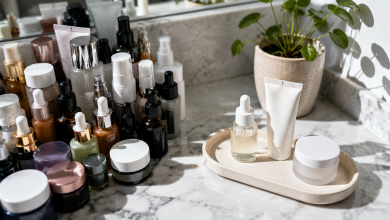
At home, the typical regimen has accumulated over years a product for this concern, something else for that one. You’ve got three serums, a prescription retinoid, a benzoyl peroxide spot treatment, a niacinamide toner, and a “barrier repair” moisturizer you added after your skin got irritated from everything else. It’s a pile-up. The skin barrier, which is essentially your skin’s first line of defense against bacteria and environmental damage, needs breathing room to function.
On vacation, most people default to the basics. A gentle cleanser, a simple moisturizer, maybe a sunscreen. The skin, freed from the chemical traffic jam of your usual routine, quietly heals itself. The barrier restores. The irritation fades. The breakouts ease.
This is not an argument for abandoning your routine entirely. Active ingredients like retinoids and niacinamide are well-supported by research. But if you come home from a beach trip with significantly clearer skin and the only thing that changed was that you used a $6 drugstore cleanser and nothing else, that tells you something worth listening to.
Sleep, Rhythm, and the Reset You Don’t Notice Happening
Vacation sleep is different. You go to bed when you’re tired instead of when you’ve finally finished everything on your list. You wake up with light instead of an alarm. Your body runs on a more natural rhythm, and that rhythm has downstream effects that reach all the way to your skin.
Sleep is when the body does its repair work. Skin cell turnover accelerates at night. Inflammation is regulated. Hormones that affect oil production reset. When you’re chronically under-sleeping even mildly, by an hour or two you’re shortchanging all of that. Vacation often gives you back the sleep debt you didn’t realize you were carrying, and your skin reflects it within days.
Bringing It Home Without Booking Another Flight
The obvious question is whether any of this is actually replicable. It is not perfectly, but meaningfully.
The cortisol piece is the hardest to address because it requires genuine behavioral change, not a new product. But even modest interventions make a measurable difference. A consistent wind-down routine before bed, time outdoors during daylight hours, reducing phone use in the hour before sleep none of this is revolutionary, but the skin responds to consistency faster than most people expect.
A vitamin D supplement is low-cost and worth considering, particularly if you spend most of your time indoors. The research isn’t definitive, but the risk profile is minimal and the potential upside for both skin and mood is credible enough to try.
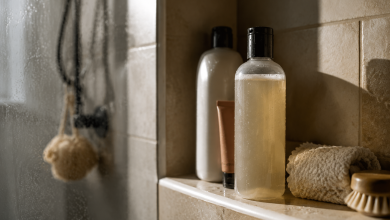
If you suspect hard water, a shower filter with a KDF or vitamin C medium is a relatively affordable fix. They don’t last forever, but the difference in how your skin feels after washing can be significant enough to justify the cost.
The simplification experiment is genuinely easy to run. Strip your routine back to three products for three weeks a gentle, non-foaming cleanser, a lightweight moisturizer, and SPF during the day. No actives, no treatments, nothing else. See what happens. You might be surprised to find that the skin you were trying to fix with more products starts improving with fewer.
And the sleep piece that one is foundational. Everything else you do for your skin is working against a current if you’re not recovering at night. It’s not a supplement. It’s not a serum. It’s the system your skin is running on.
Your vacation skin isn’t a fluke. It’s your skin functioning the way it’s supposed to when the conditions are right. The goal isn’t to recreate the vacation it’s to understand what the vacation was actually giving you, and work backward from there.