Why Everyone Is Suddenly Obsessed With Retro Running Trainers
The Shoe That Wasn’t Supposed to Come Back
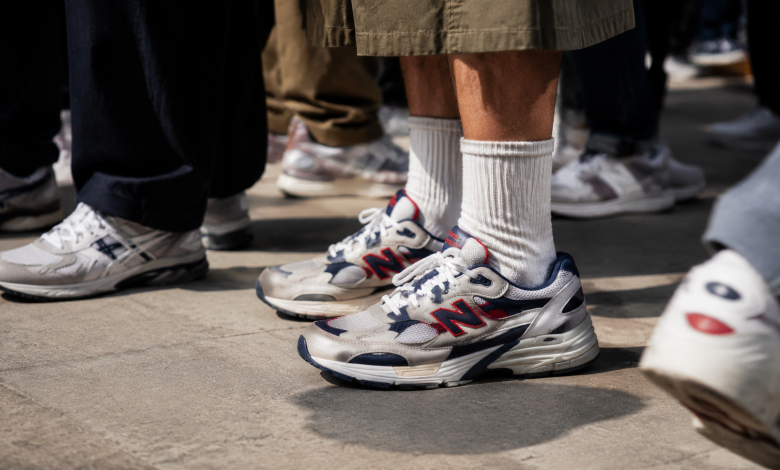
There’s a particular kind of irony in watching a shoe designed for performance become a cultural object. Retro running trainers the chunky-soled, color-blocked relics of the 1980s and 90s were built to help athletes move faster. Now they’re helping people stand still, in a very particular way, at very particular places. Fashion week front rows. Farmer’s markets. Airport lounges. Everywhere you look, someone is wearing a shoe that looks like it was pulled directly from a 1992 marathon expo.
This didn’t happen overnight, and it wasn’t an accident. Understanding why retro runners have taken over requires looking at several forces converging at the same time nostalgia culture, the athleisure economy, a backlash against minimalism, and something harder to name: a collective hunger for things that feel like they were built to last.
Nostalgia as a Commercial Force
Nostalgia has always sold product. But the version operating right now is different from what we’ve seen before. Previous nostalgia cycles typically skipped a generation you’d romanticize your parents’ era, not your own childhood. What’s happening with retro runners feels more personal and more compressed. Millennials and older Gen Z consumers aren’t looking back at something they only know from photographs. They’re recovering objects from their actual lived experience.
The New Balance990, the Nike Air Max 95, the ASICS Gel-Kayano5OG these aren’t just vintage silhouettes. For a significant chunk of today’s spending-age consumers, they’re the exact shoes that sat by the front door growing up. The ones their dads wore on weekend walks. There’s a visceral familiarity that no marketing campaign can manufacture from scratch.
Brands understand this, which is why the reissue strategy has become standard practice. Pull an archival silhouette, restore it to original spec or update it with modern materials, seed it with a few key figures, and let the recognition do the work. New Balance has executed this playbook particularly well over the past four years, transforming from a brand associated almost exclusively with middle-aged dads into one of the most coveted names in footwear. The irony the “dad shoe” label ended up being the asset.
The Bulky Sole Was Always the Point
Fashion has a way of rehabilitating aesthetics that were once considered uncool, and the chunky sole is the defining example of this decade. After years of minimalism dominating sneaker culture low-profile silhouettes, sleek construction, the kind of shoe that disappears under your outfit something shifted around 2017and never fully shifted back.
Balenciaga’s Triple S is often credited with kicking off the “ugly shoe” trend, but that framing misses what was actually happening. The bulky sole wasn’t ugly. It was substantial. In a market flooded with shoes that felt disposable, there was something refreshing about a trainer that looked like it could survive a decade. The visual weight communicated durability, seriousness, a kind of honest engineering. Whether the shoe actually delivered on that promise was almost beside the point. It looked like it meant business.
Retro running trainers fit naturally into this preference because they actually do have functional origins. The thick midsoles on a classic Brooks Adrenaline or a New Balance 577 weren’t aesthetic choices they were engineering solutions for heel cushioning and stability. When those designs came back, they brought that functional credibility with them. You could trace the lineage. That matters to a generation that’s deeply suspicious of products designed purely to look like something.
What the Athleisure Boom Actually Unlocked
The rise of athleisure over the past fifteen years fundamentally changed the grammar of how people dress. When it became socially acceptable to wear workout clothes everywhere not just to the gym but to brunch, to the office, to dinner the line between sports equipment and wardrobe staple dissolved. A shoe didn’t need to be a fashion shoe to be worn in a fashion context.
Retro runners benefited enormously from this permission structure. They’re comfortable in a way that fashion sneakers rarely are. They’re wide. They accommodate a real human foot. You can walk a city in them for six hours and not feel it the way you would in a cleaner, slimmer silhouette. That practicality, combined with their visual character, gives them a versatility that’s hard to match.
There’s also the styling logic. Retro runners work against tailoring. Throw them under a pair of wide-leg trousers or a midi skirt and the juxtaposition reads as deliberate, even sophisticated. Fashion editors have known this for years. Now the information has fully diffused into mainstream style culture.
The New Balance Effect and What It Teaches Us
It’s worth spending a moment on New Balance specifically, because their trajectory over the past half-decade is almost a case study in how a retro running revival actually works in practice.
In 2018, New Balance was profitable but culturally invisible in fashion terms. The 990 series existed, the574 existed, but they were sold in running stores and orthopedic shoe shops. Then a combination of things happened simultaneously. Jaden Smith was photographed wearing them. Teddy Santis launched Aime Leon Dore and began collaborating on990 colorways that felt both archival and current. Joe Biden wore them. That last one sounds like a joke, but it genuinely activated the irony-aware side of fashion culture suddenly the “Joe Biden shoe” was a desirable object.
New Balance didn’t try to pivot away from their heritage. They leaned into it. They kept the manufacturing story (Made in USA, Made in UK) front and center. They didn’t chase the sleek aesthetic that other brands were pushing. The result is that they now sit comfortably alongside Nike and Adidas in terms of cultural relevance while actually offering something distinct: a trainer that feels rooted, specific, and unhurried.
The Anti-Optimization Angle Nobody’s Talking About
Here’s the dimension that doesn’t get enough attention. We are living through a period of extreme optimization culture. Biohacking, productivity stacks, sleep scores, macro tracking the language of peak performance has colonized everyday life in a way that would have seemed absurd twenty years ago. And there’s a real exhaustion building around it.
Retro running trainers occupy an interesting symbolic position in that context. They are, technically, less optimized than modern performance footwear. Carbon fiber plates, nitrogen-infused foam, data-driven outsole geometry none of that is present in a reissued 1993 silhouette. What the retro trainer offers instead is something closer to a pre-optimization object. A shoe that existed before we decided everything needed to be engineered for maximum output.
Wearing one feels, on some level, like opting out. Not in a dramatic way, but in the quiet way of choosing the vinyl record over the streaming service or the film camera over the smartphone. It’s an aesthetic statement that’s also a stance. You’re choosing craft history and physical presence over the relentless forward push of improvement. Whether that choice is coherent or contradictory is part of what makes it interesting.
The obsession with retro running trainers isn’t really about shoes. It’s about what shoes are asked to carry memory, identity, belonging, a small daily rebellion against the tyranny of the new. The fact that they’re comfortable is, ultimately, just a bonus.